AI & ML Models
0.0 (0 reviews) • 0 downloads
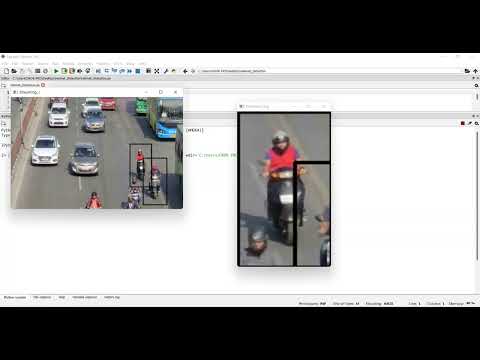
Helmet Detection Video Input Segmentation in Python Projects
र 1000
Helmet Detection Video Input Segmentation in Python Projects
Technical Details
Domain : Python
Database : Sqlite
Tools : Anaconda
Run Tools: VS Code
Database : Sqlite
Tools : Anaconda
Run Tools: VS Code
Secure Payment
Instant Download
GST Invoice
24/7 Support
About This Product
Helmet Detection Video Input Segmentation in Python Projects
Abstract
Safety in construction sites, industrial areas, and traffic environments is crucial, and wearing helmets is a primary preventive measure against head injuries. This project focuses on developing a Python-based Helmet Detection system using video input and segmentation techniques. The system processes video frames in real time, identifies individuals, and detects whether helmets are worn correctly using object detection and segmentation models. Implemented with Python libraries such as OpenCV, TensorFlow/Keras, NumPy, and Pandas, the system provides automated monitoring, alerts, and analytics, helping improve workplace safety and compliance.
Existing System
Traditional helmet compliance monitoring relies on manual inspection by safety personnel or CCTV surveillance. These methods are time-consuming, error-prone, and cannot provide real-time alerts. Existing automated systems often use basic object detection methods, which may fail under complex backgrounds, varying lighting conditions, or occlusions. Many conventional approaches also lack segmentation capabilities, reducing their accuracy in detecting improperly worn helmets or distinguishing helmets from other objects.
Proposed System
The proposed system integrates video input processing, segmentation, and object detection to accurately identify helmet usage. Video frames are captured using webcams or CCTV footage and preprocessed through resizing, normalization, and background subtraction. Advanced segmentation and detection models such as Mask R-CNN or YOLOv5 are applied to locate humans and their head regions, and to classify whether a helmet is present or absent. The system provides real-time alerts for non-compliance and can record incidents for further analysis. Python libraries such as OpenCV are used for video handling and preprocessing, TensorFlow/Keras for model training and inference, and NumPy for numerical computations. By combining segmentation, object detection, and video analysis, the system offers a robust, automated, and scalable solution for monitoring helmet usage in industrial, construction, and traffic safety scenarios.
Abstract
Safety in construction sites, industrial areas, and traffic environments is crucial, and wearing helmets is a primary preventive measure against head injuries. This project focuses on developing a Python-based Helmet Detection system using video input and segmentation techniques. The system processes video frames in real time, identifies individuals, and detects whether helmets are worn correctly using object detection and segmentation models. Implemented with Python libraries such as OpenCV, TensorFlow/Keras, NumPy, and Pandas, the system provides automated monitoring, alerts, and analytics, helping improve workplace safety and compliance.
Existing System
Traditional helmet compliance monitoring relies on manual inspection by safety personnel or CCTV surveillance. These methods are time-consuming, error-prone, and cannot provide real-time alerts. Existing automated systems often use basic object detection methods, which may fail under complex backgrounds, varying lighting conditions, or occlusions. Many conventional approaches also lack segmentation capabilities, reducing their accuracy in detecting improperly worn helmets or distinguishing helmets from other objects.
Proposed System
The proposed system integrates video input processing, segmentation, and object detection to accurately identify helmet usage. Video frames are captured using webcams or CCTV footage and preprocessed through resizing, normalization, and background subtraction. Advanced segmentation and detection models such as Mask R-CNN or YOLOv5 are applied to locate humans and their head regions, and to classify whether a helmet is present or absent. The system provides real-time alerts for non-compliance and can record incidents for further analysis. Python libraries such as OpenCV are used for video handling and preprocessing, TensorFlow/Keras for model training and inference, and NumPy for numerical computations. By combining segmentation, object detection, and video analysis, the system offers a robust, automated, and scalable solution for monitoring helmet usage in industrial, construction, and traffic safety scenarios.
Customer Reviews (0)
No reviews yet. Be the first!
Related Products
⭐ Featured

AI & ML Models
Zomato Restaurant Reviews Sentimental Analyzer in Python Projects
Zomato Restaurant Reviews Sentimental Analyzer in Python Projects
र 1000
⭐ Featured
⭐ Featured

AI & ML Models
Voice Disorder Prediction using Audio Dataset in Python Projects
Voice Disorder Prediction using Audio Dataset in Python Projects
र 1000

AI & ML Models
Vitamin Deficiency Detection Using Image Processing in Python Projects
Vitamin Deficiency Detection Using Image Processing in Python Projects
र 1000