AI & ML Models
0.0 (0 reviews) • 0 downloads
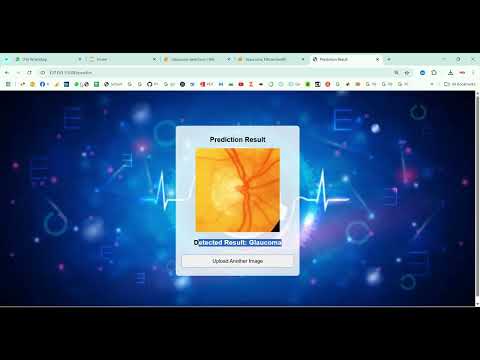
Glaucoma Detection CNN in Python Projects
र 1000
Glaucoma Detection CNN in Python Projects
Technical Details
Domain : Python
Database : Sqlite
Tools : Anaconda
Run Tools: VS Code
Database : Sqlite
Tools : Anaconda
Run Tools: VS Code
Secure Payment
Instant Download
GST Invoice
24/7 Support
About This Product
Glaucoma Detection CNN in Python Projects
Abstract
Glaucoma is a chronic eye disease that causes irreversible vision loss due to optic nerve damage, often progressing without noticeable symptoms. Early detection is critical to prevent severe visual impairment. The project Glaucoma Detection using CNN in Python Projects focuses on developing an automated system that can detect glaucoma from retinal fundus images using Convolutional Neural Networks (CNNs). Python is used as the development platform because of its powerful libraries for image processing, machine learning, and deep learning, including OpenCV, TensorFlow, Keras, and NumPy. The system preprocesses fundus images to enhance contrast, remove noise, and normalize size, then uses CNN architectures to extract features and classify images as glaucomatous or healthy. This automated detection aids ophthalmologists in early diagnosis, improving patient outcomes and reducing the need for manual examination of large image datasets.
Existing System
Existing glaucoma detection methods primarily rely on manual analysis of fundus images by ophthalmologists or the use of intraocular pressure measurements and visual field tests. Manual examination is labor-intensive, time-consuming, and prone to inter-observer variability, leading to potential misdiagnosis. Traditional computer-aided diagnosis (CAD) systems may use handcrafted features such as optic cup-to-disc ratio, texture, or color-based metrics combined with classical machine learning models like SVM or Random Forest. However, these approaches are limited in accurately capturing complex patterns in retinal images and often require extensive preprocessing. Consequently, the efficiency and scalability of existing systems are insufficient for large-scale glaucoma screening programs.
Proposed System
The proposed system introduces a Python-based deep learning framework for glaucoma detection using CNN architectures. Retinal fundus images are preprocessed for noise reduction, contrast enhancement, resizing, and normalization. The CNN model automatically extracts hierarchical features such as edges, textures, and optic nerve structures to distinguish glaucomatous from healthy images. Advanced architectures like VGG16, ResNet50, or custom CNNs can be used for feature learning and classification. Data augmentation techniques such as rotation, flipping, and scaling improve model generalization across diverse datasets. Performance is evaluated using metrics like accuracy, precision, recall, F1-score, and ROC-AUC. The system provides a scalable, reliable, and automated approach to glaucoma detection, reducing manual workload for ophthalmologists and enabling early intervention to prevent vision loss.
Abstract
Glaucoma is a chronic eye disease that causes irreversible vision loss due to optic nerve damage, often progressing without noticeable symptoms. Early detection is critical to prevent severe visual impairment. The project Glaucoma Detection using CNN in Python Projects focuses on developing an automated system that can detect glaucoma from retinal fundus images using Convolutional Neural Networks (CNNs). Python is used as the development platform because of its powerful libraries for image processing, machine learning, and deep learning, including OpenCV, TensorFlow, Keras, and NumPy. The system preprocesses fundus images to enhance contrast, remove noise, and normalize size, then uses CNN architectures to extract features and classify images as glaucomatous or healthy. This automated detection aids ophthalmologists in early diagnosis, improving patient outcomes and reducing the need for manual examination of large image datasets.
Existing System
Existing glaucoma detection methods primarily rely on manual analysis of fundus images by ophthalmologists or the use of intraocular pressure measurements and visual field tests. Manual examination is labor-intensive, time-consuming, and prone to inter-observer variability, leading to potential misdiagnosis. Traditional computer-aided diagnosis (CAD) systems may use handcrafted features such as optic cup-to-disc ratio, texture, or color-based metrics combined with classical machine learning models like SVM or Random Forest. However, these approaches are limited in accurately capturing complex patterns in retinal images and often require extensive preprocessing. Consequently, the efficiency and scalability of existing systems are insufficient for large-scale glaucoma screening programs.
Proposed System
The proposed system introduces a Python-based deep learning framework for glaucoma detection using CNN architectures. Retinal fundus images are preprocessed for noise reduction, contrast enhancement, resizing, and normalization. The CNN model automatically extracts hierarchical features such as edges, textures, and optic nerve structures to distinguish glaucomatous from healthy images. Advanced architectures like VGG16, ResNet50, or custom CNNs can be used for feature learning and classification. Data augmentation techniques such as rotation, flipping, and scaling improve model generalization across diverse datasets. Performance is evaluated using metrics like accuracy, precision, recall, F1-score, and ROC-AUC. The system provides a scalable, reliable, and automated approach to glaucoma detection, reducing manual workload for ophthalmologists and enabling early intervention to prevent vision loss.
Customer Reviews (0)
No reviews yet. Be the first!
Related Products
⭐ Featured

AI & ML Models
Zomato Restaurant Reviews Sentimental Analyzer in Python Projects
Zomato Restaurant Reviews Sentimental Analyzer in Python Projects
र 1000
⭐ Featured
⭐ Featured
AI & ML Models
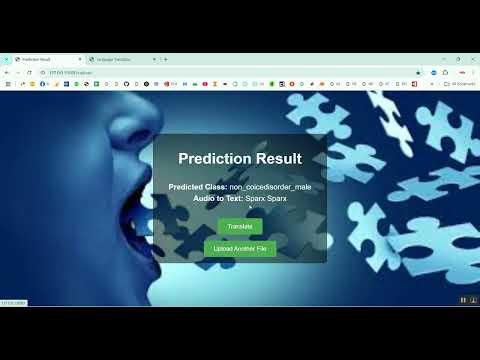
Voice Disorder Prediction using Audio Dataset in Python Projects
Voice Disorder Prediction using Audio Dataset in Python Projects
र 1000
AI & ML Models
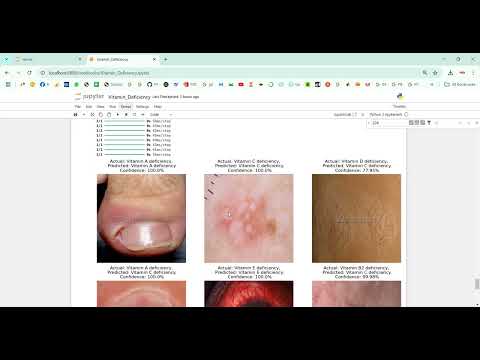
Vitamin Deficiency Detection Using Image Processing in Python Projects
Vitamin Deficiency Detection Using Image Processing in Python Projects
र 1000