AI & ML Models
0.0 (0 reviews) • 0 downloads
Gene Based Classification CNN Flask App in Python Projects
र 1000
Gene Based Classification CNN Flask App in Python Projects
Technical Details
Domain : Python
Database : Sqlite
Tools : Anaconda
Run Tools: VS Code
Database : Sqlite
Tools : Anaconda
Run Tools: VS Code
Secure Payment
Instant Download
GST Invoice
24/7 Support
About This Product
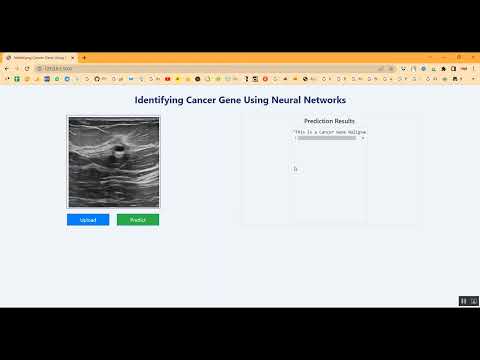
Gene Based Classification CNN Flask App in Python Projects
Abstract
Gene-based classification plays a crucial role in genomics, personalized medicine, and disease diagnosis by identifying patterns in genetic sequences that correspond to specific conditions or traits. This project focuses on developing a Python-based Gene Classification system using Convolutional Neural Networks (CNN) and deployed via a Flask web application. The system processes gene sequence or gene expression data, extracts meaningful features, and classifies genes based on disease susceptibility, functional categories, or expression profiles. Implemented with Python libraries such as TensorFlow/Keras, Pandas, NumPy, and Flask, the model is trained on labeled gene datasets to achieve high accuracy. The application provides a user-friendly interface for uploading gene data, performing classification, and visualizing results, supporting research and clinical applications in genomics.
Existing System
Traditional gene classification methods rely on statistical analysis, sequence alignment, or clustering algorithms to identify functional groups or disease-related genes. While these approaches are effective for small datasets, they struggle with large-scale genomic data, complex nonlinear patterns, and high-dimensional features. Existing systems often require manual preprocessing, extensive computational resources, and expertise in bioinformatics. Additionally, many tools lack interactive platforms for real-time classification and visualization, limiting accessibility for researchers or clinicians without programming experience.
Proposed System
The proposed system implements a CNN-based framework for gene classification integrated with a Flask web application. Gene datasets, including DNA sequences, RNA-Seq expression data, or microarray profiles, are preprocessed through normalization, encoding, and dimensionality reduction. The CNN model automatically extracts hierarchical features from the input data to classify genes into disease-associated, functional, or expression-based categories. The Flask interface allows users to upload gene datasets, perform real-time classification, and view results along with confidence scores and visualizations of feature importance. Python libraries such as TensorFlow/Keras for deep learning, Pandas and NumPy for data processing, and Flask for web deployment are utilized. By combining deep learning-based feature extraction, accurate classification, and a user-friendly web interface, the system provides a scalable and automated solution for gene analysis, supporting genomics research, personalized medicine, and clinical decision-making.
Abstract
Gene-based classification plays a crucial role in genomics, personalized medicine, and disease diagnosis by identifying patterns in genetic sequences that correspond to specific conditions or traits. This project focuses on developing a Python-based Gene Classification system using Convolutional Neural Networks (CNN) and deployed via a Flask web application. The system processes gene sequence or gene expression data, extracts meaningful features, and classifies genes based on disease susceptibility, functional categories, or expression profiles. Implemented with Python libraries such as TensorFlow/Keras, Pandas, NumPy, and Flask, the model is trained on labeled gene datasets to achieve high accuracy. The application provides a user-friendly interface for uploading gene data, performing classification, and visualizing results, supporting research and clinical applications in genomics.
Existing System
Traditional gene classification methods rely on statistical analysis, sequence alignment, or clustering algorithms to identify functional groups or disease-related genes. While these approaches are effective for small datasets, they struggle with large-scale genomic data, complex nonlinear patterns, and high-dimensional features. Existing systems often require manual preprocessing, extensive computational resources, and expertise in bioinformatics. Additionally, many tools lack interactive platforms for real-time classification and visualization, limiting accessibility for researchers or clinicians without programming experience.
Proposed System
The proposed system implements a CNN-based framework for gene classification integrated with a Flask web application. Gene datasets, including DNA sequences, RNA-Seq expression data, or microarray profiles, are preprocessed through normalization, encoding, and dimensionality reduction. The CNN model automatically extracts hierarchical features from the input data to classify genes into disease-associated, functional, or expression-based categories. The Flask interface allows users to upload gene datasets, perform real-time classification, and view results along with confidence scores and visualizations of feature importance. Python libraries such as TensorFlow/Keras for deep learning, Pandas and NumPy for data processing, and Flask for web deployment are utilized. By combining deep learning-based feature extraction, accurate classification, and a user-friendly web interface, the system provides a scalable and automated solution for gene analysis, supporting genomics research, personalized medicine, and clinical decision-making.
Customer Reviews (0)
No reviews yet. Be the first!
Related Products
⭐ Featured
AI & ML Models
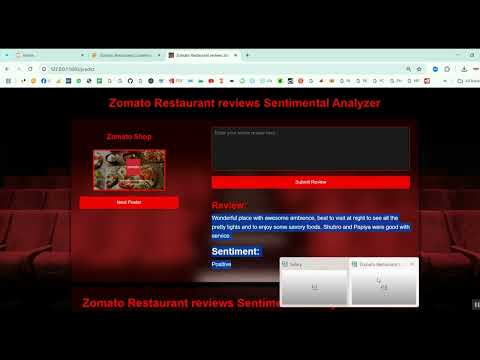
Zomato Restaurant Reviews Sentimental Analyzer in Python Projects
Zomato Restaurant Reviews Sentimental Analyzer in Python Projects
र 1000
⭐ Featured
⭐ Featured
AI & ML Models
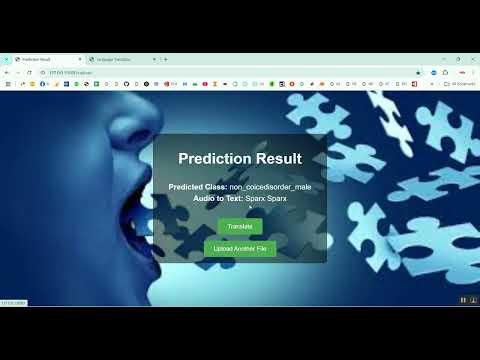
Voice Disorder Prediction using Audio Dataset in Python Projects
Voice Disorder Prediction using Audio Dataset in Python Projects
र 1000
AI & ML Models
Vitamin Deficiency Detection Using Image Processing in Python Projects
Vitamin Deficiency Detection Using Image Processing in Python Projects
र 1000