
AI & ML Models
0.0 (0 reviews) • 0 downloads
Fruit Disease Prediction CNN Train Flask App in Python Projects
र 1000
Fruit Disease Prediction CNN Train Flask App in Python Projects
Technical Details
Domain : Python
Database : Sqlite
Tools : Anaconda
Run Tools: VS Code
Database : Sqlite
Tools : Anaconda
Run Tools: VS Code
Secure Payment
Instant Download
GST Invoice
24/7 Support
About This Product
Fruit Disease Prediction CNN Train Flask App in Python Projects
Abstract
Fruit crops are highly susceptible to various diseases that can reduce yield and quality, affecting both farmers and the agricultural industry. This project focuses on developing a Python-based Fruit Disease Prediction system using Convolutional Neural Networks (CNN) and deployed via a Flask web application. The system automatically identifies diseases from fruit images by analyzing visual patterns such as color, texture, and shape abnormalities. Implemented with Python libraries like TensorFlow/Keras, OpenCV, NumPy, and Flask, the model trains on a labeled fruit disease dataset to classify types of infections accurately. The application provides an interactive interface for uploading images, detecting diseases, and visualizing results, enabling early intervention and effective crop management.
Existing System
Traditional methods of detecting fruit diseases rely on manual inspection by farmers or agricultural experts. These methods are often time-consuming, prone to human error, and dependent on the expert’s experience. Some conventional digital approaches involve simple image processing techniques or threshold-based detection, which fail to handle variations in lighting, fruit orientation, or disease severity. Additionally, existing systems lack web-based interfaces for real-time prediction and are limited in scalability for handling large datasets.
Proposed System
The proposed system implements a CNN-based framework to detect fruit diseases accurately from images. Input images are preprocessed using resizing, normalization, and augmentation techniques to improve model generalization and accuracy. The CNN architecture automatically extracts hierarchical features from the images and classifies the disease type based on learned patterns. The Flask web application provides an interactive platform where users can upload fruit images, initiate predictions, and view results with disease labels and confidence scores. Python libraries such as TensorFlow/Keras are used for model training, OpenCV for image processing, NumPy for numerical operations, and Flask for web deployment. By combining deep learning with a user-friendly web interface, the system enables scalable, automated, and accurate disease detection, assisting farmers in timely crop management and reducing losses due to infections.
Abstract
Fruit crops are highly susceptible to various diseases that can reduce yield and quality, affecting both farmers and the agricultural industry. This project focuses on developing a Python-based Fruit Disease Prediction system using Convolutional Neural Networks (CNN) and deployed via a Flask web application. The system automatically identifies diseases from fruit images by analyzing visual patterns such as color, texture, and shape abnormalities. Implemented with Python libraries like TensorFlow/Keras, OpenCV, NumPy, and Flask, the model trains on a labeled fruit disease dataset to classify types of infections accurately. The application provides an interactive interface for uploading images, detecting diseases, and visualizing results, enabling early intervention and effective crop management.
Existing System
Traditional methods of detecting fruit diseases rely on manual inspection by farmers or agricultural experts. These methods are often time-consuming, prone to human error, and dependent on the expert’s experience. Some conventional digital approaches involve simple image processing techniques or threshold-based detection, which fail to handle variations in lighting, fruit orientation, or disease severity. Additionally, existing systems lack web-based interfaces for real-time prediction and are limited in scalability for handling large datasets.
Proposed System
The proposed system implements a CNN-based framework to detect fruit diseases accurately from images. Input images are preprocessed using resizing, normalization, and augmentation techniques to improve model generalization and accuracy. The CNN architecture automatically extracts hierarchical features from the images and classifies the disease type based on learned patterns. The Flask web application provides an interactive platform where users can upload fruit images, initiate predictions, and view results with disease labels and confidence scores. Python libraries such as TensorFlow/Keras are used for model training, OpenCV for image processing, NumPy for numerical operations, and Flask for web deployment. By combining deep learning with a user-friendly web interface, the system enables scalable, automated, and accurate disease detection, assisting farmers in timely crop management and reducing losses due to infections.
Customer Reviews (0)
No reviews yet. Be the first!
Related Products
⭐ Featured

AI & ML Models
Zomato Restaurant Reviews Sentimental Analyzer in Python Projects
Zomato Restaurant Reviews Sentimental Analyzer in Python Projects
र 1000
⭐ Featured
⭐ Featured
AI & ML Models
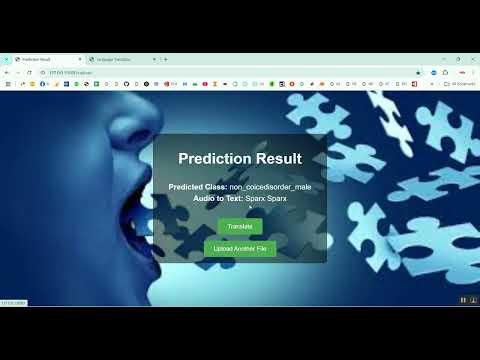
Voice Disorder Prediction using Audio Dataset in Python Projects
Voice Disorder Prediction using Audio Dataset in Python Projects
र 1000
AI & ML Models
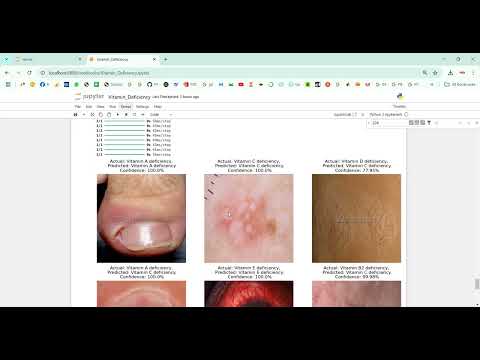
Vitamin Deficiency Detection Using Image Processing in Python Projects
Vitamin Deficiency Detection Using Image Processing in Python Projects
र 1000