AI & ML Models
0.0 (0 reviews) • 0 downloads
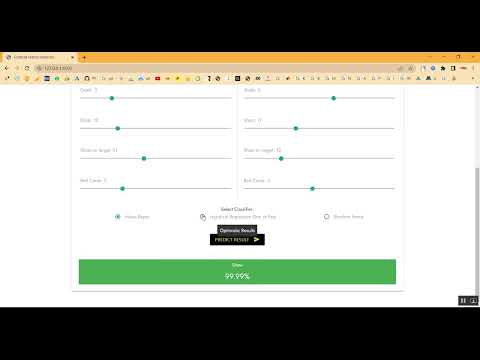
Foot Ball Match Prediction Using Different Classifier in Python Projects
र 1000
Foot Ball Match Prediction Using Different Classifier in Python Projects
Technical Details
Domain : Python
Database : Sqlite
Tools : Anaconda
Run Tools: VS Code
Database : Sqlite
Tools : Anaconda
Run Tools: VS Code
Secure Payment
Instant Download
GST Invoice
24/7 Support
About This Product
Foot Ball Match Prediction Using Different Classifier in Python Projects
Abstract
Predicting football match outcomes has become an exciting challenge in the field of data science and machine learning. This project focuses on developing a Python-based Football Match Prediction system that utilizes different machine learning classifiers to forecast match results such as win, loss, or draw. The system analyzes historical football data, including team statistics, player performance, match location, and prior outcomes, to train multiple models and compare their predictive accuracy. Implemented using Python libraries such as Pandas, NumPy, Scikit-learn, and Matplotlib, the project evaluates algorithms like Logistic Regression, Decision Tree, Random Forest, Support Vector Machine (SVM), and Gradient Boosting to identify the most accurate classifier. The objective is to create a reliable, data-driven tool for sports analysts and enthusiasts to make informed predictions with improved performance and interpretability.
Existing System
Traditional prediction methods rely on manual analysis, expert opinions, or simple statistical models like regression or probability-based estimations. These systems often fail to adapt to dynamic match conditions such as player injuries, weather effects, or team form variations. Most existing approaches depend on limited datasets and a single predictive model, which restricts accuracy and robustness. Additionally, they lack automation and the ability to evaluate multiple algorithms for performance optimization. As a result, prediction accuracy remains inconsistent and insufficient for real-time applications in sports analytics.
Proposed System
The proposed system introduces a comparative machine learning framework that employs different classifiers to predict football match outcomes more accurately. The dataset, consisting of attributes such as team performance metrics, goals scored, shots on target, possession rates, and defensive records, is preprocessed using normalization, encoding, and feature selection techniques. Several classifiers—including Logistic Regression, Decision Tree, Random Forest, Naïve Bayes, and SVM—are trained and tested on the dataset to identify the best-performing algorithm. Evaluation metrics such as accuracy, F1-score, precision, recall, and confusion matrix are used to assess model performance. The project also provides visual analytics using Matplotlib and Seaborn to display prediction comparisons across classifiers. Implemented in Python, this system automates data preprocessing, model training, and evaluation, enabling users to determine which classifier offers the highest accuracy for football match prediction. By integrating multiple learning models, the system provides a comprehensive, scalable, and accurate solution for predictive sports analytics.
Abstract
Predicting football match outcomes has become an exciting challenge in the field of data science and machine learning. This project focuses on developing a Python-based Football Match Prediction system that utilizes different machine learning classifiers to forecast match results such as win, loss, or draw. The system analyzes historical football data, including team statistics, player performance, match location, and prior outcomes, to train multiple models and compare their predictive accuracy. Implemented using Python libraries such as Pandas, NumPy, Scikit-learn, and Matplotlib, the project evaluates algorithms like Logistic Regression, Decision Tree, Random Forest, Support Vector Machine (SVM), and Gradient Boosting to identify the most accurate classifier. The objective is to create a reliable, data-driven tool for sports analysts and enthusiasts to make informed predictions with improved performance and interpretability.
Existing System
Traditional prediction methods rely on manual analysis, expert opinions, or simple statistical models like regression or probability-based estimations. These systems often fail to adapt to dynamic match conditions such as player injuries, weather effects, or team form variations. Most existing approaches depend on limited datasets and a single predictive model, which restricts accuracy and robustness. Additionally, they lack automation and the ability to evaluate multiple algorithms for performance optimization. As a result, prediction accuracy remains inconsistent and insufficient for real-time applications in sports analytics.
Proposed System
The proposed system introduces a comparative machine learning framework that employs different classifiers to predict football match outcomes more accurately. The dataset, consisting of attributes such as team performance metrics, goals scored, shots on target, possession rates, and defensive records, is preprocessed using normalization, encoding, and feature selection techniques. Several classifiers—including Logistic Regression, Decision Tree, Random Forest, Naïve Bayes, and SVM—are trained and tested on the dataset to identify the best-performing algorithm. Evaluation metrics such as accuracy, F1-score, precision, recall, and confusion matrix are used to assess model performance. The project also provides visual analytics using Matplotlib and Seaborn to display prediction comparisons across classifiers. Implemented in Python, this system automates data preprocessing, model training, and evaluation, enabling users to determine which classifier offers the highest accuracy for football match prediction. By integrating multiple learning models, the system provides a comprehensive, scalable, and accurate solution for predictive sports analytics.
Customer Reviews (0)
No reviews yet. Be the first!
Related Products
⭐ Featured
AI & ML Models
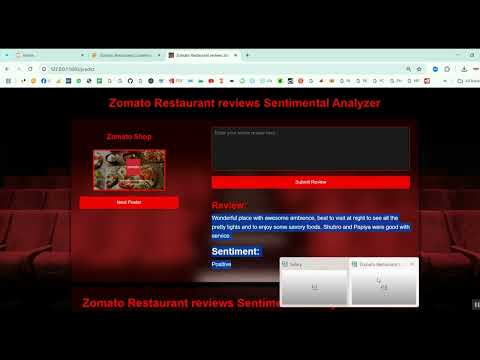
Zomato Restaurant Reviews Sentimental Analyzer in Python Projects
Zomato Restaurant Reviews Sentimental Analyzer in Python Projects
र 1000
⭐ Featured
⭐ Featured
AI & ML Models
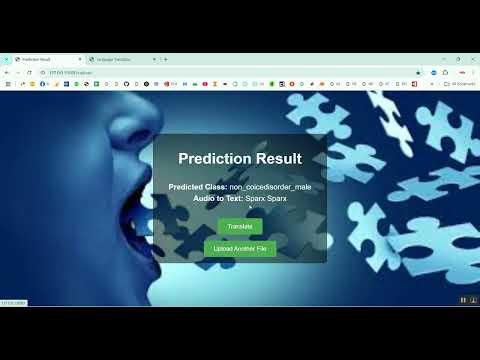
Voice Disorder Prediction using Audio Dataset in Python Projects
Voice Disorder Prediction using Audio Dataset in Python Projects
र 1000
AI & ML Models
Vitamin Deficiency Detection Using Image Processing in Python Projects
Vitamin Deficiency Detection Using Image Processing in Python Projects
र 1000