AI & ML Models
0.0 (0 reviews) • 0 downloads
Food Recommendation with Diet Plan ML App in Python Projects
र 1000
Food Recommendation with Diet Plan ML App in Python Projects
Technical Details
Domain : Python
Database : Sqlite
Tools : Anaconda
Run Tools: VS Code
Database : Sqlite
Tools : Anaconda
Run Tools: VS Code
Secure Payment
Instant Download
GST Invoice
24/7 Support
About This Product
Food Recommendation with Diet Plan ML App in Python Projects
Abstract
Personalized diet planning plays a crucial role in promoting health, managing diseases, and maintaining fitness goals. This project focuses on developing a Python-based Food Recommendation system integrated with a Machine Learning (ML) model to generate customized diet plans for users. The system analyzes user data such as age, gender, body mass index (BMI), dietary preferences, and health conditions to recommend suitable food items and daily meal plans. Implemented using Python libraries such as Pandas, NumPy, Scikit-learn, and TensorFlow/Keras, the ML-based recommendation engine provides intelligent, data-driven suggestions that adapt to user goals like weight loss, muscle gain, or diabetes management. The project offers an interactive platform that simplifies nutritional planning through automation and personalization.
Existing System
Traditional diet planning methods depend heavily on manual consultation with nutritionists or generic diet charts. These approaches are often time-consuming, subjective, and fail to accommodate individual differences in metabolism, activity levels, or medical history. Existing digital food tracking apps mostly rely on static databases, requiring users to manually input their daily food intake and offering generic suggestions. Such systems lack adaptive learning and do not provide fully personalized, ML-based diet recommendations tailored to a user’s unique profile and goals.
Proposed System
The proposed system introduces an ML-powered food recommendation and diet planning application developed in Python. It collects user inputs such as age, height, weight, medical condition, activity level, and food preferences, which are then processed through data normalization and feature extraction. Using machine learning algorithms such as Decision Tree, Random Forest, or Neural Networks, the model predicts optimal food combinations and calorie intake suitable for the user’s health goals. The system generates a daily or weekly diet plan that includes balanced meals categorized by macronutrients like carbohydrates, proteins, and fats. The app interface, built using Flask or Streamlit, allows users to interactively view their diet plans, track progress, and receive updated recommendations based on feedback. Python libraries such as Pandas and NumPy are used for data preprocessing, Scikit-learn and TensorFlow/Keras for model training, and Matplotlib for nutritional visualization. By integrating ML-based prediction with an interactive application, this system offers an efficient, personalized, and adaptive solution for food recommendation and diet management.
Abstract
Personalized diet planning plays a crucial role in promoting health, managing diseases, and maintaining fitness goals. This project focuses on developing a Python-based Food Recommendation system integrated with a Machine Learning (ML) model to generate customized diet plans for users. The system analyzes user data such as age, gender, body mass index (BMI), dietary preferences, and health conditions to recommend suitable food items and daily meal plans. Implemented using Python libraries such as Pandas, NumPy, Scikit-learn, and TensorFlow/Keras, the ML-based recommendation engine provides intelligent, data-driven suggestions that adapt to user goals like weight loss, muscle gain, or diabetes management. The project offers an interactive platform that simplifies nutritional planning through automation and personalization.
Existing System
Traditional diet planning methods depend heavily on manual consultation with nutritionists or generic diet charts. These approaches are often time-consuming, subjective, and fail to accommodate individual differences in metabolism, activity levels, or medical history. Existing digital food tracking apps mostly rely on static databases, requiring users to manually input their daily food intake and offering generic suggestions. Such systems lack adaptive learning and do not provide fully personalized, ML-based diet recommendations tailored to a user’s unique profile and goals.
Proposed System
The proposed system introduces an ML-powered food recommendation and diet planning application developed in Python. It collects user inputs such as age, height, weight, medical condition, activity level, and food preferences, which are then processed through data normalization and feature extraction. Using machine learning algorithms such as Decision Tree, Random Forest, or Neural Networks, the model predicts optimal food combinations and calorie intake suitable for the user’s health goals. The system generates a daily or weekly diet plan that includes balanced meals categorized by macronutrients like carbohydrates, proteins, and fats. The app interface, built using Flask or Streamlit, allows users to interactively view their diet plans, track progress, and receive updated recommendations based on feedback. Python libraries such as Pandas and NumPy are used for data preprocessing, Scikit-learn and TensorFlow/Keras for model training, and Matplotlib for nutritional visualization. By integrating ML-based prediction with an interactive application, this system offers an efficient, personalized, and adaptive solution for food recommendation and diet management.
Customer Reviews (0)
No reviews yet. Be the first!
Related Products
⭐ Featured
AI & ML Models
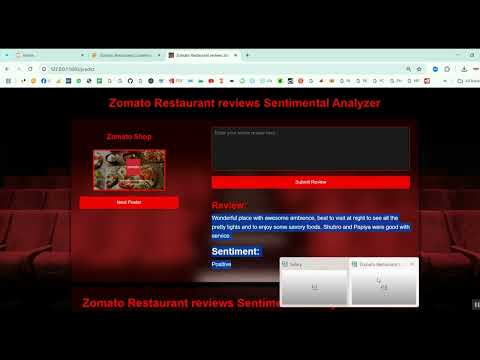
Zomato Restaurant Reviews Sentimental Analyzer in Python Projects
Zomato Restaurant Reviews Sentimental Analyzer in Python Projects
र 1000
⭐ Featured
⭐ Featured
AI & ML Models
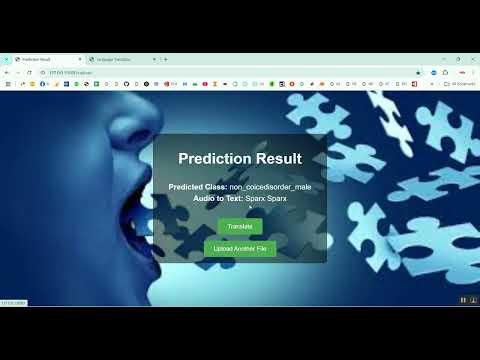
Voice Disorder Prediction using Audio Dataset in Python Projects
Voice Disorder Prediction using Audio Dataset in Python Projects
र 1000
AI & ML Models
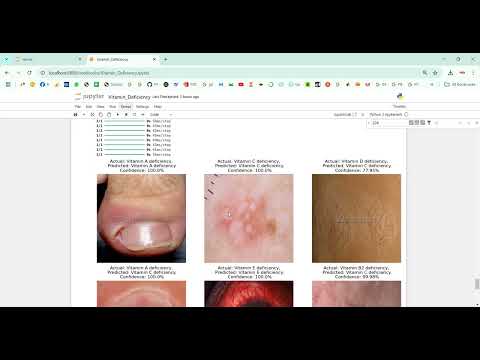
Vitamin Deficiency Detection Using Image Processing in Python Projects
Vitamin Deficiency Detection Using Image Processing in Python Projects
र 1000