AI & ML Models
0.0 (0 reviews) • 0 downloads
Flight Delay ML Classification Flask App in Python Projects
र 1000
Flight Delay ML Classification Flask App in Python Projects
Technical Details
Domain : Python
Database : Sqlite
Tools : Anaconda
Run Tools: VS Code
Database : Sqlite
Tools : Anaconda
Run Tools: VS Code
Secure Payment
Instant Download
GST Invoice
24/7 Support
About This Product
Flight Delay ML Classification Flask App in Python Projects
Abstract
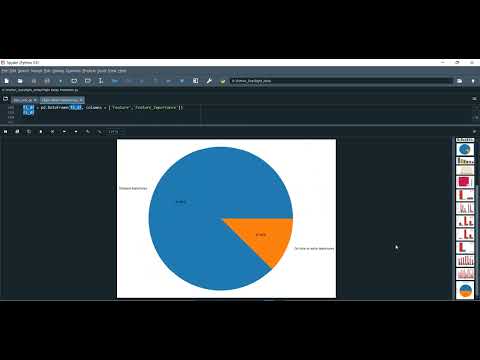
Flight delays are a major concern for passengers, airlines, and airport management, affecting schedules, customer satisfaction, and operational efficiency. This project focuses on developing a Python-based Flight Delay Prediction system using machine learning classifiers, deployed through a Flask web application. The system analyzes historical flight data, weather conditions, airline performance, and airport traffic to predict whether a flight is likely to be delayed. By leveraging machine learning models, the system provides accurate predictions and actionable insights to stakeholders. Implemented using Python libraries such as Pandas, NumPy, Scikit-learn, and Flask, the application offers an interactive platform for real-time flight delay assessment and visualization.
Existing System
Traditional approaches for predicting flight delays rely on manual monitoring, statistical averages, or simple rule-based systems. These methods often fail to capture complex patterns in historical data, seasonal variations, or real-time environmental factors, resulting in low prediction accuracy. Airlines may provide delay estimates based on schedules or experience, but such predictions are often imprecise and reactive rather than proactive. Existing systems also rarely offer an interactive platform for real-time assessment or integration with user-friendly web interfaces.
Proposed System
The proposed system implements a Python-based machine learning framework integrated with a Flask web application for flight delay prediction. Historical flight datasets—including information on departure and arrival times, airlines, airports, weather conditions, and air traffic—are preprocessed by handling missing values, encoding categorical variables, and normalizing numerical features. Feature selection and extraction are applied to identify the most influential factors affecting flight delays. Machine learning classifiers such as Logistic Regression, Random Forest, Gradient Boosting, or XGBoost are trained to predict flight delay likelihood. The Flask application provides an interactive interface where users can input flight details, receive predictions in real time, and visualize probabilities of delays. Python libraries such as Pandas, NumPy, Scikit-learn, and Flask are used for data preprocessing, model training, and web deployment. By combining machine learning with an accessible web interface, the system provides a scalable, accurate, and practical solution for predicting flight delays, enabling better planning for airlines, airports, and passengers.
Abstract
Flight delays are a major concern for passengers, airlines, and airport management, affecting schedules, customer satisfaction, and operational efficiency. This project focuses on developing a Python-based Flight Delay Prediction system using machine learning classifiers, deployed through a Flask web application. The system analyzes historical flight data, weather conditions, airline performance, and airport traffic to predict whether a flight is likely to be delayed. By leveraging machine learning models, the system provides accurate predictions and actionable insights to stakeholders. Implemented using Python libraries such as Pandas, NumPy, Scikit-learn, and Flask, the application offers an interactive platform for real-time flight delay assessment and visualization.
Existing System
Traditional approaches for predicting flight delays rely on manual monitoring, statistical averages, or simple rule-based systems. These methods often fail to capture complex patterns in historical data, seasonal variations, or real-time environmental factors, resulting in low prediction accuracy. Airlines may provide delay estimates based on schedules or experience, but such predictions are often imprecise and reactive rather than proactive. Existing systems also rarely offer an interactive platform for real-time assessment or integration with user-friendly web interfaces.
Proposed System
The proposed system implements a Python-based machine learning framework integrated with a Flask web application for flight delay prediction. Historical flight datasets—including information on departure and arrival times, airlines, airports, weather conditions, and air traffic—are preprocessed by handling missing values, encoding categorical variables, and normalizing numerical features. Feature selection and extraction are applied to identify the most influential factors affecting flight delays. Machine learning classifiers such as Logistic Regression, Random Forest, Gradient Boosting, or XGBoost are trained to predict flight delay likelihood. The Flask application provides an interactive interface where users can input flight details, receive predictions in real time, and visualize probabilities of delays. Python libraries such as Pandas, NumPy, Scikit-learn, and Flask are used for data preprocessing, model training, and web deployment. By combining machine learning with an accessible web interface, the system provides a scalable, accurate, and practical solution for predicting flight delays, enabling better planning for airlines, airports, and passengers.
Customer Reviews (0)
No reviews yet. Be the first!
Related Products
⭐ Featured
AI & ML Models
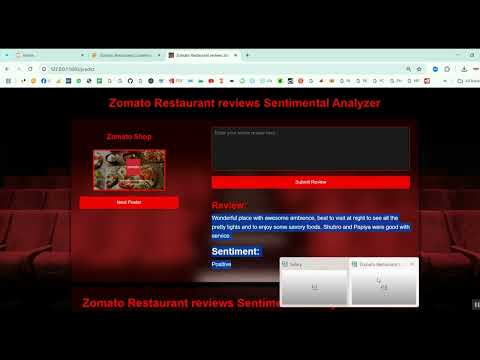
Zomato Restaurant Reviews Sentimental Analyzer in Python Projects
Zomato Restaurant Reviews Sentimental Analyzer in Python Projects
र 1000
⭐ Featured
⭐ Featured
AI & ML Models
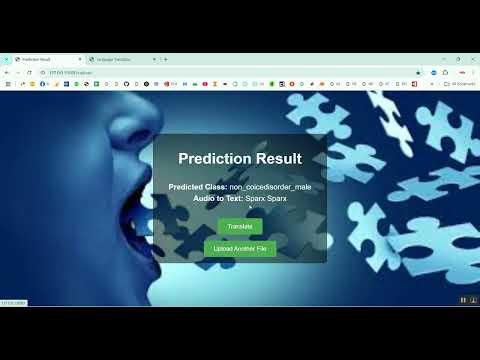
Voice Disorder Prediction using Audio Dataset in Python Projects
Voice Disorder Prediction using Audio Dataset in Python Projects
र 1000
AI & ML Models
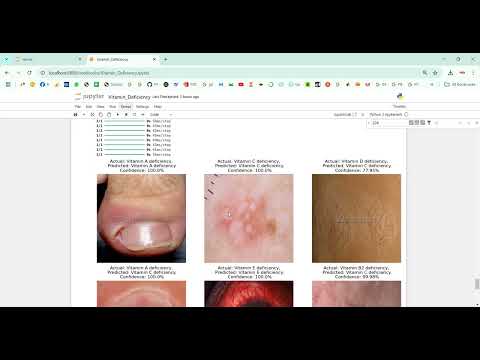
Vitamin Deficiency Detection Using Image Processing in Python Projects
Vitamin Deficiency Detection Using Image Processing in Python Projects
र 1000