AI & ML Models
0.0 (0 reviews) • 0 downloads
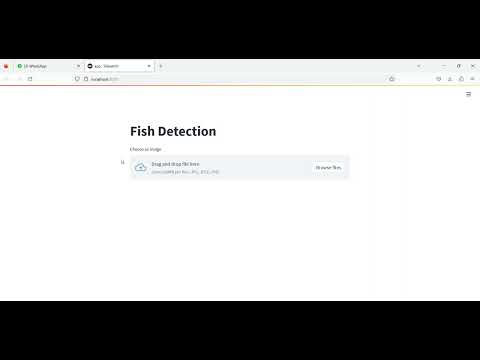
Fish Detection Train CNN Streamlit App in Python Projects
र 1000
Fish Detection Train CNN Streamlit App in Python Projects
Technical Details
Domain : Python
Database : Sqlite
Tools : Anaconda
Run Tools: VS Code
Database : Sqlite
Tools : Anaconda
Run Tools: VS Code
Secure Payment
Instant Download
GST Invoice
24/7 Support
About This Product
Fish Detection Train CNN Streamlit App in Python Projects
Abstract
Marine biodiversity monitoring and aquaculture management require accurate detection and classification of fish species. This project focuses on developing a Python-based Fish Detection system using Convolutional Neural Networks (CNN) and a Streamlit web application. The system trains CNN models on fish image datasets to automatically identify species, count the number of fish, and detect their positions in images or video frames. Implemented using Python libraries such as TensorFlow/Keras, OpenCV, NumPy, and Streamlit, the application provides an interactive interface for uploading images, visualizing predictions, and monitoring fish populations in real time. This approach enables automated, scalable, and accurate fish detection suitable for research, conservation, and aquaculture management.
Existing System
Traditional fish detection methods rely on manual counting, manual observation in aquaculture tanks, or basic computer vision techniques such as color thresholding or shape matching. Manual approaches are time-consuming, prone to errors, and not scalable for large datasets. Existing computer vision methods can detect objects but often fail to handle variations in lighting, fish orientation, overlapping fish, or underwater environments. Moreover, many systems lack interactive web interfaces, making them less accessible for real-time monitoring and data analysis.
Proposed System
The proposed system implements a Python-based CNN framework integrated with a Streamlit application for fish detection and classification. Input images or video frames are preprocessed through resizing, normalization, and augmentation to improve model accuracy and generalization. The CNN model automatically extracts hierarchical features to classify fish species, detect fish presence, and count individuals in each frame. The Streamlit interface allows users to upload images or video, start training, and visualize results including bounding boxes, predicted species labels, and confidence scores. Python libraries such as TensorFlow/Keras for CNN model development, OpenCV for image and video processing, NumPy for numerical operations, and Streamlit for web deployment are utilized. By combining deep learning with an interactive web interface, the system provides an accurate, scalable, and user-friendly solution for automated fish detection and monitoring in marine research and aquaculture applications.
Abstract
Marine biodiversity monitoring and aquaculture management require accurate detection and classification of fish species. This project focuses on developing a Python-based Fish Detection system using Convolutional Neural Networks (CNN) and a Streamlit web application. The system trains CNN models on fish image datasets to automatically identify species, count the number of fish, and detect their positions in images or video frames. Implemented using Python libraries such as TensorFlow/Keras, OpenCV, NumPy, and Streamlit, the application provides an interactive interface for uploading images, visualizing predictions, and monitoring fish populations in real time. This approach enables automated, scalable, and accurate fish detection suitable for research, conservation, and aquaculture management.
Existing System
Traditional fish detection methods rely on manual counting, manual observation in aquaculture tanks, or basic computer vision techniques such as color thresholding or shape matching. Manual approaches are time-consuming, prone to errors, and not scalable for large datasets. Existing computer vision methods can detect objects but often fail to handle variations in lighting, fish orientation, overlapping fish, or underwater environments. Moreover, many systems lack interactive web interfaces, making them less accessible for real-time monitoring and data analysis.
Proposed System
The proposed system implements a Python-based CNN framework integrated with a Streamlit application for fish detection and classification. Input images or video frames are preprocessed through resizing, normalization, and augmentation to improve model accuracy and generalization. The CNN model automatically extracts hierarchical features to classify fish species, detect fish presence, and count individuals in each frame. The Streamlit interface allows users to upload images or video, start training, and visualize results including bounding boxes, predicted species labels, and confidence scores. Python libraries such as TensorFlow/Keras for CNN model development, OpenCV for image and video processing, NumPy for numerical operations, and Streamlit for web deployment are utilized. By combining deep learning with an interactive web interface, the system provides an accurate, scalable, and user-friendly solution for automated fish detection and monitoring in marine research and aquaculture applications.
Customer Reviews (0)
No reviews yet. Be the first!
Related Products
⭐ Featured
AI & ML Models
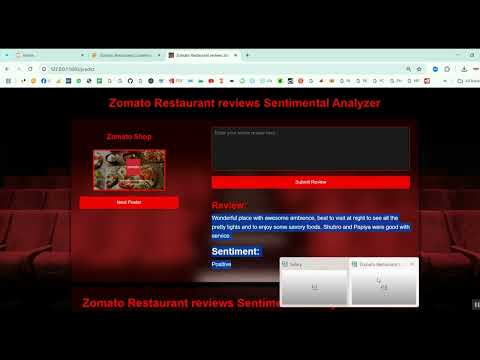
Zomato Restaurant Reviews Sentimental Analyzer in Python Projects
Zomato Restaurant Reviews Sentimental Analyzer in Python Projects
र 1000
⭐ Featured
⭐ Featured
AI & ML Models
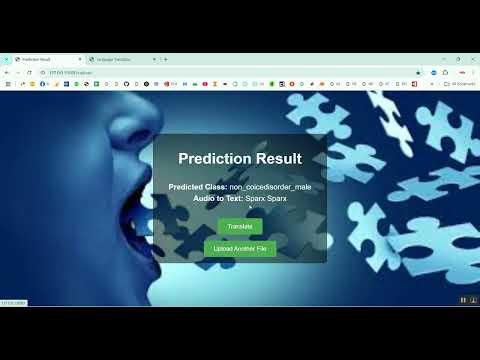
Voice Disorder Prediction using Audio Dataset in Python Projects
Voice Disorder Prediction using Audio Dataset in Python Projects
र 1000
AI & ML Models
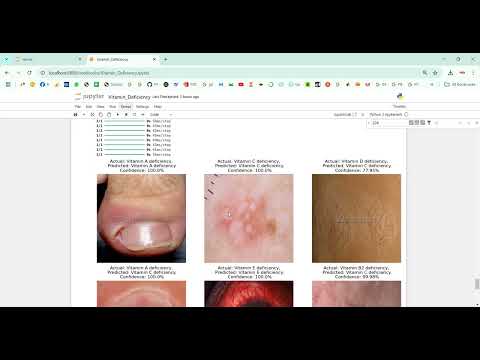
Vitamin Deficiency Detection Using Image Processing in Python Projects
Vitamin Deficiency Detection Using Image Processing in Python Projects
र 1000