AI & ML Models
0.0 (0 reviews) • 0 downloads
Finger Print Match Advanced Security Framework Upload Image in Python Projects
र 1000
Finger Print Match Advanced Security Framework Upload Image in Python Projects
Technical Details
Domain : Python
Database : Sqlite
Tools : Anaconda
Run Tools: VS Code
Database : Sqlite
Tools : Anaconda
Run Tools: VS Code
Secure Payment
Instant Download
GST Invoice
24/7 Support
About This Product
Finger Print Match Advanced Security Framework Upload Image in Python Projects
Abstract
Fingerprint authentication is a critical component of advanced security frameworks in both digital and physical systems. This project focuses on developing a Python-based Fingerprint Match system that allows users to upload images and verify identity using a robust matching framework. The system preprocesses uploaded fingerprint images, extracts unique features, and compares them against a stored database using machine learning and pattern-matching techniques. Implemented using Python libraries such as OpenCV, Scikit-learn, NumPy, and TensorFlow/Keras, the application provides an automated, accurate, and user-friendly solution for identity verification, access control, and secure authentication in various environments.
Existing System
Traditional fingerprint authentication systems often rely on hardware devices like optical or capacitive sensors combined with minutiae-based matching algorithms. While these methods are effective in controlled environments, they can fail with partial fingerprints, noisy inputs, or poor-quality scans. Existing software-only systems frequently depend on basic template matching or fixed-rule comparisons, which may not scale well for large databases or adapt to variations in image quality and finger placement. Many current systems also lack web-based or interactive interfaces for uploading and processing fingerprint images, limiting accessibility and usability for end-users.
Proposed System
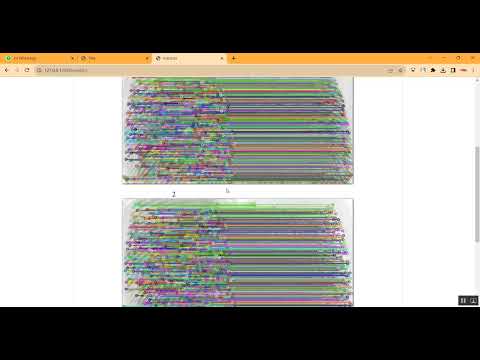
The proposed system introduces a Python-based fingerprint matching framework with image upload functionality, combining image preprocessing, feature extraction, and machine learning classification. Uploaded fingerprint images are preprocessed using grayscale conversion, noise reduction, contrast enhancement, and normalization to highlight ridge patterns. Feature extraction techniques—including minutiae points, Gabor filters, and texture descriptors—capture the unique characteristics of each fingerprint. The extracted features are then compared with the database using classifiers such as Support Vector Machines (SVM), Random Forest, or CNN-based deep learning models to determine matches. The system outputs a verification result, match score, and highlights matching areas for transparency. The framework is implemented with Python libraries including OpenCV for image processing, Scikit-learn and TensorFlow/Keras for model training, and NumPy for numerical operations. By combining advanced feature extraction, machine learning, and a user-friendly image upload interface, this project provides a scalable, accurate, and secure fingerprint authentication solution suitable for high-security applications.
Abstract
Fingerprint authentication is a critical component of advanced security frameworks in both digital and physical systems. This project focuses on developing a Python-based Fingerprint Match system that allows users to upload images and verify identity using a robust matching framework. The system preprocesses uploaded fingerprint images, extracts unique features, and compares them against a stored database using machine learning and pattern-matching techniques. Implemented using Python libraries such as OpenCV, Scikit-learn, NumPy, and TensorFlow/Keras, the application provides an automated, accurate, and user-friendly solution for identity verification, access control, and secure authentication in various environments.
Existing System
Traditional fingerprint authentication systems often rely on hardware devices like optical or capacitive sensors combined with minutiae-based matching algorithms. While these methods are effective in controlled environments, they can fail with partial fingerprints, noisy inputs, or poor-quality scans. Existing software-only systems frequently depend on basic template matching or fixed-rule comparisons, which may not scale well for large databases or adapt to variations in image quality and finger placement. Many current systems also lack web-based or interactive interfaces for uploading and processing fingerprint images, limiting accessibility and usability for end-users.
Proposed System
The proposed system introduces a Python-based fingerprint matching framework with image upload functionality, combining image preprocessing, feature extraction, and machine learning classification. Uploaded fingerprint images are preprocessed using grayscale conversion, noise reduction, contrast enhancement, and normalization to highlight ridge patterns. Feature extraction techniques—including minutiae points, Gabor filters, and texture descriptors—capture the unique characteristics of each fingerprint. The extracted features are then compared with the database using classifiers such as Support Vector Machines (SVM), Random Forest, or CNN-based deep learning models to determine matches. The system outputs a verification result, match score, and highlights matching areas for transparency. The framework is implemented with Python libraries including OpenCV for image processing, Scikit-learn and TensorFlow/Keras for model training, and NumPy for numerical operations. By combining advanced feature extraction, machine learning, and a user-friendly image upload interface, this project provides a scalable, accurate, and secure fingerprint authentication solution suitable for high-security applications.
Customer Reviews (0)
No reviews yet. Be the first!
Related Products
⭐ Featured

AI & ML Models
Zomato Restaurant Reviews Sentimental Analyzer in Python Projects
Zomato Restaurant Reviews Sentimental Analyzer in Python Projects
र 1000
⭐ Featured
⭐ Featured

AI & ML Models
Voice Disorder Prediction using Audio Dataset in Python Projects
Voice Disorder Prediction using Audio Dataset in Python Projects
र 1000
AI & ML Models
Vitamin Deficiency Detection Using Image Processing in Python Projects
Vitamin Deficiency Detection Using Image Processing in Python Projects
र 1000