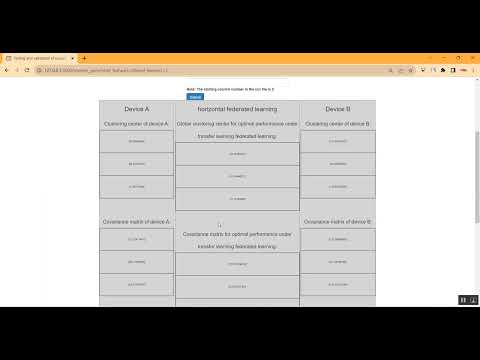
AI & ML Models
0.0 (0 reviews) • 0 downloads
Federated Learning Disease Flask App in Python Projects
र 1000
Federated Learning Disease Flask App in Python Projects
Technical Details
Domain : Python
Database : Sqlite
Tools : Anaconda
Run Tools: VS Code
Database : Sqlite
Tools : Anaconda
Run Tools: VS Code
Secure Payment
Instant Download
GST Invoice
24/7 Support
About This Product
Federated Learning Disease Flask App in Python Projects
Abstract
Healthcare data is often distributed across multiple institutions, making centralized machine learning difficult due to privacy and regulatory constraints. This project focuses on developing a Python-based Flask application for disease detection using Federated Learning (FL), which allows multiple institutions to collaboratively train a global model without sharing raw patient data. The system analyzes medical records, imaging data, or sensor readings to detect diseases such as diabetes, heart disease, or respiratory conditions. By leveraging Federated Learning, the model improves predictive accuracy while maintaining data privacy. Implemented with Python libraries such as TensorFlow Federated, Keras, Pandas, NumPy, and Flask, the application provides a secure, scalable, and interactive interface for real-time disease prediction across distributed datasets.
Existing System
Traditional disease prediction systems rely on centralized machine learning models, requiring data aggregation from multiple hospitals or clinics. This approach raises privacy concerns, is subject to regulatory restrictions, and is often impractical due to the heterogeneity of healthcare data. Existing standalone models trained on local datasets lack generalization and fail to capture diverse patterns across populations. Additionally, many current systems do not provide interactive web interfaces for clinicians or patients, limiting accessibility and real-time deployment in healthcare environments.
Proposed System
The proposed system introduces a Python-based Flask application that implements Federated Learning for disease prediction. Medical datasets are stored locally at participating institutions, where local models are trained on-site. Model updates—rather than raw data—are shared with a central server, which aggregates them to update a global model. This iterative process continues until convergence, ensuring both privacy and model robustness. Input features such as patient demographics, laboratory results, and imaging data are preprocessed using normalization, missing value handling, and feature scaling. The trained model predicts disease risk and outputs probability scores through a Flask web interface, allowing users to upload patient data securely and receive real-time predictions. Python libraries such as TensorFlow Federated, Keras, Pandas, NumPy, and Flask are used for distributed model training, data processing, and application deployment. By combining Federated Learning with a user-friendly web interface, the system provides a privacy-preserving, scalable, and accurate solution for collaborative disease prediction across multiple healthcare institutions.
Abstract
Healthcare data is often distributed across multiple institutions, making centralized machine learning difficult due to privacy and regulatory constraints. This project focuses on developing a Python-based Flask application for disease detection using Federated Learning (FL), which allows multiple institutions to collaboratively train a global model without sharing raw patient data. The system analyzes medical records, imaging data, or sensor readings to detect diseases such as diabetes, heart disease, or respiratory conditions. By leveraging Federated Learning, the model improves predictive accuracy while maintaining data privacy. Implemented with Python libraries such as TensorFlow Federated, Keras, Pandas, NumPy, and Flask, the application provides a secure, scalable, and interactive interface for real-time disease prediction across distributed datasets.
Existing System
Traditional disease prediction systems rely on centralized machine learning models, requiring data aggregation from multiple hospitals or clinics. This approach raises privacy concerns, is subject to regulatory restrictions, and is often impractical due to the heterogeneity of healthcare data. Existing standalone models trained on local datasets lack generalization and fail to capture diverse patterns across populations. Additionally, many current systems do not provide interactive web interfaces for clinicians or patients, limiting accessibility and real-time deployment in healthcare environments.
Proposed System
The proposed system introduces a Python-based Flask application that implements Federated Learning for disease prediction. Medical datasets are stored locally at participating institutions, where local models are trained on-site. Model updates—rather than raw data—are shared with a central server, which aggregates them to update a global model. This iterative process continues until convergence, ensuring both privacy and model robustness. Input features such as patient demographics, laboratory results, and imaging data are preprocessed using normalization, missing value handling, and feature scaling. The trained model predicts disease risk and outputs probability scores through a Flask web interface, allowing users to upload patient data securely and receive real-time predictions. Python libraries such as TensorFlow Federated, Keras, Pandas, NumPy, and Flask are used for distributed model training, data processing, and application deployment. By combining Federated Learning with a user-friendly web interface, the system provides a privacy-preserving, scalable, and accurate solution for collaborative disease prediction across multiple healthcare institutions.
Customer Reviews (0)
No reviews yet. Be the first!
Related Products
⭐ Featured
AI & ML Models
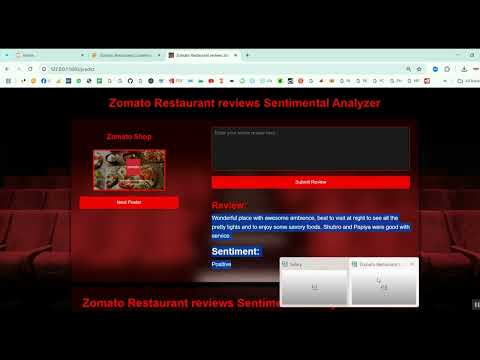
Zomato Restaurant Reviews Sentimental Analyzer in Python Projects
Zomato Restaurant Reviews Sentimental Analyzer in Python Projects
र 1000
⭐ Featured
⭐ Featured
AI & ML Models
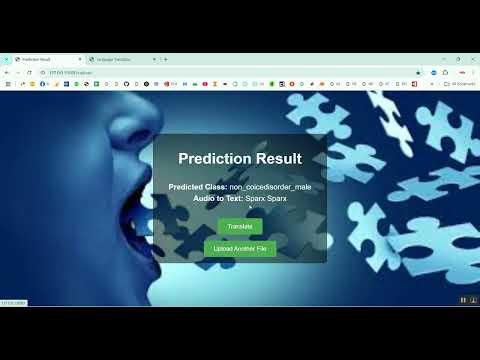
Voice Disorder Prediction using Audio Dataset in Python Projects
Voice Disorder Prediction using Audio Dataset in Python Projects
र 1000
AI & ML Models
Vitamin Deficiency Detection Using Image Processing in Python Projects
Vitamin Deficiency Detection Using Image Processing in Python Projects
र 1000