AI & ML Models
0.0 (0 reviews) • 0 downloads
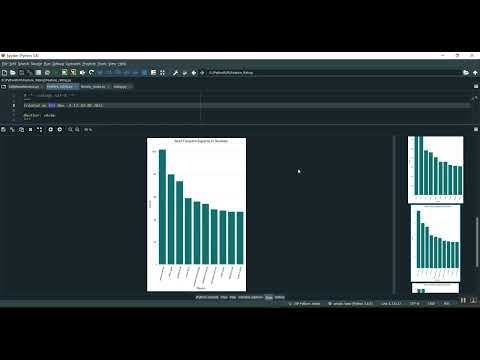
Feature Rating Train in Python Projects
र 1000
Feature Rating Train in Python Projects
Technical Details
Domain : Python
Database : Sqlite
Tools : Anaconda
Run Tools: VS Code
Database : Sqlite
Tools : Anaconda
Run Tools: VS Code
Secure Payment
Instant Download
GST Invoice
24/7 Support
About This Product
Feature Rating Train in Python Projects
Abstract
Feature rating in train systems plays a vital role in evaluating performance, safety, and operational efficiency. This project focuses on developing a Python-based Feature Rating Train system that analyzes various train components and operational parameters to provide a comprehensive rating of train performance. The system collects data such as speed, braking efficiency, engine health, track conditions, and passenger feedback, and uses machine learning techniques to generate performance ratings for different features. By converting raw sensor and operational data into actionable insights, the system assists railway authorities in maintenance planning, performance benchmarking, and operational optimization. Implemented using Python libraries such as Pandas, NumPy, Scikit-learn, and Matplotlib, the project offers an automated, scalable, and user-friendly tool for feature-based evaluation of train systems.
Existing System
Current train performance evaluation systems largely rely on periodic inspections, manual reporting, and fixed maintenance schedules. While these approaches provide basic insights, they often lack granularity, fail to consider real-time data, and are unable to identify subtle performance issues. Manual rating or evaluation is time-consuming, subjective, and prone to errors. Additionally, traditional systems do not integrate multiple data sources—such as sensor readings, operational logs, and passenger feedback—into a single comprehensive rating, limiting the effectiveness of performance assessment and optimization strategies.
Proposed System
The proposed system introduces a Python-based framework for rating train features by combining sensor data analysis, operational parameters, and machine learning techniques. Collected data—including speed, engine health, brake efficiency, vibration, track conditions, and passenger feedback—is preprocessed for normalization, noise reduction, and feature extraction. Supervised learning algorithms such as Random Forest, Support Vector Machines, and Gradient Boosting are trained to generate predictive ratings for individual train features and overall performance. The system outputs feature-specific ratings along with visual dashboards highlighting strengths and areas for improvement. Python libraries such as Pandas, NumPy, Scikit-learn, and Matplotlib are used for data preprocessing, model training, and visualization. By integrating multi-source data and machine learning, this project provides a scalable, accurate, and automated solution for evaluating train performance and facilitating data-driven operational decisions.
Abstract
Feature rating in train systems plays a vital role in evaluating performance, safety, and operational efficiency. This project focuses on developing a Python-based Feature Rating Train system that analyzes various train components and operational parameters to provide a comprehensive rating of train performance. The system collects data such as speed, braking efficiency, engine health, track conditions, and passenger feedback, and uses machine learning techniques to generate performance ratings for different features. By converting raw sensor and operational data into actionable insights, the system assists railway authorities in maintenance planning, performance benchmarking, and operational optimization. Implemented using Python libraries such as Pandas, NumPy, Scikit-learn, and Matplotlib, the project offers an automated, scalable, and user-friendly tool for feature-based evaluation of train systems.
Existing System
Current train performance evaluation systems largely rely on periodic inspections, manual reporting, and fixed maintenance schedules. While these approaches provide basic insights, they often lack granularity, fail to consider real-time data, and are unable to identify subtle performance issues. Manual rating or evaluation is time-consuming, subjective, and prone to errors. Additionally, traditional systems do not integrate multiple data sources—such as sensor readings, operational logs, and passenger feedback—into a single comprehensive rating, limiting the effectiveness of performance assessment and optimization strategies.
Proposed System
The proposed system introduces a Python-based framework for rating train features by combining sensor data analysis, operational parameters, and machine learning techniques. Collected data—including speed, engine health, brake efficiency, vibration, track conditions, and passenger feedback—is preprocessed for normalization, noise reduction, and feature extraction. Supervised learning algorithms such as Random Forest, Support Vector Machines, and Gradient Boosting are trained to generate predictive ratings for individual train features and overall performance. The system outputs feature-specific ratings along with visual dashboards highlighting strengths and areas for improvement. Python libraries such as Pandas, NumPy, Scikit-learn, and Matplotlib are used for data preprocessing, model training, and visualization. By integrating multi-source data and machine learning, this project provides a scalable, accurate, and automated solution for evaluating train performance and facilitating data-driven operational decisions.
Customer Reviews (0)
No reviews yet. Be the first!
Related Products
⭐ Featured
AI & ML Models
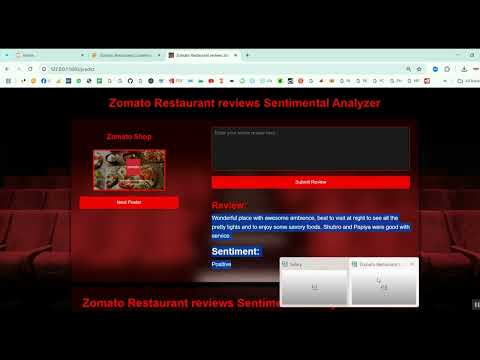
Zomato Restaurant Reviews Sentimental Analyzer in Python Projects
Zomato Restaurant Reviews Sentimental Analyzer in Python Projects
र 1000
⭐ Featured
⭐ Featured
AI & ML Models
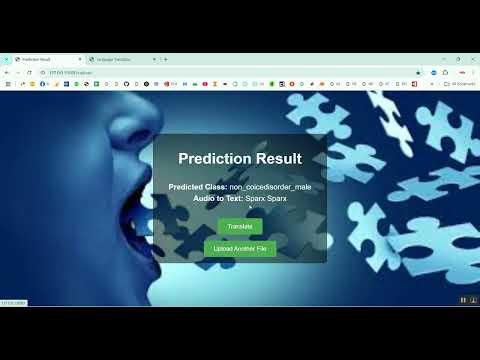
Voice Disorder Prediction using Audio Dataset in Python Projects
Voice Disorder Prediction using Audio Dataset in Python Projects
र 1000

AI & ML Models
Vitamin Deficiency Detection Using Image Processing in Python Projects
Vitamin Deficiency Detection Using Image Processing in Python Projects
र 1000