AI & ML Models
0.0 (0 reviews) • 0 downloads
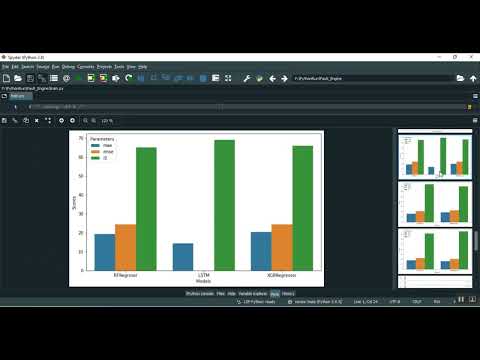
Fault Engine Detection CNN ROC FLASK in Python Projects
र 1000
Fault Engine Detection CNN ROC FLASK in Python Projects
Technical Details
Domain : Python
Database : Sqlite
Tools : Anaconda
Run Tools: VS Code
Database : Sqlite
Tools : Anaconda
Run Tools: VS Code
Secure Payment
Instant Download
GST Invoice
24/7 Support
About This Product
Fault Engine Detection CNN ROC FLASK in Python Projects
Abstract
Engine faults in vehicles can lead to reduced performance, higher maintenance costs, and potential safety hazards. This project focuses on developing a Python-based system for Fault Engine Detection using Convolutional Neural Networks (CNN) and ROC (Receiver Operating Characteristic) analysis, deployed through a Flask web application. By analyzing sensor data, engine sound signals, or vibration patterns, the system identifies potential faults and classifies them into categories such as mechanical, electrical, or fuel system issues. The CNN model extracts relevant features automatically from the input data, while ROC analysis helps evaluate the classifier's performance and optimize threshold settings. Implemented using Python libraries such as TensorFlow/Keras, Scikit-learn, NumPy, and Flask, the application provides an interactive interface for real-time engine fault detection and monitoring.
Existing System
Existing engine fault detection methods typically rely on manual inspection, diagnostic tools, or simple threshold-based alert systems. Manual inspection is time-consuming, error-prone, and may not detect early-stage faults effectively. Traditional diagnostic tools can be expensive and require expert operators, while threshold-based monitoring systems often fail to capture complex patterns in engine data, resulting in inaccurate detection. Additionally, many current systems lack automated reporting, visualization, and web-based interfaces, limiting their accessibility and usability for vehicle owners and maintenance personnel.
Proposed System
The proposed system introduces a Python-based CNN framework for fault engine detection, integrated with ROC evaluation and deployed via a Flask web application. Engine data—such as vibration signals, temperature, and acoustic patterns—is preprocessed through normalization, noise filtering, and feature extraction. The CNN model is trained on labeled datasets to automatically learn discriminative features that distinguish normal engine behavior from fault conditions. ROC analysis is used to evaluate the model's performance, optimize classification thresholds, and assess trade-offs between sensitivity and specificity. The Flask application provides a user-friendly web interface where users can upload engine data, visualize prediction results, and monitor fault probabilities in real time. Python libraries such as TensorFlow/Keras, Scikit-learn, NumPy, Pandas, and Flask are utilized for model development, evaluation, and deployment. By combining deep learning, performance analysis, and interactive web deployment, the system offers an accurate, scalable, and accessible solution for early engine fault detection and maintenance optimization.
Abstract
Engine faults in vehicles can lead to reduced performance, higher maintenance costs, and potential safety hazards. This project focuses on developing a Python-based system for Fault Engine Detection using Convolutional Neural Networks (CNN) and ROC (Receiver Operating Characteristic) analysis, deployed through a Flask web application. By analyzing sensor data, engine sound signals, or vibration patterns, the system identifies potential faults and classifies them into categories such as mechanical, electrical, or fuel system issues. The CNN model extracts relevant features automatically from the input data, while ROC analysis helps evaluate the classifier's performance and optimize threshold settings. Implemented using Python libraries such as TensorFlow/Keras, Scikit-learn, NumPy, and Flask, the application provides an interactive interface for real-time engine fault detection and monitoring.
Existing System
Existing engine fault detection methods typically rely on manual inspection, diagnostic tools, or simple threshold-based alert systems. Manual inspection is time-consuming, error-prone, and may not detect early-stage faults effectively. Traditional diagnostic tools can be expensive and require expert operators, while threshold-based monitoring systems often fail to capture complex patterns in engine data, resulting in inaccurate detection. Additionally, many current systems lack automated reporting, visualization, and web-based interfaces, limiting their accessibility and usability for vehicle owners and maintenance personnel.
Proposed System
The proposed system introduces a Python-based CNN framework for fault engine detection, integrated with ROC evaluation and deployed via a Flask web application. Engine data—such as vibration signals, temperature, and acoustic patterns—is preprocessed through normalization, noise filtering, and feature extraction. The CNN model is trained on labeled datasets to automatically learn discriminative features that distinguish normal engine behavior from fault conditions. ROC analysis is used to evaluate the model's performance, optimize classification thresholds, and assess trade-offs between sensitivity and specificity. The Flask application provides a user-friendly web interface where users can upload engine data, visualize prediction results, and monitor fault probabilities in real time. Python libraries such as TensorFlow/Keras, Scikit-learn, NumPy, Pandas, and Flask are utilized for model development, evaluation, and deployment. By combining deep learning, performance analysis, and interactive web deployment, the system offers an accurate, scalable, and accessible solution for early engine fault detection and maintenance optimization.
Customer Reviews (0)
No reviews yet. Be the first!
Related Products
⭐ Featured
AI & ML Models
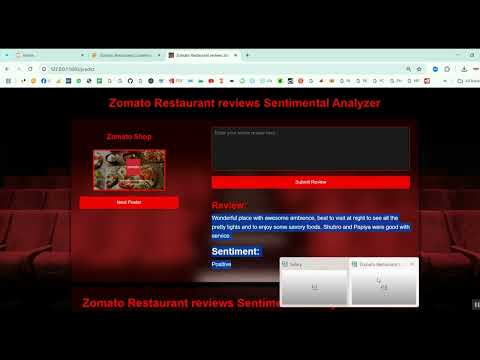
Zomato Restaurant Reviews Sentimental Analyzer in Python Projects
Zomato Restaurant Reviews Sentimental Analyzer in Python Projects
र 1000
⭐ Featured
⭐ Featured
AI & ML Models
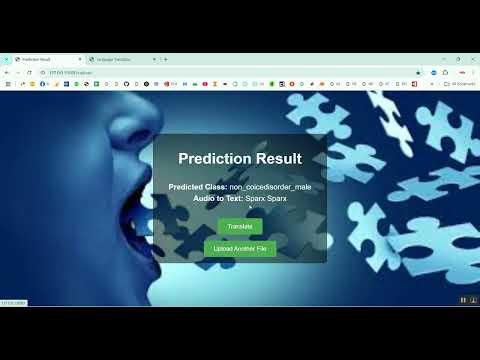
Voice Disorder Prediction using Audio Dataset in Python Projects
Voice Disorder Prediction using Audio Dataset in Python Projects
र 1000
AI & ML Models
Vitamin Deficiency Detection Using Image Processing in Python Projects
Vitamin Deficiency Detection Using Image Processing in Python Projects
र 1000