AI & ML Models
0.0 (0 reviews) • 0 downloads
Farmer Crop Recommendation in Python Projects
र 1000
Farmer Crop Recommendation in Python Projects
Technical Details
Domain : Python
Database : Sqlite
Tools : Anaconda
Run Tools: VS Code
Database : Sqlite
Tools : Anaconda
Run Tools: VS Code
Secure Payment
Instant Download
GST Invoice
24/7 Support
About This Product
Farmer Crop Recommendation in Python Projects
Abstract
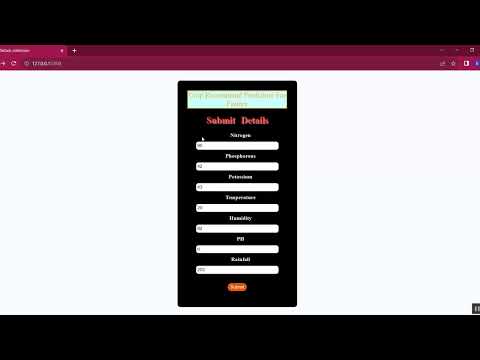
Effective crop selection is crucial for maximizing yield, ensuring soil health, and improving the economic returns of farmers. This project focuses on developing a Python-based Farmer Crop Recommendation system that suggests the most suitable crops based on soil conditions, weather patterns, and other environmental factors. The system collects data on soil nutrients, pH, temperature, rainfall, and humidity, and applies machine learning algorithms to predict optimal crop choices. By integrating data-driven insights with domain knowledge, the system helps farmers make informed decisions, optimize resource usage, and increase productivity. Implemented using Python libraries such as Pandas, NumPy, Scikit-learn, and Matplotlib, the application provides an efficient, scalable, and user-friendly tool for precision agriculture.
Existing System
Traditional crop selection methods often rely on farmers’ experience, local knowledge, or seasonal trends. While experience-based methods can be effective, they are subjective and do not account for dynamic environmental changes such as soil degradation, climate variability, or market demand fluctuations. Some conventional advisory systems provide crop recommendations based on fixed rules or expert consultation, but they are often limited in accuracy, adaptability, and accessibility. Additionally, these systems may fail to consider complex interactions between multiple environmental factors, reducing the reliability of recommendations.
Proposed System
The proposed system employs a Python-based machine learning framework to provide personalized crop recommendations. Environmental and soil data—including nitrogen, phosphorus, potassium levels, pH, temperature, rainfall, and humidity—are collected and preprocessed to handle missing values, outliers, and normalization. Feature extraction and selection techniques identify the most influential factors for crop suitability. Machine learning algorithms such as Random Forest, Decision Tree, or Gradient Boosting are trained on historical agricultural datasets to predict the best crop for given conditions. The system outputs recommendations with confidence scores and provides visualization of key factors affecting crop suitability. Python libraries like Pandas, NumPy, Scikit-learn, and Matplotlib are used for data handling, model training, and result visualization. By combining data analytics with machine learning, the system offers a scalable, accurate, and practical solution to assist farmers in making informed crop selection decisions, improving productivity and sustainability in agriculture.
Abstract
Effective crop selection is crucial for maximizing yield, ensuring soil health, and improving the economic returns of farmers. This project focuses on developing a Python-based Farmer Crop Recommendation system that suggests the most suitable crops based on soil conditions, weather patterns, and other environmental factors. The system collects data on soil nutrients, pH, temperature, rainfall, and humidity, and applies machine learning algorithms to predict optimal crop choices. By integrating data-driven insights with domain knowledge, the system helps farmers make informed decisions, optimize resource usage, and increase productivity. Implemented using Python libraries such as Pandas, NumPy, Scikit-learn, and Matplotlib, the application provides an efficient, scalable, and user-friendly tool for precision agriculture.
Existing System
Traditional crop selection methods often rely on farmers’ experience, local knowledge, or seasonal trends. While experience-based methods can be effective, they are subjective and do not account for dynamic environmental changes such as soil degradation, climate variability, or market demand fluctuations. Some conventional advisory systems provide crop recommendations based on fixed rules or expert consultation, but they are often limited in accuracy, adaptability, and accessibility. Additionally, these systems may fail to consider complex interactions between multiple environmental factors, reducing the reliability of recommendations.
Proposed System
The proposed system employs a Python-based machine learning framework to provide personalized crop recommendations. Environmental and soil data—including nitrogen, phosphorus, potassium levels, pH, temperature, rainfall, and humidity—are collected and preprocessed to handle missing values, outliers, and normalization. Feature extraction and selection techniques identify the most influential factors for crop suitability. Machine learning algorithms such as Random Forest, Decision Tree, or Gradient Boosting are trained on historical agricultural datasets to predict the best crop for given conditions. The system outputs recommendations with confidence scores and provides visualization of key factors affecting crop suitability. Python libraries like Pandas, NumPy, Scikit-learn, and Matplotlib are used for data handling, model training, and result visualization. By combining data analytics with machine learning, the system offers a scalable, accurate, and practical solution to assist farmers in making informed crop selection decisions, improving productivity and sustainability in agriculture.
Customer Reviews (0)
No reviews yet. Be the first!
Related Products
⭐ Featured
AI & ML Models
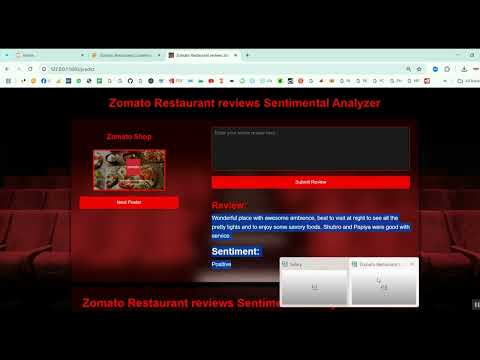
Zomato Restaurant Reviews Sentimental Analyzer in Python Projects
Zomato Restaurant Reviews Sentimental Analyzer in Python Projects
र 1000
⭐ Featured
⭐ Featured
AI & ML Models
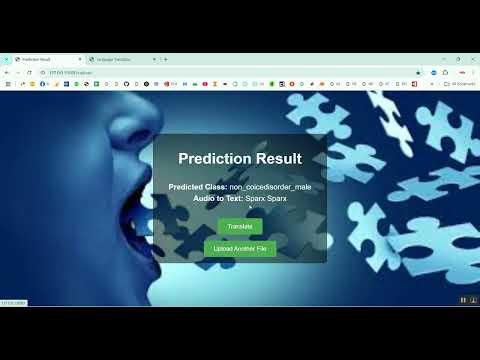
Voice Disorder Prediction using Audio Dataset in Python Projects
Voice Disorder Prediction using Audio Dataset in Python Projects
र 1000
AI & ML Models
Vitamin Deficiency Detection Using Image Processing in Python Projects
Vitamin Deficiency Detection Using Image Processing in Python Projects
र 1000