
AI & ML Models
0.0 (0 reviews) • 0 downloads
Fake Media Prediction with ML Classifier in Python Projects
र 1000
Fake Media Prediction with ML Classifier in Python Projects
Technical Details
Domain : Python
Database : Sqlite
Tools : Anaconda
Run Tools: VS Code
Database : Sqlite
Tools : Anaconda
Run Tools: VS Code
Secure Payment
Instant Download
GST Invoice
24/7 Support
About This Product
Fake Media Prediction with ML Classifier in Python Projects
Abstract
The proliferation of fake media—manipulated images, videos, and audio—poses a significant challenge to digital trust, cybersecurity, and social media platforms. This project presents a Python-based system for Fake Media Prediction using machine learning classifiers to automatically detect and classify media as authentic or fake. By analyzing visual, auditory, and metadata features, the system identifies subtle inconsistencies introduced during manipulation or generation by deep learning models such as GANs. The project leverages feature extraction, preprocessing, and supervised machine learning techniques to build a predictive model capable of accurately flagging fake media. Implemented with Python libraries including OpenCV, Librosa, TensorFlow/Keras, and Scikit-learn, the system offers a scalable, automated, and efficient solution for monitoring media integrity in real time.
Existing System
Traditional fake media detection systems rely heavily on manual inspection, forensic analysis, or metadata verification. While these methods can catch some manipulations, they are often time-consuming and limited in detecting sophisticated attacks such as deepfake videos, AI-generated images, or voice cloning. Many existing systems focus on a single type of media, failing to provide cross-modal detection capabilities. Moreover, conventional approaches often lack robustness to noise, compression, and real-world distortions, making them less effective in practical scenarios. As a result, these systems struggle to keep pace with evolving methods of media forgery and cannot scale efficiently for high-volume content monitoring.
Proposed System
The proposed system implements a Python-based machine learning framework for predicting fake media across images, videos, and audio. Preprocessing steps include resizing and normalization for images, frame extraction and temporal smoothing for videos, and spectrogram generation for audio signals. Feature extraction captures visual artifacts, audio inconsistencies, and metadata anomalies, which are then fed into ML classifiers such as Support Vector Machines (SVM), Random Forests, or CNN-LSTM hybrid models for sequence-based analysis. The system outputs a prediction score indicating the likelihood of the media being fake, enabling automated monitoring and flagging. Optionally, the solution can be deployed using Streamlit or Flask to provide an interactive interface for uploading media and viewing prediction results. By integrating multi-modal feature analysis with machine learning classification, the system provides a robust, accurate, and scalable approach to detect and predict fake media, supporting digital security, media authenticity, and trust.
Abstract
The proliferation of fake media—manipulated images, videos, and audio—poses a significant challenge to digital trust, cybersecurity, and social media platforms. This project presents a Python-based system for Fake Media Prediction using machine learning classifiers to automatically detect and classify media as authentic or fake. By analyzing visual, auditory, and metadata features, the system identifies subtle inconsistencies introduced during manipulation or generation by deep learning models such as GANs. The project leverages feature extraction, preprocessing, and supervised machine learning techniques to build a predictive model capable of accurately flagging fake media. Implemented with Python libraries including OpenCV, Librosa, TensorFlow/Keras, and Scikit-learn, the system offers a scalable, automated, and efficient solution for monitoring media integrity in real time.
Existing System
Traditional fake media detection systems rely heavily on manual inspection, forensic analysis, or metadata verification. While these methods can catch some manipulations, they are often time-consuming and limited in detecting sophisticated attacks such as deepfake videos, AI-generated images, or voice cloning. Many existing systems focus on a single type of media, failing to provide cross-modal detection capabilities. Moreover, conventional approaches often lack robustness to noise, compression, and real-world distortions, making them less effective in practical scenarios. As a result, these systems struggle to keep pace with evolving methods of media forgery and cannot scale efficiently for high-volume content monitoring.
Proposed System
The proposed system implements a Python-based machine learning framework for predicting fake media across images, videos, and audio. Preprocessing steps include resizing and normalization for images, frame extraction and temporal smoothing for videos, and spectrogram generation for audio signals. Feature extraction captures visual artifacts, audio inconsistencies, and metadata anomalies, which are then fed into ML classifiers such as Support Vector Machines (SVM), Random Forests, or CNN-LSTM hybrid models for sequence-based analysis. The system outputs a prediction score indicating the likelihood of the media being fake, enabling automated monitoring and flagging. Optionally, the solution can be deployed using Streamlit or Flask to provide an interactive interface for uploading media and viewing prediction results. By integrating multi-modal feature analysis with machine learning classification, the system provides a robust, accurate, and scalable approach to detect and predict fake media, supporting digital security, media authenticity, and trust.
Customer Reviews (0)
No reviews yet. Be the first!
Related Products
⭐ Featured
AI & ML Models
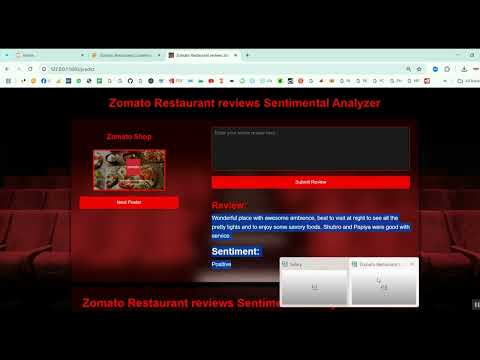
Zomato Restaurant Reviews Sentimental Analyzer in Python Projects
Zomato Restaurant Reviews Sentimental Analyzer in Python Projects
र 1000
⭐ Featured
⭐ Featured
AI & ML Models
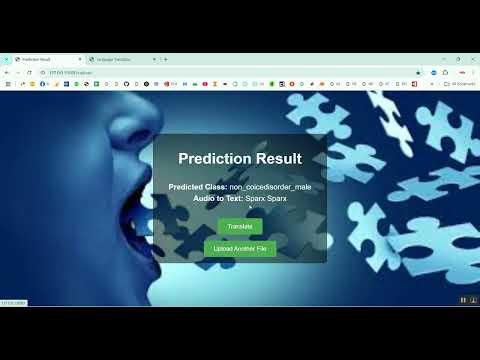
Voice Disorder Prediction using Audio Dataset in Python Projects
Voice Disorder Prediction using Audio Dataset in Python Projects
र 1000
AI & ML Models
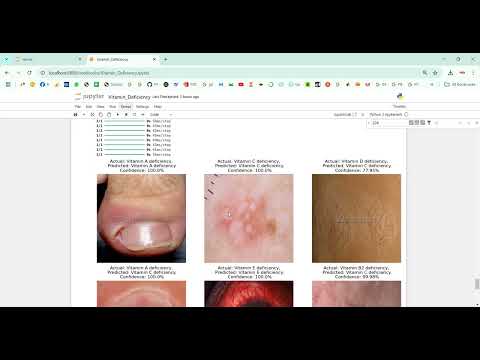
Vitamin Deficiency Detection Using Image Processing in Python Projects
Vitamin Deficiency Detection Using Image Processing in Python Projects
र 1000