AI & ML Models
0.0 (0 reviews) • 0 downloads
Facial Feature Detection and Emotion Classification in Python Projects
र 1000
Facial Feature Detection and Emotion Classification in Python Projects
Technical Details
Domain : Python
Database : Sqlite
Tools : Anaconda
Run Tools: VS Code
Database : Sqlite
Tools : Anaconda
Run Tools: VS Code
Secure Payment
Instant Download
GST Invoice
24/7 Support
About This Product
Facial Feature Detection and Emotion Classification in Python Projects
Abstract
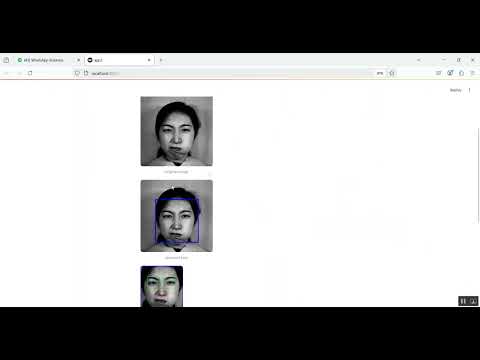
Facial feature detection and emotion classification are key technologies in human-computer interaction, security systems, healthcare, and social robotics. The project Facial Feature Detection and Emotion Classification in Python Projects aims to develop an intelligent system that can detect facial landmarks and classify human emotions in real time. Python is used as the development platform due to its powerful libraries for computer vision, machine learning, and deep learning, including OpenCV, Dlib, NumPy, TensorFlow, and Keras. The system detects key facial features such as eyes, nose, and mouth using landmark detection algorithms and extracts feature vectors that represent facial expressions. Machine learning and deep learning models then classify these expressions into emotions such as happiness, sadness, anger, surprise, fear, and neutrality. This automated approach enhances human-computer interaction, supports emotion-aware applications, and enables real-time feedback systems.
Existing System
Existing facial emotion recognition systems rely either on handcrafted features or traditional machine learning classifiers. Handcrafted methods use geometric or appearance-based features such as distances between facial landmarks, Local Binary Patterns (LBP), or Histogram of Oriented Gradients (HOG), combined with classifiers like SVM or k-NN. While these approaches can achieve moderate accuracy, they are sensitive to variations in lighting, pose, occlusion, and individual facial differences. Some systems also use deep learning models, but they require large annotated datasets and significant computational resources. Many existing applications lack real-time processing capabilities and fail to combine both precise facial feature detection with emotion classification in a robust and scalable manner.
Proposed System
The proposed system introduces a Python-based framework that integrates facial feature detection and emotion classification using both computer vision and deep learning techniques. Facial landmarks are detected using Dlib or MediaPipe to identify key points on the eyes, eyebrows, nose, and mouth. Feature extraction methods capture facial geometry and appearance variations, which are then fed into deep learning models such as CNNs or hybrid CNN-LSTM architectures for emotion classification. Data augmentation techniques such as rotation, scaling, and horizontal flipping are applied to improve model generalization across diverse subjects and lighting conditions. The system can classify multiple emotions in real time with high accuracy and provides visual feedback by overlaying detected landmarks and predicted emotions on the face. Applications include emotion-aware gaming, human-computer interaction, online learning assessment, and mental health monitoring. This approach improves detection robustness, reduces computational overhead, and supports real-time emotion analysis for practical deployment.
Abstract
Facial feature detection and emotion classification are key technologies in human-computer interaction, security systems, healthcare, and social robotics. The project Facial Feature Detection and Emotion Classification in Python Projects aims to develop an intelligent system that can detect facial landmarks and classify human emotions in real time. Python is used as the development platform due to its powerful libraries for computer vision, machine learning, and deep learning, including OpenCV, Dlib, NumPy, TensorFlow, and Keras. The system detects key facial features such as eyes, nose, and mouth using landmark detection algorithms and extracts feature vectors that represent facial expressions. Machine learning and deep learning models then classify these expressions into emotions such as happiness, sadness, anger, surprise, fear, and neutrality. This automated approach enhances human-computer interaction, supports emotion-aware applications, and enables real-time feedback systems.
Existing System
Existing facial emotion recognition systems rely either on handcrafted features or traditional machine learning classifiers. Handcrafted methods use geometric or appearance-based features such as distances between facial landmarks, Local Binary Patterns (LBP), or Histogram of Oriented Gradients (HOG), combined with classifiers like SVM or k-NN. While these approaches can achieve moderate accuracy, they are sensitive to variations in lighting, pose, occlusion, and individual facial differences. Some systems also use deep learning models, but they require large annotated datasets and significant computational resources. Many existing applications lack real-time processing capabilities and fail to combine both precise facial feature detection with emotion classification in a robust and scalable manner.
Proposed System
The proposed system introduces a Python-based framework that integrates facial feature detection and emotion classification using both computer vision and deep learning techniques. Facial landmarks are detected using Dlib or MediaPipe to identify key points on the eyes, eyebrows, nose, and mouth. Feature extraction methods capture facial geometry and appearance variations, which are then fed into deep learning models such as CNNs or hybrid CNN-LSTM architectures for emotion classification. Data augmentation techniques such as rotation, scaling, and horizontal flipping are applied to improve model generalization across diverse subjects and lighting conditions. The system can classify multiple emotions in real time with high accuracy and provides visual feedback by overlaying detected landmarks and predicted emotions on the face. Applications include emotion-aware gaming, human-computer interaction, online learning assessment, and mental health monitoring. This approach improves detection robustness, reduces computational overhead, and supports real-time emotion analysis for practical deployment.
Customer Reviews (0)
No reviews yet. Be the first!
Related Products
⭐ Featured

AI & ML Models
Zomato Restaurant Reviews Sentimental Analyzer in Python Projects
Zomato Restaurant Reviews Sentimental Analyzer in Python Projects
र 1000
⭐ Featured
⭐ Featured

AI & ML Models
Voice Disorder Prediction using Audio Dataset in Python Projects
Voice Disorder Prediction using Audio Dataset in Python Projects
र 1000

AI & ML Models
Vitamin Deficiency Detection Using Image Processing in Python Projects
Vitamin Deficiency Detection Using Image Processing in Python Projects
र 1000