AI & ML Models
0.0 (0 reviews) • 0 downloads
Face Disease CNN Train Streamlit App in Python Projects
र 1000
Face Disease CNN Train Streamlit App in Python Projects
Technical Details
Domain : Python
Database : Sqlite
Tools : Anaconda
Run Tools: VS Code
Database : Sqlite
Tools : Anaconda
Run Tools: VS Code
Secure Payment
Instant Download
GST Invoice
24/7 Support
About This Product
Face Disease CNN Train Streamlit App in Python Projects
Abstract
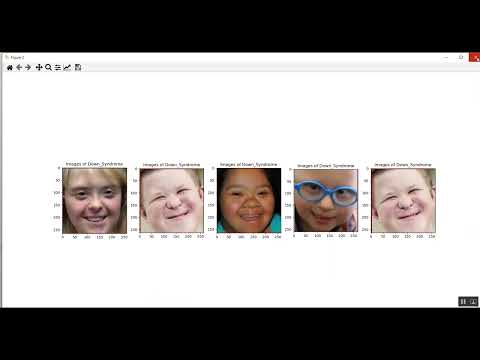
Early detection of facial skin diseases is crucial for effective treatment and patient care. Manual diagnosis often requires dermatological expertise and can be time-consuming or prone to errors, especially in regions with limited access to healthcare professionals. This project focuses on developing a Python-based Face Disease Detection system using Convolutional Neural Networks (CNN) integrated with a Streamlit web application. The CNN model is trained on a dataset of facial images representing various skin conditions such as acne, eczema, and dermatitis. By automatically extracting features from facial images, the system can classify skin diseases with high accuracy. The integration with Streamlit provides an interactive platform where users can upload images, train models, and receive real-time predictions. This approach demonstrates the potential of AI-powered tools to improve accessibility, accuracy, and efficiency in facial disease diagnosis.
Existing System
Traditional facial disease detection relies heavily on manual inspection by dermatologists, which is labor-intensive, subjective, and often delayed due to high patient volumes. Some existing computer-aided diagnosis systems use handcrafted feature extraction combined with basic machine learning classifiers, but these approaches often fail to capture the complex patterns and subtle variations in skin textures. Additionally, many existing systems lack real-time deployment capabilities, making them unsuitable for user-friendly applications. As a result, current solutions are limited in scalability, accuracy, and accessibility, especially for remote or resource-constrained settings.
Proposed System
The proposed system employs a CNN-based deep learning model for facial disease detection, implemented in Python and deployed via Streamlit for user interaction. The system processes facial images by performing preprocessing steps such as normalization, resizing, and augmentation to improve model robustness. The CNN model automatically extracts spatial and texture features to classify different skin conditions accurately. Streamlit provides an intuitive web interface that allows users to upload images, visualize training progress, and receive predictions in real time. The system leverages Python libraries including TensorFlow/Keras for deep learning, OpenCV for image processing, and Streamlit for the front-end application. By combining deep learning with a user-friendly platform, the project offers a scalable, accurate, and interactive solution for early detection of facial diseases, assisting both medical professionals and individuals in timely healthcare decisions.
Abstract
Early detection of facial skin diseases is crucial for effective treatment and patient care. Manual diagnosis often requires dermatological expertise and can be time-consuming or prone to errors, especially in regions with limited access to healthcare professionals. This project focuses on developing a Python-based Face Disease Detection system using Convolutional Neural Networks (CNN) integrated with a Streamlit web application. The CNN model is trained on a dataset of facial images representing various skin conditions such as acne, eczema, and dermatitis. By automatically extracting features from facial images, the system can classify skin diseases with high accuracy. The integration with Streamlit provides an interactive platform where users can upload images, train models, and receive real-time predictions. This approach demonstrates the potential of AI-powered tools to improve accessibility, accuracy, and efficiency in facial disease diagnosis.
Existing System
Traditional facial disease detection relies heavily on manual inspection by dermatologists, which is labor-intensive, subjective, and often delayed due to high patient volumes. Some existing computer-aided diagnosis systems use handcrafted feature extraction combined with basic machine learning classifiers, but these approaches often fail to capture the complex patterns and subtle variations in skin textures. Additionally, many existing systems lack real-time deployment capabilities, making them unsuitable for user-friendly applications. As a result, current solutions are limited in scalability, accuracy, and accessibility, especially for remote or resource-constrained settings.
Proposed System
The proposed system employs a CNN-based deep learning model for facial disease detection, implemented in Python and deployed via Streamlit for user interaction. The system processes facial images by performing preprocessing steps such as normalization, resizing, and augmentation to improve model robustness. The CNN model automatically extracts spatial and texture features to classify different skin conditions accurately. Streamlit provides an intuitive web interface that allows users to upload images, visualize training progress, and receive predictions in real time. The system leverages Python libraries including TensorFlow/Keras for deep learning, OpenCV for image processing, and Streamlit for the front-end application. By combining deep learning with a user-friendly platform, the project offers a scalable, accurate, and interactive solution for early detection of facial diseases, assisting both medical professionals and individuals in timely healthcare decisions.
Customer Reviews (0)
No reviews yet. Be the first!
Related Products
⭐ Featured

AI & ML Models
Zomato Restaurant Reviews Sentimental Analyzer in Python Projects
Zomato Restaurant Reviews Sentimental Analyzer in Python Projects
र 1000
⭐ Featured
⭐ Featured

AI & ML Models
Voice Disorder Prediction using Audio Dataset in Python Projects
Voice Disorder Prediction using Audio Dataset in Python Projects
र 1000
AI & ML Models
Vitamin Deficiency Detection Using Image Processing in Python Projects
Vitamin Deficiency Detection Using Image Processing in Python Projects
र 1000