AI & ML Models
0.0 (0 reviews) • 0 downloads
EV Charging Analysis ML LSTM in Python Projects
र 1000
EV Charging Analysis ML LSTM in Python Projects
Technical Details
Domain : Python
Database : Sqlite
Tools : Anaconda
Run Tools: VS Code
Database : Sqlite
Tools : Anaconda
Run Tools: VS Code
Secure Payment
Instant Download
GST Invoice
24/7 Support
About This Product
EV Charging Analysis ML LSTM in Python Projects
Abstract
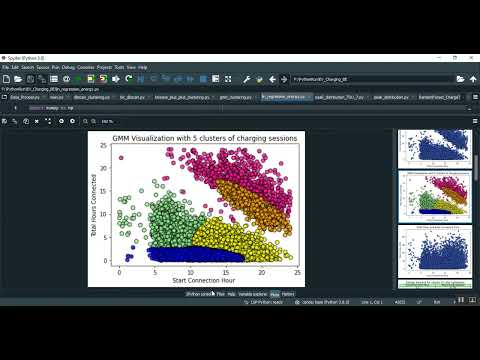
The rapid adoption of electric vehicles (EVs) has led to a growing demand for efficient charging infrastructure and intelligent energy management. Understanding and predicting EV charging patterns are crucial for optimizing grid load, reducing energy costs, and ensuring reliable service availability. This project focuses on developing an EV charging analysis system using machine learning with Long Short-Term Memory (LSTM) networks in Python. By analyzing historical charging data, including factors such as charging time, duration, power consumption, and user behavior, the system leverages LSTM’s strength in handling sequential time-series data to forecast future charging demand. The proposed approach not only improves accuracy compared to traditional models but also assists energy providers and charging station operators in planning, load balancing, and demand-side management. The integration of ML and LSTM makes the system highly adaptable to dynamic EV usage trends and scalable for real-world deployment.
Existing System
Existing EV charging analysis methods often rely on conventional statistical models or basic regression techniques that assume linear relationships between variables. While these approaches provide a general understanding of charging patterns, they struggle to capture the nonlinear and temporal dependencies present in real-world EV data. Moreover, current systems lack the ability to dynamically adapt to changing user behaviors, seasonal variations, and grid fluctuations. Some existing platforms also focus solely on aggregate demand without providing detailed predictions at a granular level. This limitation often results in inaccurate forecasts, inefficient energy allocation, and challenges in managing peak demand periods. As a result, existing systems fall short in delivering the precision and flexibility required for modern EV charging infrastructure.
Proposed System
The proposed system introduces an advanced EV charging analysis model using LSTM-based deep learning techniques implemented in Python. LSTM networks are designed to capture long-term dependencies and patterns in sequential data, making them highly effective for time-series forecasting of EV charging behavior. The system processes historical charging datasets through preprocessing steps such as normalization, missing value handling, and sequence formatting before feeding them into the LSTM model. The trained model predicts future charging demands, peak load periods, and consumption trends with improved accuracy. Implemented with Python libraries like TensorFlow, Keras, Pandas, and NumPy, the system is both efficient and scalable. Additionally, the model can be integrated with visualization tools to present insights for decision-making. By accurately forecasting charging demand, the proposed system helps optimize energy distribution, reduce operational costs, and improve the reliability of EV charging infrastructure.
Abstract
The rapid adoption of electric vehicles (EVs) has led to a growing demand for efficient charging infrastructure and intelligent energy management. Understanding and predicting EV charging patterns are crucial for optimizing grid load, reducing energy costs, and ensuring reliable service availability. This project focuses on developing an EV charging analysis system using machine learning with Long Short-Term Memory (LSTM) networks in Python. By analyzing historical charging data, including factors such as charging time, duration, power consumption, and user behavior, the system leverages LSTM’s strength in handling sequential time-series data to forecast future charging demand. The proposed approach not only improves accuracy compared to traditional models but also assists energy providers and charging station operators in planning, load balancing, and demand-side management. The integration of ML and LSTM makes the system highly adaptable to dynamic EV usage trends and scalable for real-world deployment.
Existing System
Existing EV charging analysis methods often rely on conventional statistical models or basic regression techniques that assume linear relationships between variables. While these approaches provide a general understanding of charging patterns, they struggle to capture the nonlinear and temporal dependencies present in real-world EV data. Moreover, current systems lack the ability to dynamically adapt to changing user behaviors, seasonal variations, and grid fluctuations. Some existing platforms also focus solely on aggregate demand without providing detailed predictions at a granular level. This limitation often results in inaccurate forecasts, inefficient energy allocation, and challenges in managing peak demand periods. As a result, existing systems fall short in delivering the precision and flexibility required for modern EV charging infrastructure.
Proposed System
The proposed system introduces an advanced EV charging analysis model using LSTM-based deep learning techniques implemented in Python. LSTM networks are designed to capture long-term dependencies and patterns in sequential data, making them highly effective for time-series forecasting of EV charging behavior. The system processes historical charging datasets through preprocessing steps such as normalization, missing value handling, and sequence formatting before feeding them into the LSTM model. The trained model predicts future charging demands, peak load periods, and consumption trends with improved accuracy. Implemented with Python libraries like TensorFlow, Keras, Pandas, and NumPy, the system is both efficient and scalable. Additionally, the model can be integrated with visualization tools to present insights for decision-making. By accurately forecasting charging demand, the proposed system helps optimize energy distribution, reduce operational costs, and improve the reliability of EV charging infrastructure.
Customer Reviews (0)
No reviews yet. Be the first!
Related Products
⭐ Featured

AI & ML Models
Zomato Restaurant Reviews Sentimental Analyzer in Python Projects
Zomato Restaurant Reviews Sentimental Analyzer in Python Projects
र 1000
⭐ Featured
⭐ Featured

AI & ML Models
Voice Disorder Prediction using Audio Dataset in Python Projects
Voice Disorder Prediction using Audio Dataset in Python Projects
र 1000

AI & ML Models
Vitamin Deficiency Detection Using Image Processing in Python Projects
Vitamin Deficiency Detection Using Image Processing in Python Projects
र 1000