AI & ML Models
0.0 (0 reviews) • 0 downloads
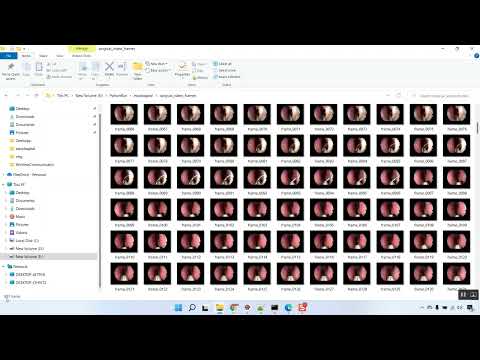
Esophageal Fusion Image Classification CNN Flask App in Python Projects
र 1000
Esophageal Fusion Image Classification CNN Flask App in Python Projects
Technical Details
Domain : Python
Database : Sqlite
Tools : Anaconda
Run Tools: VS Code
Database : Sqlite
Tools : Anaconda
Run Tools: VS Code
Secure Payment
Instant Download
GST Invoice
24/7 Support
About This Product
Esophageal Fusion Image Classification CNN Flask App in Python Projects
Abstract
Medical image classification plays a vital role in supporting clinical diagnosis and treatment planning. Esophageal disorders, including cancer and structural abnormalities, can be detected and analyzed using advanced imaging techniques. This project focuses on the development of an esophageal fusion image classification system using Convolutional Neural Networks (CNN) integrated with a Flask web application in Python. The CNN model is trained on fusion images that combine different imaging modalities to enhance structural and functional features. By leveraging deep learning, the system is able to automatically learn spatial and texture-based patterns to classify esophageal images with high accuracy. The integration of the trained model into a Flask-based application provides an interactive platform where users can upload images and receive instant classification results. This project demonstrates how AI-powered image analysis can assist healthcare professionals by providing accurate, efficient, and accessible diagnostic support.
Existing System
Traditional approaches to medical image classification rely on manual inspection by radiologists or pathologists, which is time-consuming, subjective, and prone to human error. Some computer-aided diagnosis systems use handcrafted feature extraction methods combined with basic machine learning classifiers. While these methods provide partial assistance, they often fail to capture the complex and high-dimensional features present in fusion images. Furthermore, existing systems may lack user-friendly deployment platforms, making them inaccessible to healthcare practitioners in real-time clinical settings. As a result, current systems are limited in scalability, accuracy, and usability for automated esophageal image classification.
Proposed System
The proposed system employs a CNN-based deep learning architecture for classifying esophageal fusion images. CNNs are highly effective in medical imaging tasks due to their ability to automatically extract spatial and hierarchical features from raw image data. The model is trained on a dataset of esophageal fusion images, where preprocessing steps such as normalization, resizing, and augmentation are applied to improve robustness. Once trained, the CNN model is integrated into a Flask web application, allowing users to interact with the system through a simple browser interface. Users can upload esophageal images, and the model processes the input to provide real-time classification results, indicating the presence or type of abnormality. Implemented in Python using TensorFlow/Keras for deep learning and Flask for deployment, the system offers an efficient, accurate, and scalable solution. By bridging advanced deep learning techniques with a user-friendly web interface, the project enhances accessibility and supports healthcare professionals in diagnostic decision-making.
Abstract
Medical image classification plays a vital role in supporting clinical diagnosis and treatment planning. Esophageal disorders, including cancer and structural abnormalities, can be detected and analyzed using advanced imaging techniques. This project focuses on the development of an esophageal fusion image classification system using Convolutional Neural Networks (CNN) integrated with a Flask web application in Python. The CNN model is trained on fusion images that combine different imaging modalities to enhance structural and functional features. By leveraging deep learning, the system is able to automatically learn spatial and texture-based patterns to classify esophageal images with high accuracy. The integration of the trained model into a Flask-based application provides an interactive platform where users can upload images and receive instant classification results. This project demonstrates how AI-powered image analysis can assist healthcare professionals by providing accurate, efficient, and accessible diagnostic support.
Existing System
Traditional approaches to medical image classification rely on manual inspection by radiologists or pathologists, which is time-consuming, subjective, and prone to human error. Some computer-aided diagnosis systems use handcrafted feature extraction methods combined with basic machine learning classifiers. While these methods provide partial assistance, they often fail to capture the complex and high-dimensional features present in fusion images. Furthermore, existing systems may lack user-friendly deployment platforms, making them inaccessible to healthcare practitioners in real-time clinical settings. As a result, current systems are limited in scalability, accuracy, and usability for automated esophageal image classification.
Proposed System
The proposed system employs a CNN-based deep learning architecture for classifying esophageal fusion images. CNNs are highly effective in medical imaging tasks due to their ability to automatically extract spatial and hierarchical features from raw image data. The model is trained on a dataset of esophageal fusion images, where preprocessing steps such as normalization, resizing, and augmentation are applied to improve robustness. Once trained, the CNN model is integrated into a Flask web application, allowing users to interact with the system through a simple browser interface. Users can upload esophageal images, and the model processes the input to provide real-time classification results, indicating the presence or type of abnormality. Implemented in Python using TensorFlow/Keras for deep learning and Flask for deployment, the system offers an efficient, accurate, and scalable solution. By bridging advanced deep learning techniques with a user-friendly web interface, the project enhances accessibility and supports healthcare professionals in diagnostic decision-making.
Customer Reviews (0)
No reviews yet. Be the first!
Related Products
⭐ Featured
AI & ML Models
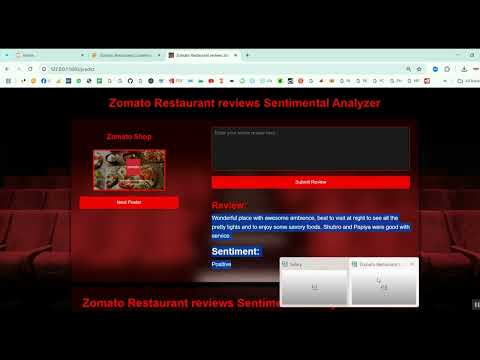
Zomato Restaurant Reviews Sentimental Analyzer in Python Projects
Zomato Restaurant Reviews Sentimental Analyzer in Python Projects
र 1000
⭐ Featured
⭐ Featured
AI & ML Models
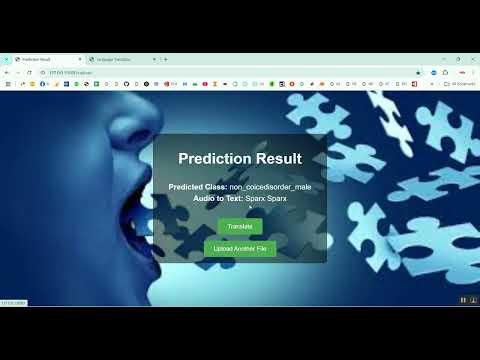
Voice Disorder Prediction using Audio Dataset in Python Projects
Voice Disorder Prediction using Audio Dataset in Python Projects
र 1000
AI & ML Models
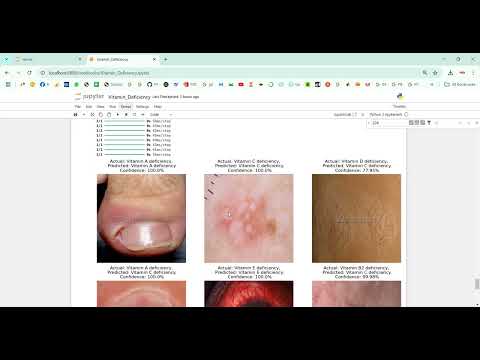
Vitamin Deficiency Detection Using Image Processing in Python Projects
Vitamin Deficiency Detection Using Image Processing in Python Projects
र 1000