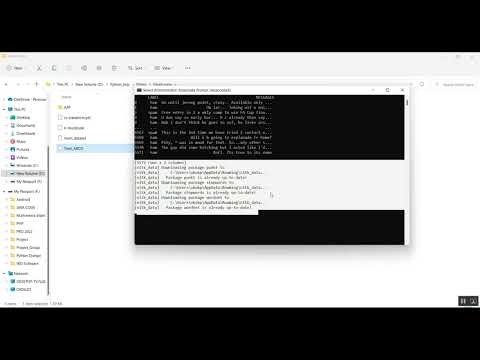
AI & ML Models
0.0 (0 reviews) • 0 downloads
Email Spoofing Detection App Classification in Python Projects
र 1000
Email Spoofing Detection App Classification in Python Projects
Technical Details
Domain : Python
Database : Sqlite
Tools : Anaconda
Run Tools: VS Code
Database : Sqlite
Tools : Anaconda
Run Tools: VS Code
Secure Payment
Instant Download
GST Invoice
24/7 Support
About This Product
Email Spoofing Detection App Classification in Python Projects
Abstract
Email spoofing is a serious cybersecurity threat where attackers forge the sender’s identity to trick recipients into believing that the email originates from a trusted source. Such attacks are widely used in phishing campaigns, financial fraud, and social engineering exploits. Traditional spam filters often fail to detect spoofed emails because they appear legitimate in structure and content. This project proposes an Email Spoofing Detection App built using Python, where classification models are applied to identify and block spoofed emails. By analyzing metadata such as sender domain, header information, and email content features, the system employs machine learning techniques to classify whether an email is genuine or spoofed. The Python-based application integrates preprocessing, feature extraction, and classification models to deliver an efficient, scalable, and user-friendly solution that enhances email security for both individuals and organizations.
Existing System
Current spoofing detection systems rely heavily on basic authentication mechanisms such as SPF (Sender Policy Framework), DKIM (DomainKeys Identified Mail), and DMARC (Domain-based Message Authentication, Reporting, and Conformance). While these techniques help verify sender identities, they are not always sufficient, as attackers exploit misconfigured or non-compliant email servers to bypass detection. Additionally, many existing spam or phishing detection tools focus only on content-based filtering and fail to analyze deeper patterns in headers or metadata. As a result, traditional systems suffer from low adaptability, high false negatives, and limited protection against advanced spoofing techniques, leaving end-users vulnerable to fraudulent emails.
Proposed System
The proposed system introduces a Python-based email spoofing detection application that uses classification algorithms to identify forged emails. The solution extracts critical features from email headers, such as “From” address mismatches, domain reputation, and authentication record inconsistencies, along with textual and structural content analysis. Preprocessing techniques convert email data into structured formats suitable for training machine learning models. Algorithms such as Logistic Regression, Naïve Bayes, Random Forest, and Support Vector Machines (SVM) are applied to classify emails as spoofed or legitimate. The system also incorporates visualization modules to display detection results and allow users to monitor suspicious emails in real time. Implemented with Python libraries like Scikit-learn, Pandas, and Flask for the application interface, the proposed system provides a reliable and scalable defense mechanism. By integrating machine learning with email authentication features, this app offers enhanced protection against email spoofing attacks and strengthens user trust in digital communication.
Abstract
Email spoofing is a serious cybersecurity threat where attackers forge the sender’s identity to trick recipients into believing that the email originates from a trusted source. Such attacks are widely used in phishing campaigns, financial fraud, and social engineering exploits. Traditional spam filters often fail to detect spoofed emails because they appear legitimate in structure and content. This project proposes an Email Spoofing Detection App built using Python, where classification models are applied to identify and block spoofed emails. By analyzing metadata such as sender domain, header information, and email content features, the system employs machine learning techniques to classify whether an email is genuine or spoofed. The Python-based application integrates preprocessing, feature extraction, and classification models to deliver an efficient, scalable, and user-friendly solution that enhances email security for both individuals and organizations.
Existing System
Current spoofing detection systems rely heavily on basic authentication mechanisms such as SPF (Sender Policy Framework), DKIM (DomainKeys Identified Mail), and DMARC (Domain-based Message Authentication, Reporting, and Conformance). While these techniques help verify sender identities, they are not always sufficient, as attackers exploit misconfigured or non-compliant email servers to bypass detection. Additionally, many existing spam or phishing detection tools focus only on content-based filtering and fail to analyze deeper patterns in headers or metadata. As a result, traditional systems suffer from low adaptability, high false negatives, and limited protection against advanced spoofing techniques, leaving end-users vulnerable to fraudulent emails.
Proposed System
The proposed system introduces a Python-based email spoofing detection application that uses classification algorithms to identify forged emails. The solution extracts critical features from email headers, such as “From” address mismatches, domain reputation, and authentication record inconsistencies, along with textual and structural content analysis. Preprocessing techniques convert email data into structured formats suitable for training machine learning models. Algorithms such as Logistic Regression, Naïve Bayes, Random Forest, and Support Vector Machines (SVM) are applied to classify emails as spoofed or legitimate. The system also incorporates visualization modules to display detection results and allow users to monitor suspicious emails in real time. Implemented with Python libraries like Scikit-learn, Pandas, and Flask for the application interface, the proposed system provides a reliable and scalable defense mechanism. By integrating machine learning with email authentication features, this app offers enhanced protection against email spoofing attacks and strengthens user trust in digital communication.
Customer Reviews (0)
No reviews yet. Be the first!
Related Products
⭐ Featured
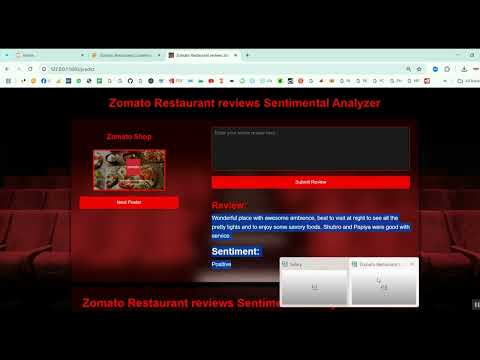
AI & ML Models
Zomato Restaurant Reviews Sentimental Analyzer in Python Projects
Zomato Restaurant Reviews Sentimental Analyzer in Python Projects
र 1000
⭐ Featured
⭐ Featured

AI & ML Models
Voice Disorder Prediction using Audio Dataset in Python Projects
Voice Disorder Prediction using Audio Dataset in Python Projects
र 1000
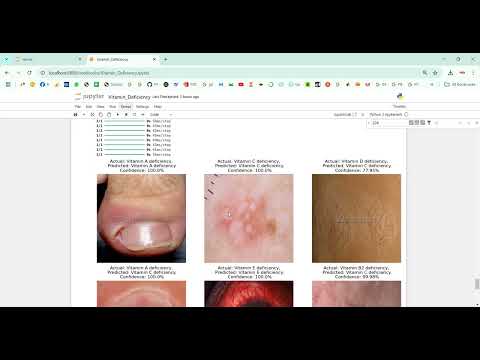
AI & ML Models
Vitamin Deficiency Detection Using Image Processing in Python Projects
Vitamin Deficiency Detection Using Image Processing in Python Projects
र 1000