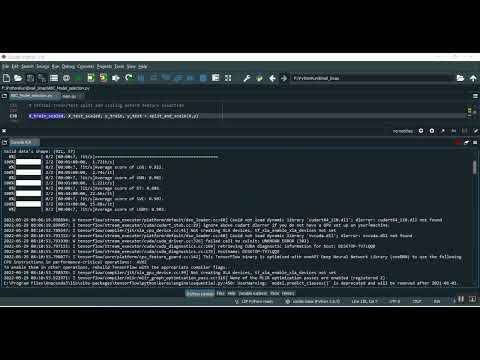
AI & ML Models
0.0 (0 reviews) • 0 downloads
Email Spam Detection Using ML in Python Projects
र 1000
Email Spam Detection Using ML in Python Projects
Technical Details
Domain : Python
Database : Sqlite
Tools : Anaconda
Run Tools: VS Code
Database : Sqlite
Tools : Anaconda
Run Tools: VS Code
Secure Payment
Instant Download
GST Invoice
24/7 Support
About This Product
Email Spam Detection Using ML in Python Projects
Abstract
Email spam detection has become an essential security task in today’s digital communication, as the rapid increase of unwanted emails containing advertisements, phishing links, or malware threatens both individuals and organizations. Manual filtering or rule-based techniques are no longer sufficient to handle the scale and complexity of spam, as spammers continuously modify their tactics to bypass detection. This project focuses on developing an intelligent spam detection system using machine learning (ML) techniques in Python. By training ML models on large datasets of labeled emails, the system learns to distinguish between spam and legitimate (ham) messages based on textual content, subject headers, and metadata. The use of ML enables automatic adaptation to new spam patterns, reduces human intervention, and improves accuracy. This solution demonstrates how machine learning provides a more dynamic and scalable approach to email security compared to conventional methods.
Existing System
Traditional spam detection systems are primarily rule-based, relying on predefined keywords, sender blacklists, or regular expression filters to flag suspicious messages. While effective in blocking simple spam, these systems often fail against sophisticated attacks, such as phishing emails disguised as legitimate communications or spam containing obfuscated text and multimedia. Moreover, such systems require continuous manual updates and struggle with high false positive rates, where important legitimate emails are incorrectly classified as spam. As a result, existing systems do not fully address the adaptability required to combat modern spam strategies, leaving users vulnerable to both security threats and communication inefficiencies.
Proposed System
The proposed system leverages machine learning algorithms implemented in Python to automatically classify emails into spam or ham categories. Preprocessing steps such as tokenization, stopword removal, stemming, and TF-IDF vectorization are applied to transform unstructured email text into meaningful numerical features. These features are then used to train ML algorithms such as Naïve Bayes, Logistic Regression, Random Forest, Support Vector Machines (SVM), or deep learning models like LSTM for sequence classification. The system learns patterns from large email datasets and continuously improves through retraining, ensuring adaptability to emerging spam trends. With Python libraries such as Scikit-learn, Pandas, and NLTK, the solution is efficient, scalable, and easy to deploy. By reducing false positives and achieving high accuracy, the proposed system provides a reliable and automated approach for modern email spam detection.
Abstract
Email spam detection has become an essential security task in today’s digital communication, as the rapid increase of unwanted emails containing advertisements, phishing links, or malware threatens both individuals and organizations. Manual filtering or rule-based techniques are no longer sufficient to handle the scale and complexity of spam, as spammers continuously modify their tactics to bypass detection. This project focuses on developing an intelligent spam detection system using machine learning (ML) techniques in Python. By training ML models on large datasets of labeled emails, the system learns to distinguish between spam and legitimate (ham) messages based on textual content, subject headers, and metadata. The use of ML enables automatic adaptation to new spam patterns, reduces human intervention, and improves accuracy. This solution demonstrates how machine learning provides a more dynamic and scalable approach to email security compared to conventional methods.
Existing System
Traditional spam detection systems are primarily rule-based, relying on predefined keywords, sender blacklists, or regular expression filters to flag suspicious messages. While effective in blocking simple spam, these systems often fail against sophisticated attacks, such as phishing emails disguised as legitimate communications or spam containing obfuscated text and multimedia. Moreover, such systems require continuous manual updates and struggle with high false positive rates, where important legitimate emails are incorrectly classified as spam. As a result, existing systems do not fully address the adaptability required to combat modern spam strategies, leaving users vulnerable to both security threats and communication inefficiencies.
Proposed System
The proposed system leverages machine learning algorithms implemented in Python to automatically classify emails into spam or ham categories. Preprocessing steps such as tokenization, stopword removal, stemming, and TF-IDF vectorization are applied to transform unstructured email text into meaningful numerical features. These features are then used to train ML algorithms such as Naïve Bayes, Logistic Regression, Random Forest, Support Vector Machines (SVM), or deep learning models like LSTM for sequence classification. The system learns patterns from large email datasets and continuously improves through retraining, ensuring adaptability to emerging spam trends. With Python libraries such as Scikit-learn, Pandas, and NLTK, the solution is efficient, scalable, and easy to deploy. By reducing false positives and achieving high accuracy, the proposed system provides a reliable and automated approach for modern email spam detection.
Customer Reviews (0)
No reviews yet. Be the first!
Related Products
⭐ Featured
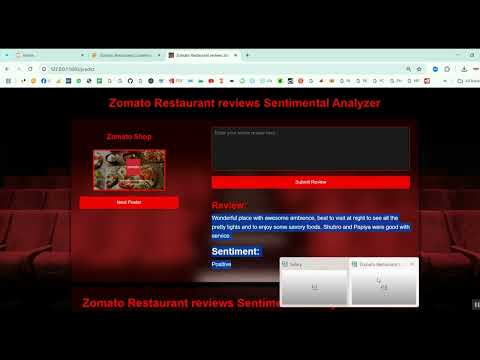
AI & ML Models
Zomato Restaurant Reviews Sentimental Analyzer in Python Projects
Zomato Restaurant Reviews Sentimental Analyzer in Python Projects
र 1000
⭐ Featured
⭐ Featured

AI & ML Models
Voice Disorder Prediction using Audio Dataset in Python Projects
Voice Disorder Prediction using Audio Dataset in Python Projects
र 1000

AI & ML Models
Vitamin Deficiency Detection Using Image Processing in Python Projects
Vitamin Deficiency Detection Using Image Processing in Python Projects
र 1000