AI & ML Models
0.0 (0 reviews) • 0 downloads
EHR Gastric Cancer in Python Projects
र 1000
EHR Gastric Cancer in Python Projects
Technical Details
Domain : Python
Database : Sqlite
Tools : Anaconda
Run Tools: VS Code
Database : Sqlite
Tools : Anaconda
Run Tools: VS Code
Secure Payment
Instant Download
GST Invoice
24/7 Support
About This Product
EHR Gastric Cancer in Python Projects
Abstract
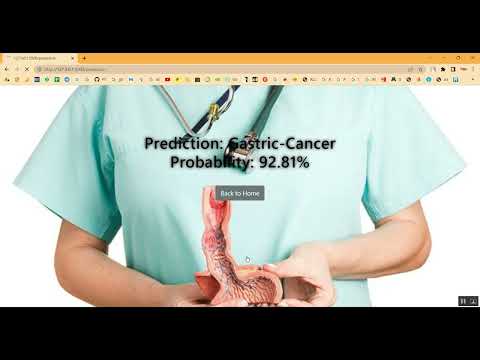
The project “EHR Gastric Cancer Prediction in Python” focuses on developing a machine learning-based system for predicting the likelihood of gastric cancer using Electronic Health Records (EHRs). Early detection of gastric cancer is crucial for effective treatment and improving patient survival rates. The system uses patient data such as demographics, medical history, lab test results, lifestyle factors, and endoscopy reports. Python libraries such as Pandas, NumPy, Scikit-learn, and TensorFlow/Keras are used for data preprocessing, feature extraction, model training, and evaluation. Machine learning algorithms such as Random Forest, Logistic Regression, Support Vector Machines (SVM), and Neural Networks are applied to classify patients into high-risk or low-risk categories. The system provides a data-driven decision support tool for doctors to identify at-risk patients early.
Existing System
Traditional gastric cancer diagnosis relies on manual clinical assessments, endoscopy, biopsy, and lab tests. While accurate, these methods are time-consuming, invasive, and dependent on the availability of specialists. Existing EHR-based predictive systems are limited and often use basic statistical analysis without leveraging advanced machine learning techniques, resulting in lower predictive accuracy. Moreover, many current solutions do not integrate multiple EHR features or provide an interactive Python-based tool for healthcare practitioners.
Proposed System
The proposed system introduces a Python-based EHR gastric cancer prediction framework. The EHR data is preprocessed to handle missing values, normalize features, and select the most relevant attributes influencing gastric cancer risk. Machine learning models (Random Forest, SVM, Logistic Regression, or Neural Networks) are trained and validated to classify patients into high-risk or low-risk categories. The system can be deployed as a Flask or Streamlit web application, allowing doctors to input patient EHR data and receive instant predictions along with confidence scores. Additional functionalities may include visualization of key risk factors, trend analysis, and patient history tracking. This approach provides a non-invasive, scalable, and efficient decision support tool for early gastric cancer detection and personalized patient management.
Abstract
The project “EHR Gastric Cancer Prediction in Python” focuses on developing a machine learning-based system for predicting the likelihood of gastric cancer using Electronic Health Records (EHRs). Early detection of gastric cancer is crucial for effective treatment and improving patient survival rates. The system uses patient data such as demographics, medical history, lab test results, lifestyle factors, and endoscopy reports. Python libraries such as Pandas, NumPy, Scikit-learn, and TensorFlow/Keras are used for data preprocessing, feature extraction, model training, and evaluation. Machine learning algorithms such as Random Forest, Logistic Regression, Support Vector Machines (SVM), and Neural Networks are applied to classify patients into high-risk or low-risk categories. The system provides a data-driven decision support tool for doctors to identify at-risk patients early.
Existing System
Traditional gastric cancer diagnosis relies on manual clinical assessments, endoscopy, biopsy, and lab tests. While accurate, these methods are time-consuming, invasive, and dependent on the availability of specialists. Existing EHR-based predictive systems are limited and often use basic statistical analysis without leveraging advanced machine learning techniques, resulting in lower predictive accuracy. Moreover, many current solutions do not integrate multiple EHR features or provide an interactive Python-based tool for healthcare practitioners.
Proposed System
The proposed system introduces a Python-based EHR gastric cancer prediction framework. The EHR data is preprocessed to handle missing values, normalize features, and select the most relevant attributes influencing gastric cancer risk. Machine learning models (Random Forest, SVM, Logistic Regression, or Neural Networks) are trained and validated to classify patients into high-risk or low-risk categories. The system can be deployed as a Flask or Streamlit web application, allowing doctors to input patient EHR data and receive instant predictions along with confidence scores. Additional functionalities may include visualization of key risk factors, trend analysis, and patient history tracking. This approach provides a non-invasive, scalable, and efficient decision support tool for early gastric cancer detection and personalized patient management.
Customer Reviews (0)
No reviews yet. Be the first!
Related Products
⭐ Featured
AI & ML Models
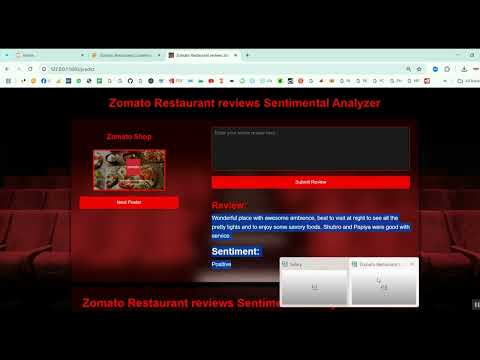
Zomato Restaurant Reviews Sentimental Analyzer in Python Projects
Zomato Restaurant Reviews Sentimental Analyzer in Python Projects
र 1000
⭐ Featured
⭐ Featured
AI & ML Models
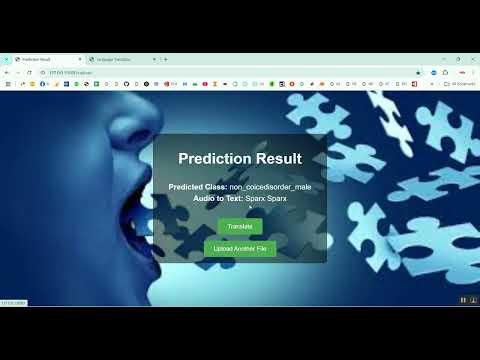
Voice Disorder Prediction using Audio Dataset in Python Projects
Voice Disorder Prediction using Audio Dataset in Python Projects
र 1000
AI & ML Models
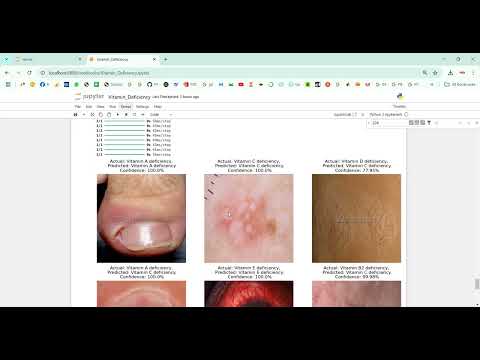
Vitamin Deficiency Detection Using Image Processing in Python Projects
Vitamin Deficiency Detection Using Image Processing in Python Projects
र 1000