AI & ML Models
0.0 (0 reviews) • 0 downloads
EHR Block Chain Public Health Care Monitoring System in Python Projects
र 1000
EHR Block Chain Public Health Care Monitoring System in Python Projects
Technical Details
Domain : Python
Database : Sqlite
Tools : Anaconda
Run Tools: VS Code
Database : Sqlite
Tools : Anaconda
Run Tools: VS Code
Secure Payment
Instant Download
GST Invoice
24/7 Support
About This Product
EHR Block Chain Public Health Care Monitoring System in Python Projects
Abstract
The project “EHR Blockchain Public Health Care Monitoring System in Python” focuses on creating a secure, transparent, and decentralized system for managing Electronic Health Records (EHRs) using blockchain technology. Traditional healthcare systems often suffer from fragmented data, security breaches, and lack of patient control over sensitive medical information. This system leverages Python-based blockchain frameworks to store EHR data immutably while allowing authorized access for hospitals, doctors, and patients. Smart contracts are used to automate data access permissions, track medical history, and ensure compliance with healthcare regulations. Features include real-time monitoring of public health trends, patient record sharing, and secure analytics. Python libraries such as Flask/Django for web interface, SQLAlchemy for databases, and web3.py for blockchain interaction are used to implement the platform. This project demonstrates how blockchain can improve data security, interoperability, and efficiency in public healthcare monitoring.
Existing System
Current healthcare management systems are largely centralized, which makes them vulnerable to data tampering, cyber-attacks, and unauthorized access. Hospitals and clinics maintain separate databases, resulting in fragmented patient histories and delays in data sharing. Many systems use traditional EHRs without strong encryption or audit mechanisms, making it difficult for patients to control their own medical data. Additionally, existing public health monitoring relies on aggregated or delayed reports, which reduces real-time responsiveness for epidemic tracking, disease monitoring, or healthcare resource allocation.
Proposed System
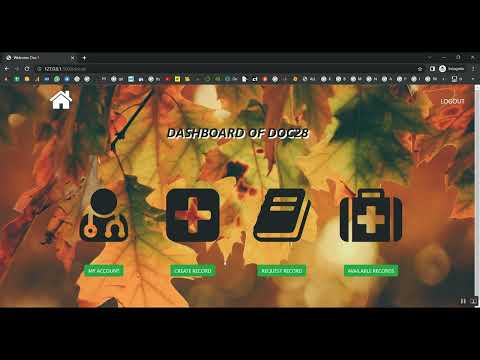
The proposed system introduces a blockchain-based EHR management framework for public healthcare monitoring. Patient records are stored in a decentralized ledger, where each transaction (record creation, update, or access) is verified and encrypted. Smart contracts automate data sharing permissions, ensuring that only authorized personnel can view or update records. The system allows real-time monitoring of health trends, outbreak detection, and analytics for policymakers. A Python-based web interface (Flask/Django) provides user-friendly dashboards for hospitals, doctors, and public health administrators. This approach ensures security, transparency, immutability, and patient control over data, while also supporting scalable, real-time public health monitoring.
Abstract
The project “EHR Blockchain Public Health Care Monitoring System in Python” focuses on creating a secure, transparent, and decentralized system for managing Electronic Health Records (EHRs) using blockchain technology. Traditional healthcare systems often suffer from fragmented data, security breaches, and lack of patient control over sensitive medical information. This system leverages Python-based blockchain frameworks to store EHR data immutably while allowing authorized access for hospitals, doctors, and patients. Smart contracts are used to automate data access permissions, track medical history, and ensure compliance with healthcare regulations. Features include real-time monitoring of public health trends, patient record sharing, and secure analytics. Python libraries such as Flask/Django for web interface, SQLAlchemy for databases, and web3.py for blockchain interaction are used to implement the platform. This project demonstrates how blockchain can improve data security, interoperability, and efficiency in public healthcare monitoring.
Existing System
Current healthcare management systems are largely centralized, which makes them vulnerable to data tampering, cyber-attacks, and unauthorized access. Hospitals and clinics maintain separate databases, resulting in fragmented patient histories and delays in data sharing. Many systems use traditional EHRs without strong encryption or audit mechanisms, making it difficult for patients to control their own medical data. Additionally, existing public health monitoring relies on aggregated or delayed reports, which reduces real-time responsiveness for epidemic tracking, disease monitoring, or healthcare resource allocation.
Proposed System
The proposed system introduces a blockchain-based EHR management framework for public healthcare monitoring. Patient records are stored in a decentralized ledger, where each transaction (record creation, update, or access) is verified and encrypted. Smart contracts automate data sharing permissions, ensuring that only authorized personnel can view or update records. The system allows real-time monitoring of health trends, outbreak detection, and analytics for policymakers. A Python-based web interface (Flask/Django) provides user-friendly dashboards for hospitals, doctors, and public health administrators. This approach ensures security, transparency, immutability, and patient control over data, while also supporting scalable, real-time public health monitoring.
Customer Reviews (0)
No reviews yet. Be the first!
Related Products
⭐ Featured

AI & ML Models
Zomato Restaurant Reviews Sentimental Analyzer in Python Projects
Zomato Restaurant Reviews Sentimental Analyzer in Python Projects
र 1000
⭐ Featured
⭐ Featured

AI & ML Models
Voice Disorder Prediction using Audio Dataset in Python Projects
Voice Disorder Prediction using Audio Dataset in Python Projects
र 1000

AI & ML Models
Vitamin Deficiency Detection Using Image Processing in Python Projects
Vitamin Deficiency Detection Using Image Processing in Python Projects
र 1000