AI & ML Models
0.0 (0 reviews) • 0 downloads
EEG Based Depression in Python Projects
र 1000
EEG Based Depression in Python Projects
Technical Details
Domain : Python
Database : Sqlite
Tools : Anaconda
Run Tools: VS Code
Database : Sqlite
Tools : Anaconda
Run Tools: VS Code
Secure Payment
Instant Download
GST Invoice
24/7 Support
About This Product
EEG Based Depression in Python Projects
Abstract
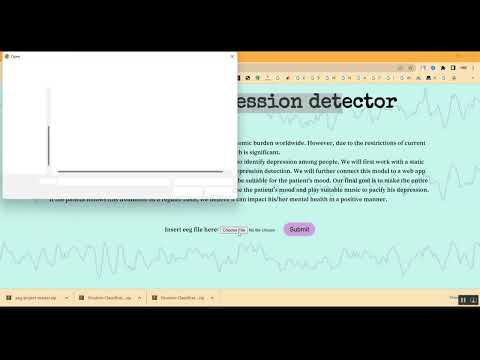
The project “EEG-Based Depression Detection in Python” focuses on developing a system to detect depressive states using electroencephalogram (EEG) signals. Depression is a serious mental health disorder, and early detection is crucial for timely intervention and treatment. The system collects EEG signals from subjects and preprocesses the data using filtering, artifact removal, and normalization. Features such as power spectral density, frequency band analysis (delta, theta, alpha, beta), and statistical measures are extracted. Machine learning models like Support Vector Machines (SVM), Random Forest, K-Nearest Neighbors (KNN), and Deep Neural Networks (DNN) are trained to classify subjects into depressed or non-depressed categories. Python libraries like MNE, SciPy, NumPy, Pandas, and TensorFlow/Keras are used for signal processing, model training, and evaluation. The project demonstrates how EEG analysis can be applied for automated mental health assessment.
Existing System
Traditional depression detection relies on clinical assessments, self-reported questionnaires, and psychological interviews, which can be subjective, time-consuming, and prone to bias. Some automated systems analyze facial expressions, speech patterns, or wearable sensor data, but these methods may not accurately capture the neurological basis of depression. Existing EEG-based research often remains academic, with limited real-time implementations, scalability, or integration into user-friendly software platforms for healthcare professionals. Most systems also lack predictive modeling that can assist in early and objective depression detection.
Proposed System
The proposed system introduces a Python-based EEG depression detection framework that automates the classification of depressive states. The EEG signals are first preprocessed to remove noise and artifacts, and then features are extracted from time-domain, frequency-domain, and wavelet-domain representations. The extracted features are fed into a machine learning or deep learning model (e.g., SVM, Random Forest, or DNN) to classify the subject as depressed or non-depressed. For real-time applications, the system can be integrated with a Flask or Streamlit web app, allowing clinicians or researchers to input EEG recordings and receive instant predictive results. Additional functionalities may include visualization of EEG patterns, probability scores, and tracking of patient progress over time. This system provides a cost-effective, accurate, and scalable solution for mental health monitoring and early intervention.
Abstract
The project “EEG-Based Depression Detection in Python” focuses on developing a system to detect depressive states using electroencephalogram (EEG) signals. Depression is a serious mental health disorder, and early detection is crucial for timely intervention and treatment. The system collects EEG signals from subjects and preprocesses the data using filtering, artifact removal, and normalization. Features such as power spectral density, frequency band analysis (delta, theta, alpha, beta), and statistical measures are extracted. Machine learning models like Support Vector Machines (SVM), Random Forest, K-Nearest Neighbors (KNN), and Deep Neural Networks (DNN) are trained to classify subjects into depressed or non-depressed categories. Python libraries like MNE, SciPy, NumPy, Pandas, and TensorFlow/Keras are used for signal processing, model training, and evaluation. The project demonstrates how EEG analysis can be applied for automated mental health assessment.
Existing System
Traditional depression detection relies on clinical assessments, self-reported questionnaires, and psychological interviews, which can be subjective, time-consuming, and prone to bias. Some automated systems analyze facial expressions, speech patterns, or wearable sensor data, but these methods may not accurately capture the neurological basis of depression. Existing EEG-based research often remains academic, with limited real-time implementations, scalability, or integration into user-friendly software platforms for healthcare professionals. Most systems also lack predictive modeling that can assist in early and objective depression detection.
Proposed System
The proposed system introduces a Python-based EEG depression detection framework that automates the classification of depressive states. The EEG signals are first preprocessed to remove noise and artifacts, and then features are extracted from time-domain, frequency-domain, and wavelet-domain representations. The extracted features are fed into a machine learning or deep learning model (e.g., SVM, Random Forest, or DNN) to classify the subject as depressed or non-depressed. For real-time applications, the system can be integrated with a Flask or Streamlit web app, allowing clinicians or researchers to input EEG recordings and receive instant predictive results. Additional functionalities may include visualization of EEG patterns, probability scores, and tracking of patient progress over time. This system provides a cost-effective, accurate, and scalable solution for mental health monitoring and early intervention.
Customer Reviews (0)
No reviews yet. Be the first!
Related Products
⭐ Featured
AI & ML Models
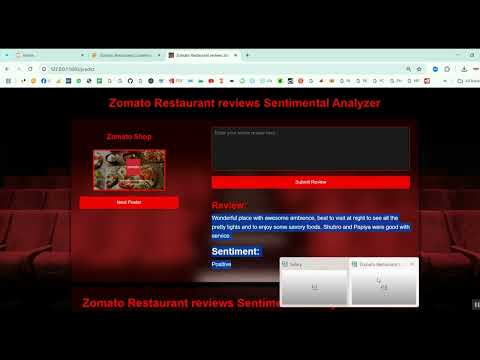
Zomato Restaurant Reviews Sentimental Analyzer in Python Projects
Zomato Restaurant Reviews Sentimental Analyzer in Python Projects
र 1000
⭐ Featured
⭐ Featured
AI & ML Models
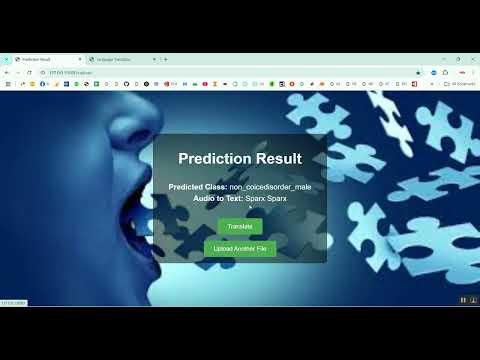
Voice Disorder Prediction using Audio Dataset in Python Projects
Voice Disorder Prediction using Audio Dataset in Python Projects
र 1000
AI & ML Models
Vitamin Deficiency Detection Using Image Processing in Python Projects
Vitamin Deficiency Detection Using Image Processing in Python Projects
र 1000