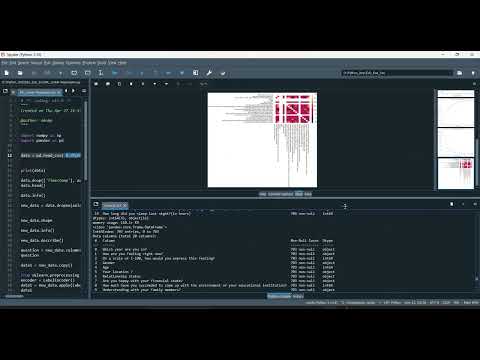
AI & ML Models
0.0 (0 reviews) • 0 downloads
Education Exam Prediction Ml Classification in Python Projects
र 1000
Education Exam Prediction Ml Classification in Python Projects
Technical Details
Domain : Python
Database : Sqlite
Tools : Anaconda
Run Tools: VS Code
Database : Sqlite
Tools : Anaconda
Run Tools: VS Code
Secure Payment
Instant Download
GST Invoice
24/7 Support
About This Product
Education Exam Prediction Ml Classification in Python Projects
Abstract
The project “Education Exam Prediction ML Classification in Python” aims to predict student exam performance using machine learning classification techniques. With the increasing importance of data-driven education systems, predicting student outcomes can help educators identify weak areas and provide early interventions. The system uses student demographic data, attendance records, study hours, past grades, and behavioral factors as input features. Various ML algorithms such as Logistic Regression, Decision Trees, Random Forest, Support Vector Machines (SVM), and Neural Networks are applied to classify students into categories like pass/fail, high/medium/low performance, or grade predictions. Implemented in Python with libraries like Pandas, Scikit-learn, TensorFlow, and Matplotlib, the system provides accurate predictions, visualizations, and insights for teachers and administrators to improve educational outcomes.
Existing System
Traditional exam prediction methods rely mainly on manual evaluation, teacher assessments, and basic statistical models. These methods often fail to capture hidden patterns in student behavior, socio-economic factors, and learning habits, making them less reliable for large-scale prediction. Many existing academic systems provide report cards and historical performance tracking, but they lack predictive analytics capabilities. This means that at-risk students are often identified too late, reducing the chances of effective remedial action. Moreover, conventional approaches are time-consuming and do not utilize modern AI/ML advancements for better accuracy.
Proposed System
The proposed system introduces an ML-based classification model to predict student exam performance with high accuracy. Data preprocessing techniques handle missing values, normalize inputs, and select the most relevant features affecting student performance. The trained model can classify students into performance groups or predict pass/fail outcomes before exams, enabling educators to take timely corrective steps. The system can also be deployed as a Flask/Streamlit web app, where teachers upload datasets (student details, attendance, test scores) and receive real-time predictions with visual analytics. This approach not only improves student learning outcomes but also provides administrators with data-driven insights for curriculum planning, resource allocation, and personalized student support.
Abstract
The project “Education Exam Prediction ML Classification in Python” aims to predict student exam performance using machine learning classification techniques. With the increasing importance of data-driven education systems, predicting student outcomes can help educators identify weak areas and provide early interventions. The system uses student demographic data, attendance records, study hours, past grades, and behavioral factors as input features. Various ML algorithms such as Logistic Regression, Decision Trees, Random Forest, Support Vector Machines (SVM), and Neural Networks are applied to classify students into categories like pass/fail, high/medium/low performance, or grade predictions. Implemented in Python with libraries like Pandas, Scikit-learn, TensorFlow, and Matplotlib, the system provides accurate predictions, visualizations, and insights for teachers and administrators to improve educational outcomes.
Existing System
Traditional exam prediction methods rely mainly on manual evaluation, teacher assessments, and basic statistical models. These methods often fail to capture hidden patterns in student behavior, socio-economic factors, and learning habits, making them less reliable for large-scale prediction. Many existing academic systems provide report cards and historical performance tracking, but they lack predictive analytics capabilities. This means that at-risk students are often identified too late, reducing the chances of effective remedial action. Moreover, conventional approaches are time-consuming and do not utilize modern AI/ML advancements for better accuracy.
Proposed System
The proposed system introduces an ML-based classification model to predict student exam performance with high accuracy. Data preprocessing techniques handle missing values, normalize inputs, and select the most relevant features affecting student performance. The trained model can classify students into performance groups or predict pass/fail outcomes before exams, enabling educators to take timely corrective steps. The system can also be deployed as a Flask/Streamlit web app, where teachers upload datasets (student details, attendance, test scores) and receive real-time predictions with visual analytics. This approach not only improves student learning outcomes but also provides administrators with data-driven insights for curriculum planning, resource allocation, and personalized student support.
Customer Reviews (0)
No reviews yet. Be the first!
Related Products
⭐ Featured
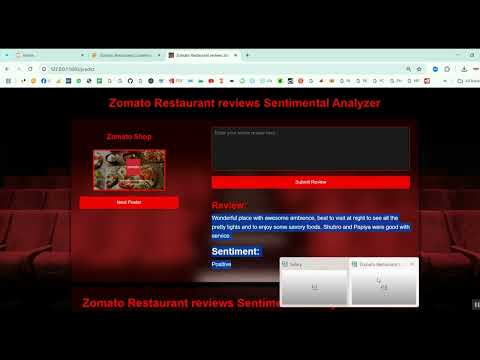
AI & ML Models
Zomato Restaurant Reviews Sentimental Analyzer in Python Projects
Zomato Restaurant Reviews Sentimental Analyzer in Python Projects
र 1000
⭐ Featured
⭐ Featured
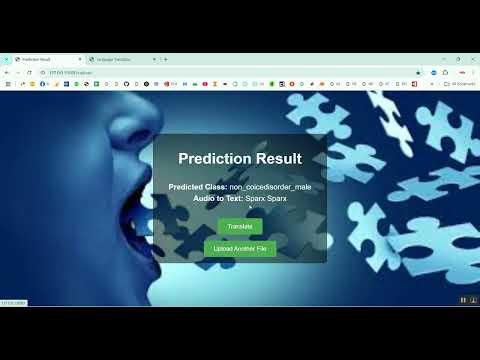
AI & ML Models
Voice Disorder Prediction using Audio Dataset in Python Projects
Voice Disorder Prediction using Audio Dataset in Python Projects
र 1000
AI & ML Models
Vitamin Deficiency Detection Using Image Processing in Python Projects
Vitamin Deficiency Detection Using Image Processing in Python Projects
र 1000