AI & ML Models
0.0 (0 reviews) • 0 downloads
ECG SNN Train Data in Python Projects
र 1000
ECG SNN Train Data in Python Projects
Technical Details
Domain : Python
Database : Sqlite
Tools : Anaconda
Run Tools: VS Code
Database : Sqlite
Tools : Anaconda
Run Tools: VS Code
Secure Payment
Instant Download
GST Invoice
24/7 Support
About This Product
ECG SNN Train Data in Python Projects
Abstract
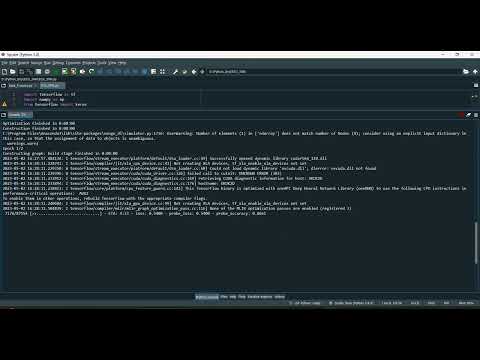
The project “ECG SNN Train Data in Python” focuses on training a Spiking Neural Network (SNN) model to classify ECG (Electrocardiogram) signals for early detection of cardiac abnormalities. Unlike conventional deep learning approaches, SNNs are biologically inspired neural networks that operate using discrete spikes, making them more energy-efficient and suitable for real-time processing on edge devices. The ECG signals are preprocessed to remove noise, segmented into beats, and then encoded into spike-based representations that serve as input to the SNN model. Python frameworks such as Brian2, PyTorch, SpikingJelly, or Nengo can be utilized for implementing and training the SNN. The goal is to identify normal and abnormal heart rhythms like arrhythmias, tachycardia, and fibrillation, demonstrating how neuromorphic computing can advance medical diagnostics.
Existing System
Traditional ECG classification systems rely on machine learning models (SVM, Decision Trees) or deep learning models (CNN, RNN, LSTM) trained directly on raw time-series signals or converted image datasets. While effective, these models consume large amounts of computational power, require high memory, and are not always suitable for real-time healthcare monitoring on wearable devices. Furthermore, most existing solutions use batch-processing techniques that delay predictions rather than performing event-driven real-time classification. This limits their application in low-power embedded devices or IoT-based health monitoring systems.
Proposed System
The proposed system introduces an ECG heartbeat classification model using Spiking Neural Networks (SNNs) trained on ECG datasets. ECG signals are first preprocessed through filtering and normalization, then converted into spike trains using rate-coding or temporal coding. The encoded data is fed into an SNN model that mimics brain-like computation to classify different heartbeat patterns. Training is performed using methods like Spike-Timing Dependent Plasticity (STDP) or surrogate gradient learning. Once trained, the system can be deployed on neuromorphic chips (Intel Loihi, SpiNNaker) or edge devices for real-time, low-power ECG monitoring. This approach combines the accuracy of modern ML with the efficiency and biological plausibility of SNNs, making it a step toward future-ready medical AI applications.
Abstract
The project “ECG SNN Train Data in Python” focuses on training a Spiking Neural Network (SNN) model to classify ECG (Electrocardiogram) signals for early detection of cardiac abnormalities. Unlike conventional deep learning approaches, SNNs are biologically inspired neural networks that operate using discrete spikes, making them more energy-efficient and suitable for real-time processing on edge devices. The ECG signals are preprocessed to remove noise, segmented into beats, and then encoded into spike-based representations that serve as input to the SNN model. Python frameworks such as Brian2, PyTorch, SpikingJelly, or Nengo can be utilized for implementing and training the SNN. The goal is to identify normal and abnormal heart rhythms like arrhythmias, tachycardia, and fibrillation, demonstrating how neuromorphic computing can advance medical diagnostics.
Existing System
Traditional ECG classification systems rely on machine learning models (SVM, Decision Trees) or deep learning models (CNN, RNN, LSTM) trained directly on raw time-series signals or converted image datasets. While effective, these models consume large amounts of computational power, require high memory, and are not always suitable for real-time healthcare monitoring on wearable devices. Furthermore, most existing solutions use batch-processing techniques that delay predictions rather than performing event-driven real-time classification. This limits their application in low-power embedded devices or IoT-based health monitoring systems.
Proposed System
The proposed system introduces an ECG heartbeat classification model using Spiking Neural Networks (SNNs) trained on ECG datasets. ECG signals are first preprocessed through filtering and normalization, then converted into spike trains using rate-coding or temporal coding. The encoded data is fed into an SNN model that mimics brain-like computation to classify different heartbeat patterns. Training is performed using methods like Spike-Timing Dependent Plasticity (STDP) or surrogate gradient learning. Once trained, the system can be deployed on neuromorphic chips (Intel Loihi, SpiNNaker) or edge devices for real-time, low-power ECG monitoring. This approach combines the accuracy of modern ML with the efficiency and biological plausibility of SNNs, making it a step toward future-ready medical AI applications.
Customer Reviews (0)
No reviews yet. Be the first!
Related Products
⭐ Featured

AI & ML Models
Zomato Restaurant Reviews Sentimental Analyzer in Python Projects
Zomato Restaurant Reviews Sentimental Analyzer in Python Projects
र 1000
⭐ Featured

⭐ Featured

AI & ML Models
Voice Disorder Prediction using Audio Dataset in Python Projects
Voice Disorder Prediction using Audio Dataset in Python Projects
र 1000

AI & ML Models
Vitamin Deficiency Detection Using Image Processing in Python Projects
Vitamin Deficiency Detection Using Image Processing in Python Projects
र 1000