AI & ML Models
0.0 (0 reviews) • 0 downloads
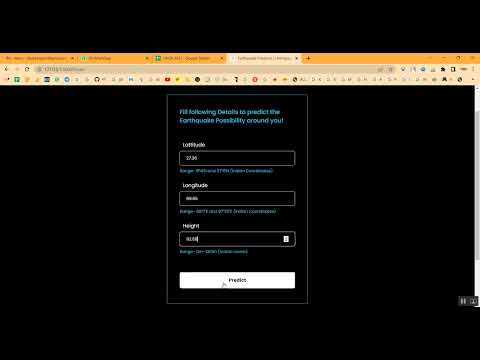
Earth Quake Prediction Flask App in Python Projects
र 1000
Earth Quake Prediction Flask App in Python Projects
Technical Details
Domain : Python
Database : Sqlite
Tools : Anaconda
Run Tools: VS Code
Database : Sqlite
Tools : Anaconda
Run Tools: VS Code
Secure Payment
Instant Download
GST Invoice
24/7 Support
About This Product
Earth Quake Prediction Flask App in Python Projects
Abstract
The project “Earthquake Prediction Flask App in Python” is designed to build a machine learning-based system for predicting the likelihood of earthquakes using historical seismic data and geological features. Earthquakes are natural disasters that cause massive destruction, and accurate prediction models can play a crucial role in risk management and disaster preparedness. The system uses features such as seismic wave readings, magnitude, depth, tectonic plate activity, and historical event frequency to train ML models like Logistic Regression, Random Forest, Decision Tree, and LSTM networks. Once trained, the prediction model is deployed as a Flask web application, allowing users to input seismic data or upload datasets and receive real-time earthquake likelihood predictions with probability scores. The project demonstrates how Python and Flask can be applied in natural disaster analytics and emergency response planning.
Existing System
Current earthquake prediction systems rely primarily on seismographic instruments and geological monitoring stations. These methods analyze seismic waves and tectonic plate activity but are limited to detection and early warnings rather than accurate long-term prediction. Many existing solutions are hardware-dependent, costly, and inaccessible to smaller research institutions. Additionally, most current platforms are not user-friendly applications where data can be directly tested and predictions obtained in real time. This leaves a gap for a lightweight, accessible, ML-powered earthquake prediction app that can be used for research, training, and public safety awareness.
Proposed System
The proposed system introduces a Flask-based earthquake prediction application that integrates machine learning with a user-friendly interface. The backend handles data preprocessing (handling missing values, normalization, feature selection) and model training using Scikit-learn or TensorFlow/Keras. Users can input parameters such as magnitude, depth, longitude, latitude, and tectonic zone activity, after which the system predicts the probability of an earthquake occurrence. The Flask app also provides features such as data visualization, prediction history, and performance metrics for better understanding. This approach makes earthquake prediction more accessible, interactive, and scalable, and can be further extended to integrate with real-time seismic sensor data, IoT devices, and early warning systems for disaster management.
Abstract
The project “Earthquake Prediction Flask App in Python” is designed to build a machine learning-based system for predicting the likelihood of earthquakes using historical seismic data and geological features. Earthquakes are natural disasters that cause massive destruction, and accurate prediction models can play a crucial role in risk management and disaster preparedness. The system uses features such as seismic wave readings, magnitude, depth, tectonic plate activity, and historical event frequency to train ML models like Logistic Regression, Random Forest, Decision Tree, and LSTM networks. Once trained, the prediction model is deployed as a Flask web application, allowing users to input seismic data or upload datasets and receive real-time earthquake likelihood predictions with probability scores. The project demonstrates how Python and Flask can be applied in natural disaster analytics and emergency response planning.
Existing System
Current earthquake prediction systems rely primarily on seismographic instruments and geological monitoring stations. These methods analyze seismic waves and tectonic plate activity but are limited to detection and early warnings rather than accurate long-term prediction. Many existing solutions are hardware-dependent, costly, and inaccessible to smaller research institutions. Additionally, most current platforms are not user-friendly applications where data can be directly tested and predictions obtained in real time. This leaves a gap for a lightweight, accessible, ML-powered earthquake prediction app that can be used for research, training, and public safety awareness.
Proposed System
The proposed system introduces a Flask-based earthquake prediction application that integrates machine learning with a user-friendly interface. The backend handles data preprocessing (handling missing values, normalization, feature selection) and model training using Scikit-learn or TensorFlow/Keras. Users can input parameters such as magnitude, depth, longitude, latitude, and tectonic zone activity, after which the system predicts the probability of an earthquake occurrence. The Flask app also provides features such as data visualization, prediction history, and performance metrics for better understanding. This approach makes earthquake prediction more accessible, interactive, and scalable, and can be further extended to integrate with real-time seismic sensor data, IoT devices, and early warning systems for disaster management.
Customer Reviews (0)
No reviews yet. Be the first!
Related Products
⭐ Featured
AI & ML Models
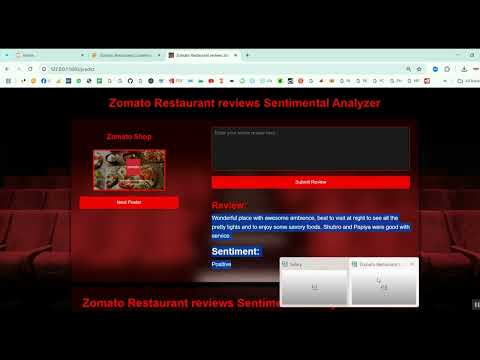
Zomato Restaurant Reviews Sentimental Analyzer in Python Projects
Zomato Restaurant Reviews Sentimental Analyzer in Python Projects
र 1000
⭐ Featured
⭐ Featured
AI & ML Models
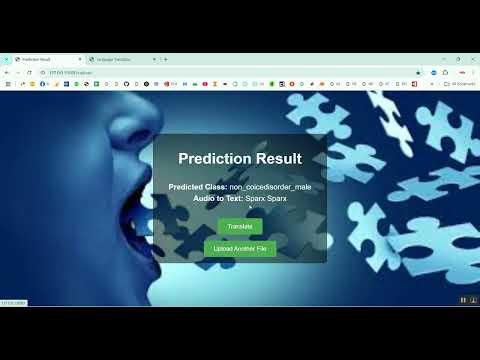
Voice Disorder Prediction using Audio Dataset in Python Projects
Voice Disorder Prediction using Audio Dataset in Python Projects
र 1000
AI & ML Models
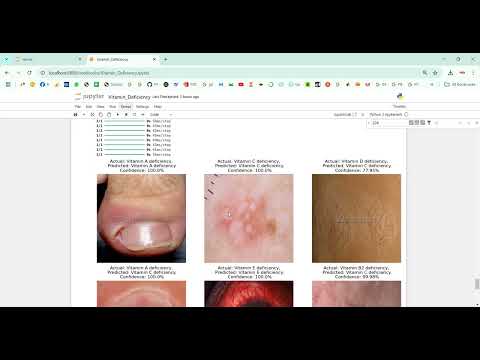
Vitamin Deficiency Detection Using Image Processing in Python Projects
Vitamin Deficiency Detection Using Image Processing in Python Projects
र 1000