AI & ML Models
0.0 (0 reviews) • 0 downloads
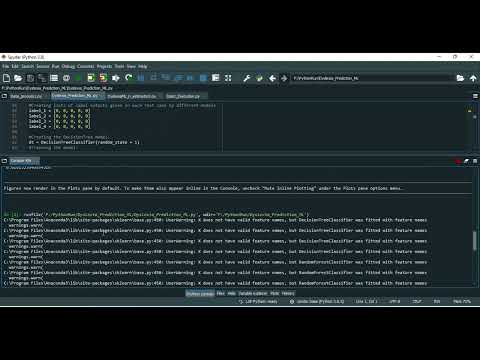
Dyslexia Prediction ML in Python Projects
र 1000
Dyslexia Prediction ML in Python Projects
Technical Details
Domain : Python
Database : Sqlite
Tools : Anaconda
Run Tools: VS Code
Database : Sqlite
Tools : Anaconda
Run Tools: VS Code
Secure Payment
Instant Download
GST Invoice
24/7 Support
About This Product
Dyslexia Prediction ML in Python Projects
Abstract
The project “Dyslexia Prediction ML in Python” aims to develop a machine learning-based model to predict the likelihood of dyslexia in students or individuals based on behavioral, cognitive, and performance-related features. Dyslexia is a learning disorder that impacts reading, spelling, and comprehension abilities, and early prediction is vital for timely educational and medical intervention. The system uses datasets containing features such as reading errors, phonological awareness, memory scores, attention span, and linguistic test results. Machine learning algorithms including Logistic Regression, Decision Trees, Random Forest, Support Vector Machines (SVM), and Deep Neural Networks are trained and evaluated for accuracy. Python libraries like Scikit-learn, Pandas, NumPy, Matplotlib, and TensorFlow/Keras form the backbone of the project. The model outputs whether an individual is at risk of dyslexia, enabling educators and clinicians to make data-driven decisions.
Existing System
Existing dyslexia assessment relies heavily on manual testing methods, including teacher observations, psychological assessments, and reading/writing evaluations. While effective, these approaches are time-intensive, subjective, and require trained specialists, leading to delayed detection. A few digital screening tools exist but often lack sophisticated machine learning capabilities, limiting their ability to provide accurate, adaptive, and large-scale predictions. Furthermore, many existing systems are commercial and costly, making them inaccessible for schools, parents, and healthcare workers in under-resourced regions.
Proposed System
The proposed system introduces a machine learning-powered dyslexia prediction framework that automates classification using academic and behavioral datasets. The pipeline involves data preprocessing (cleaning, normalization, feature selection) followed by model training and testing. Machine learning classifiers are optimized through cross-validation and hyperparameter tuning to improve prediction accuracy. The system can generate performance metrics such as accuracy, precision, recall, and confusion matrix to validate reliability. The model is lightweight, scalable, and can be extended into applications such as Flask or Streamlit-based web apps to provide real-time predictions. This solution helps in early screening of dyslexia, supports large-scale educational deployment, and empowers teachers and healthcare professionals with AI-driven insights.
Abstract
The project “Dyslexia Prediction ML in Python” aims to develop a machine learning-based model to predict the likelihood of dyslexia in students or individuals based on behavioral, cognitive, and performance-related features. Dyslexia is a learning disorder that impacts reading, spelling, and comprehension abilities, and early prediction is vital for timely educational and medical intervention. The system uses datasets containing features such as reading errors, phonological awareness, memory scores, attention span, and linguistic test results. Machine learning algorithms including Logistic Regression, Decision Trees, Random Forest, Support Vector Machines (SVM), and Deep Neural Networks are trained and evaluated for accuracy. Python libraries like Scikit-learn, Pandas, NumPy, Matplotlib, and TensorFlow/Keras form the backbone of the project. The model outputs whether an individual is at risk of dyslexia, enabling educators and clinicians to make data-driven decisions.
Existing System
Existing dyslexia assessment relies heavily on manual testing methods, including teacher observations, psychological assessments, and reading/writing evaluations. While effective, these approaches are time-intensive, subjective, and require trained specialists, leading to delayed detection. A few digital screening tools exist but often lack sophisticated machine learning capabilities, limiting their ability to provide accurate, adaptive, and large-scale predictions. Furthermore, many existing systems are commercial and costly, making them inaccessible for schools, parents, and healthcare workers in under-resourced regions.
Proposed System
The proposed system introduces a machine learning-powered dyslexia prediction framework that automates classification using academic and behavioral datasets. The pipeline involves data preprocessing (cleaning, normalization, feature selection) followed by model training and testing. Machine learning classifiers are optimized through cross-validation and hyperparameter tuning to improve prediction accuracy. The system can generate performance metrics such as accuracy, precision, recall, and confusion matrix to validate reliability. The model is lightweight, scalable, and can be extended into applications such as Flask or Streamlit-based web apps to provide real-time predictions. This solution helps in early screening of dyslexia, supports large-scale educational deployment, and empowers teachers and healthcare professionals with AI-driven insights.
Customer Reviews (0)
No reviews yet. Be the first!
Related Products
⭐ Featured
AI & ML Models
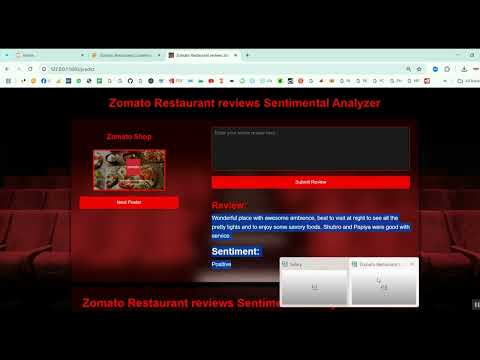
Zomato Restaurant Reviews Sentimental Analyzer in Python Projects
Zomato Restaurant Reviews Sentimental Analyzer in Python Projects
र 1000
⭐ Featured
⭐ Featured
AI & ML Models
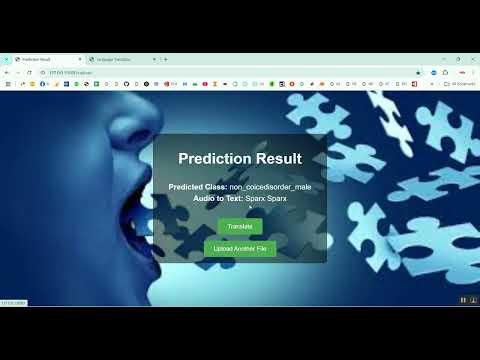
Voice Disorder Prediction using Audio Dataset in Python Projects
Voice Disorder Prediction using Audio Dataset in Python Projects
र 1000
AI & ML Models
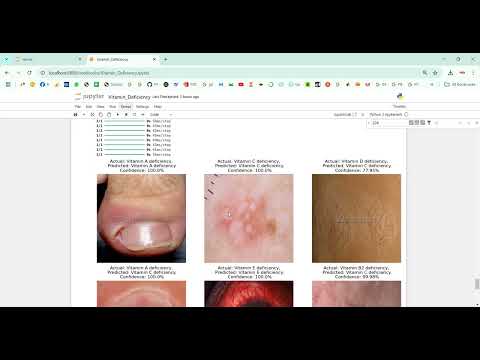
Vitamin Deficiency Detection Using Image Processing in Python Projects
Vitamin Deficiency Detection Using Image Processing in Python Projects
र 1000