AI & ML Models
0.0 (0 reviews) • 0 downloads
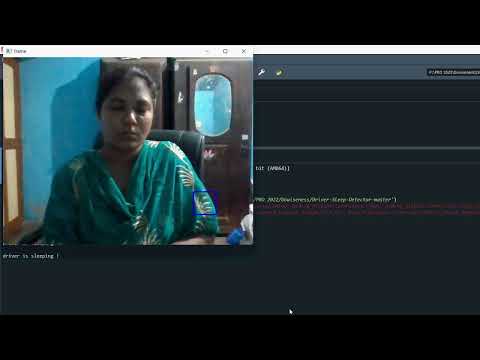
Drowsiness Detection Using Web Cam in Python Projects
र 1000
Drowsiness Detection Using Web Cam in Python Projects
Technical Details
Domain : Python
Database : Sqlite
Tools : Anaconda
Run Tools: VS Code
Database : Sqlite
Tools : Anaconda
Run Tools: VS Code
Secure Payment
Instant Download
GST Invoice
24/7 Support
About This Product
Drowsiness Detection Using Web Cam in Python Projects
Abstract
The project “Drowsiness Detection Using Web Cam in Python” aims to develop a real-time system that detects driver fatigue using a standard webcam. Drowsiness is one of the leading causes of road accidents, and timely detection can significantly reduce risks. This system leverages computer vision and machine learning techniques to monitor facial features such as eye closure, blinking frequency, and yawning. Using Python libraries like OpenCV, Dlib/MediaPipe, NumPy, and TensorFlow/Keras, the system processes live video frames, extracts face landmarks, and classifies the driver’s state as alert or drowsy. If the driver is detected as drowsy, an alarm alert is triggered to regain attention. The solution is lightweight, cost-effective, and deployable in real-world driving environments.
Existing System
Current driver drowsiness detection methods largely depend on hardware sensors such as EEG headbands, steering wheel motion sensors, or heart rate monitors. While accurate, these methods are expensive, intrusive, and impractical for mass adoption. Some existing camera-based solutions are limited to basic blink detection or operate only under controlled lighting, failing in real driving conditions. Moreover, most commercial solutions are integrated into high-end vehicles, leaving affordable cars and transport systems without such safety measures.
Proposed System
The proposed system introduces a webcam-based real-time drowsiness detection application that requires no additional hardware beyond a standard camera. Facial landmarks are detected using Dlib’s 68-point landmark detector or MediaPipe Face Mesh. The Eye Aspect Ratio (EAR) is continuously calculated to detect long eye closures, while the Mouth Aspect Ratio (MAR) helps in yawning detection. A threshold-based logic determines whether the driver is drowsy, and if detected, the system plays a buzzer sound as an alert. Python’s OpenCV manages video capture, while the backend can be extended with Flask/Streamlit to log driver states and generate safety reports. This makes the system affordable, accurate, and scalable for real-world road safety enhancement.
Abstract
The project “Drowsiness Detection Using Web Cam in Python” aims to develop a real-time system that detects driver fatigue using a standard webcam. Drowsiness is one of the leading causes of road accidents, and timely detection can significantly reduce risks. This system leverages computer vision and machine learning techniques to monitor facial features such as eye closure, blinking frequency, and yawning. Using Python libraries like OpenCV, Dlib/MediaPipe, NumPy, and TensorFlow/Keras, the system processes live video frames, extracts face landmarks, and classifies the driver’s state as alert or drowsy. If the driver is detected as drowsy, an alarm alert is triggered to regain attention. The solution is lightweight, cost-effective, and deployable in real-world driving environments.
Existing System
Current driver drowsiness detection methods largely depend on hardware sensors such as EEG headbands, steering wheel motion sensors, or heart rate monitors. While accurate, these methods are expensive, intrusive, and impractical for mass adoption. Some existing camera-based solutions are limited to basic blink detection or operate only under controlled lighting, failing in real driving conditions. Moreover, most commercial solutions are integrated into high-end vehicles, leaving affordable cars and transport systems without such safety measures.
Proposed System
The proposed system introduces a webcam-based real-time drowsiness detection application that requires no additional hardware beyond a standard camera. Facial landmarks are detected using Dlib’s 68-point landmark detector or MediaPipe Face Mesh. The Eye Aspect Ratio (EAR) is continuously calculated to detect long eye closures, while the Mouth Aspect Ratio (MAR) helps in yawning detection. A threshold-based logic determines whether the driver is drowsy, and if detected, the system plays a buzzer sound as an alert. Python’s OpenCV manages video capture, while the backend can be extended with Flask/Streamlit to log driver states and generate safety reports. This makes the system affordable, accurate, and scalable for real-world road safety enhancement.
Customer Reviews (0)
No reviews yet. Be the first!
Related Products
⭐ Featured

AI & ML Models
Zomato Restaurant Reviews Sentimental Analyzer in Python Projects
Zomato Restaurant Reviews Sentimental Analyzer in Python Projects
र 1000
⭐ Featured
⭐ Featured

AI & ML Models
Voice Disorder Prediction using Audio Dataset in Python Projects
Voice Disorder Prediction using Audio Dataset in Python Projects
र 1000

AI & ML Models
Vitamin Deficiency Detection Using Image Processing in Python Projects
Vitamin Deficiency Detection Using Image Processing in Python Projects
र 1000