AI & ML Models
0.0 (0 reviews) • 0 downloads
Driver Distraction CNN Train Flask App in Python Projects
र 1000
Driver Distraction CNN Train Flask App in Python Projects
Technical Details
Domain : Python
Database : Sqlite
Tools : Anaconda
Run Tools: VS Code
Database : Sqlite
Tools : Anaconda
Run Tools: VS Code
Secure Payment
Instant Download
GST Invoice
24/7 Support
About This Product
Driver Distraction CNN Train Flask App in Python Projects
Abstract
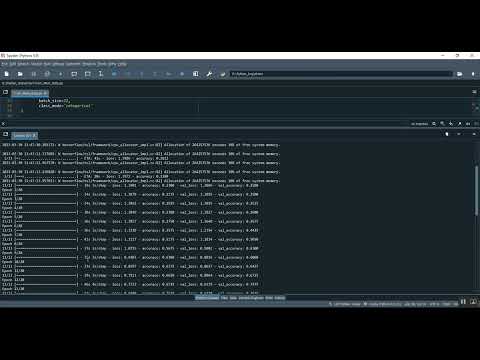
The project “Driver Distraction CNN Train Flask App in Python” focuses on developing an intelligent system to detect distracted driving behaviors using Convolutional Neural Networks (CNNs). Distractions like texting, eating, talking on the phone, or looking away from the road are major causes of road accidents. In this project, a CNN model is trained on a dataset of driver images categorized into different distraction classes. The model learns to recognize visual patterns indicating unsafe driving behavior. Python libraries such as TensorFlow/Keras, OpenCV, NumPy, and Pandas are used for preprocessing, training, and evaluation. The trained model is integrated into a Flask web application, where users can upload or stream driver images to get real-time classification results. This project demonstrates the use of deep learning in driver safety monitoring and its potential application in smart vehicles.
Existing System
Traditional driver monitoring systems rely on rule-based methods, such as detecting steering wheel movements or vehicle trajectory deviations. While some commercial vehicles include built-in monitoring cameras, they are often expensive and limited to high-end cars. Existing systems based on handcrafted features (like face tracking, eye gaze detection, or head pose estimation) are not always accurate in diverse environments, especially with varying lighting conditions, camera angles, and driver postures. Furthermore, most existing systems lack real-time, user-accessible implementations through lightweight apps, which limits their usability for developers, researchers, and road safety initiatives.
Proposed System
The proposed system introduces a CNN-based driver distraction detection model trained on labeled datasets (such as distracted driver datasets). The training process includes data preprocessing (resizing, normalization, augmentation) and CNN model training for classifying distraction categories (e.g., safe driving, texting, eating, talking on the phone, reaching behind, etc.). After achieving sufficient accuracy, the model is deployed in a Flask web app that provides an interface for users to upload driver images or test in real-time via webcam. The app then predicts the driver’s activity and flags distracted behavior with a confidence score. This system is scalable and can be extended with additional features such as real-time alert generation, integration with IoT-enabled vehicles, and mobile deployment for road safety monitoring.
Abstract
The project “Driver Distraction CNN Train Flask App in Python” focuses on developing an intelligent system to detect distracted driving behaviors using Convolutional Neural Networks (CNNs). Distractions like texting, eating, talking on the phone, or looking away from the road are major causes of road accidents. In this project, a CNN model is trained on a dataset of driver images categorized into different distraction classes. The model learns to recognize visual patterns indicating unsafe driving behavior. Python libraries such as TensorFlow/Keras, OpenCV, NumPy, and Pandas are used for preprocessing, training, and evaluation. The trained model is integrated into a Flask web application, where users can upload or stream driver images to get real-time classification results. This project demonstrates the use of deep learning in driver safety monitoring and its potential application in smart vehicles.
Existing System
Traditional driver monitoring systems rely on rule-based methods, such as detecting steering wheel movements or vehicle trajectory deviations. While some commercial vehicles include built-in monitoring cameras, they are often expensive and limited to high-end cars. Existing systems based on handcrafted features (like face tracking, eye gaze detection, or head pose estimation) are not always accurate in diverse environments, especially with varying lighting conditions, camera angles, and driver postures. Furthermore, most existing systems lack real-time, user-accessible implementations through lightweight apps, which limits their usability for developers, researchers, and road safety initiatives.
Proposed System
The proposed system introduces a CNN-based driver distraction detection model trained on labeled datasets (such as distracted driver datasets). The training process includes data preprocessing (resizing, normalization, augmentation) and CNN model training for classifying distraction categories (e.g., safe driving, texting, eating, talking on the phone, reaching behind, etc.). After achieving sufficient accuracy, the model is deployed in a Flask web app that provides an interface for users to upload driver images or test in real-time via webcam. The app then predicts the driver’s activity and flags distracted behavior with a confidence score. This system is scalable and can be extended with additional features such as real-time alert generation, integration with IoT-enabled vehicles, and mobile deployment for road safety monitoring.
Customer Reviews (0)
No reviews yet. Be the first!
Related Products
⭐ Featured
AI & ML Models
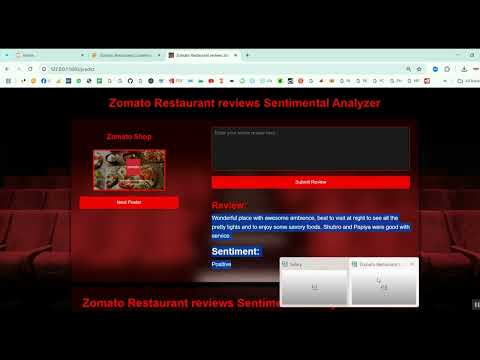
Zomato Restaurant Reviews Sentimental Analyzer in Python Projects
Zomato Restaurant Reviews Sentimental Analyzer in Python Projects
र 1000
⭐ Featured
⭐ Featured

AI & ML Models
Voice Disorder Prediction using Audio Dataset in Python Projects
Voice Disorder Prediction using Audio Dataset in Python Projects
र 1000

AI & ML Models
Vitamin Deficiency Detection Using Image Processing in Python Projects
Vitamin Deficiency Detection Using Image Processing in Python Projects
र 1000