AI & ML Models
0.0 (0 reviews) • 0 downloads
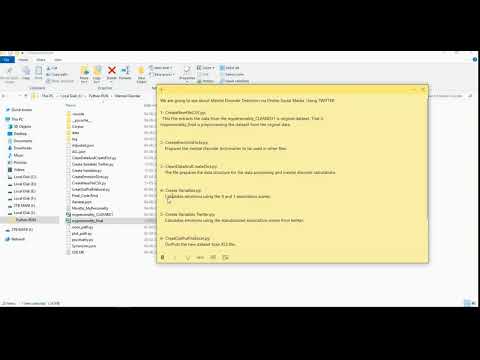
Disorder Twitter Dataset in Python Projects
र 1000
Disorder Twitter Dataset in Python Projects
Technical Details
Domain : Python
Database : Sqlite
Tools : Anaconda
Run Tools: VS Code
Database : Sqlite
Tools : Anaconda
Run Tools: VS Code
Secure Payment
Instant Download
GST Invoice
24/7 Support
About This Product
Disorder Twitter Dataset in Python Projects
Abstract
Social media platforms like Twitter provide massive amounts of user-generated content, making them valuable resources for analyzing mental health conditions and behavioral disorders. The project “Disorder Twitter Dataset in Python” focuses on building a machine learning system that can classify tweets into categories related to mental health disorders (such as depression, anxiety, stress, or bipolar disorder) versus neutral posts. The project uses a Twitter dataset containing labeled disorder-related tweets, which undergo preprocessing steps like tokenization, stop-word removal, lemmatization, and vectorization (TF-IDF, Word2Vec, or BERT embeddings). Machine learning and deep learning models such as Logistic Regression, SVM, LSTM, and BERT are trained for classification. Python libraries like NLTK, Scikit-learn, TensorFlow/Keras, and Pandas are used to implement the system, providing insights into disorder detection through natural language processing (NLP).
Existing System
Current disorder detection approaches rely mainly on clinical interviews and psychological surveys, which are effective but limited by availability, accessibility, and stigma around seeking help. Computational approaches exist but often focus on binary sentiment analysis (positive vs. negative) rather than nuanced classification of mental health conditions. Many existing systems lack robust preprocessing, ignore slang and emojis common on social media, and are not trained on large-scale disorder-related datasets. Moreover, most do not provide real-time applications for analyzing social media text, limiting their use in digital mental health monitoring.
Proposed System
The proposed system leverages Twitter datasets and machine learning/deep learning models to detect and classify disorder-related tweets. The pipeline begins with data preprocessing using NLTK and SpaCy for text cleaning, stop-word removal, tokenization, and lemmatization. Feature extraction is performed using TF-IDF vectors, Word2Vec embeddings, or Transformer-based embeddings (BERT/DistilBERT). Classification models (SVM, Random Forest, CNN, Bi-LSTM, or fine-tuned BERT) are trained and validated using cross-validation techniques to improve performance. The final model outputs the predicted disorder class with a confidence score, enabling insights into how language use reflects mental health. The project can also be extended into a Flask or Streamlit web app, where users input tweets or text, and the system predicts the disorder category in real-time. This makes it useful for research in digital psychiatry and mental health surveillance.
Abstract
Social media platforms like Twitter provide massive amounts of user-generated content, making them valuable resources for analyzing mental health conditions and behavioral disorders. The project “Disorder Twitter Dataset in Python” focuses on building a machine learning system that can classify tweets into categories related to mental health disorders (such as depression, anxiety, stress, or bipolar disorder) versus neutral posts. The project uses a Twitter dataset containing labeled disorder-related tweets, which undergo preprocessing steps like tokenization, stop-word removal, lemmatization, and vectorization (TF-IDF, Word2Vec, or BERT embeddings). Machine learning and deep learning models such as Logistic Regression, SVM, LSTM, and BERT are trained for classification. Python libraries like NLTK, Scikit-learn, TensorFlow/Keras, and Pandas are used to implement the system, providing insights into disorder detection through natural language processing (NLP).
Existing System
Current disorder detection approaches rely mainly on clinical interviews and psychological surveys, which are effective but limited by availability, accessibility, and stigma around seeking help. Computational approaches exist but often focus on binary sentiment analysis (positive vs. negative) rather than nuanced classification of mental health conditions. Many existing systems lack robust preprocessing, ignore slang and emojis common on social media, and are not trained on large-scale disorder-related datasets. Moreover, most do not provide real-time applications for analyzing social media text, limiting their use in digital mental health monitoring.
Proposed System
The proposed system leverages Twitter datasets and machine learning/deep learning models to detect and classify disorder-related tweets. The pipeline begins with data preprocessing using NLTK and SpaCy for text cleaning, stop-word removal, tokenization, and lemmatization. Feature extraction is performed using TF-IDF vectors, Word2Vec embeddings, or Transformer-based embeddings (BERT/DistilBERT). Classification models (SVM, Random Forest, CNN, Bi-LSTM, or fine-tuned BERT) are trained and validated using cross-validation techniques to improve performance. The final model outputs the predicted disorder class with a confidence score, enabling insights into how language use reflects mental health. The project can also be extended into a Flask or Streamlit web app, where users input tweets or text, and the system predicts the disorder category in real-time. This makes it useful for research in digital psychiatry and mental health surveillance.
Customer Reviews (0)
No reviews yet. Be the first!
Related Products
⭐ Featured
AI & ML Models
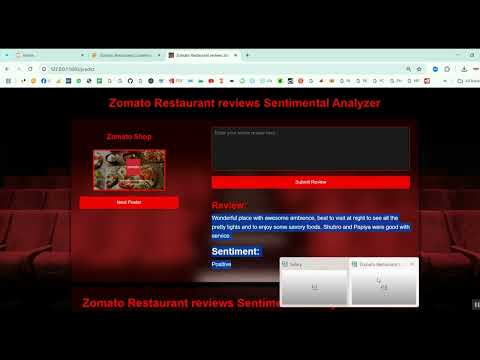
Zomato Restaurant Reviews Sentimental Analyzer in Python Projects
Zomato Restaurant Reviews Sentimental Analyzer in Python Projects
र 1000
⭐ Featured
⭐ Featured
AI & ML Models
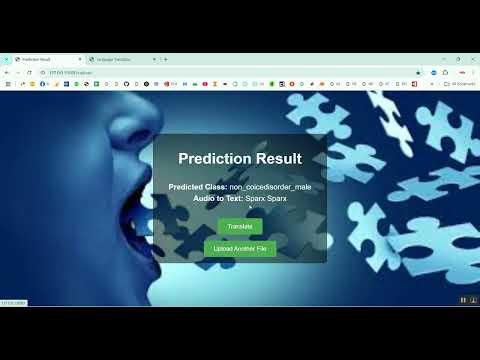
Voice Disorder Prediction using Audio Dataset in Python Projects
Voice Disorder Prediction using Audio Dataset in Python Projects
र 1000
AI & ML Models
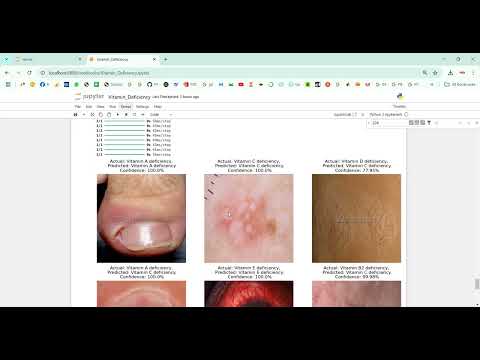
Vitamin Deficiency Detection Using Image Processing in Python Projects
Vitamin Deficiency Detection Using Image Processing in Python Projects
र 1000