AI & ML Models
0.0 (0 reviews) • 0 downloads
Discharge Destination in Python Projects
र 1000
Discharge Destination in Python Projects
Technical Details
Domain : Python
Database : Sqlite
Tools : Anaconda
Run Tools: VS Code
Database : Sqlite
Tools : Anaconda
Run Tools: VS Code
Secure Payment
Instant Download
GST Invoice
24/7 Support
About This Product
Discharge Destination in Python Projects
Abstract
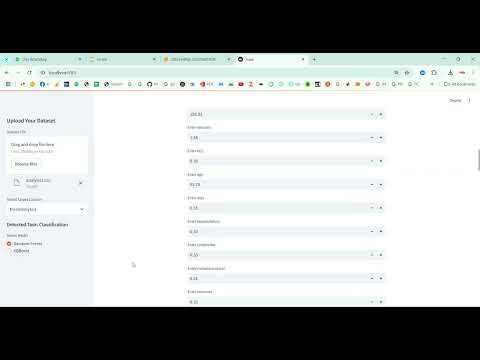
Predicting the discharge destination of patients in hospitals is a crucial task for optimizing healthcare resources, planning post-hospital care, and improving patient outcomes. The project Discharge Destination in Python Projects focuses on developing a predictive system that uses patient medical records, treatment details, and demographic information to determine whether a patient will be discharged home, transferred to another facility, or require specialized care. Python is used as the development platform due to its extensive libraries for data preprocessing, machine learning, and visualization, including Pandas, NumPy, Scikit-learn, TensorFlow, and Matplotlib. The system applies supervised learning algorithms such as Random Forest, Gradient Boosting, XGBoost, and Neural Networks to classify discharge destinations accurately. This predictive approach aids healthcare professionals in planning resources, reducing hospital readmissions, and ensuring patients receive appropriate post-discharge care.
Existing System
Existing methods for determining patient discharge destination largely rely on manual judgment by healthcare professionals based on patient condition, diagnosis, and subjective assessment. Traditional hospital management systems may track patient status and generate alerts, but they do not provide predictive insights. Some hospitals use basic rule-based decision systems, such as if-then guidelines based on diagnosis codes or length of stay, but these approaches cannot capture complex relationships among multiple patient factors. Consequently, manual and rule-based systems may result in inefficient resource allocation, delayed post-discharge planning, and higher readmission rates. There is a clear need for data-driven, predictive tools that can handle large-scale patient datasets and provide real-time recommendations.
Proposed System
The proposed system introduces a Python-based predictive framework for discharge destination classification. Patient data, including demographics, diagnosis, lab results, comorbidities, length of stay, and treatment information, is preprocessed to handle missing values, encode categorical features, and normalize numerical data. Machine learning models such as Random Forest, Gradient Boosting, Support Vector Machines (SVM), and deep neural networks are trained to classify patients into discharge categories: home, rehabilitation facility, nursing home, or other specialized care. Feature importance analysis helps identify critical factors influencing discharge decisions, improving interpretability for healthcare staff. Performance is evaluated using metrics such as accuracy, precision, recall, F1-score, and confusion matrix. The system provides actionable predictions and dashboards for healthcare administrators, enabling better planning of post-discharge services, reducing readmission risks, and improving overall patient care and hospital efficiency.
Abstract
Predicting the discharge destination of patients in hospitals is a crucial task for optimizing healthcare resources, planning post-hospital care, and improving patient outcomes. The project Discharge Destination in Python Projects focuses on developing a predictive system that uses patient medical records, treatment details, and demographic information to determine whether a patient will be discharged home, transferred to another facility, or require specialized care. Python is used as the development platform due to its extensive libraries for data preprocessing, machine learning, and visualization, including Pandas, NumPy, Scikit-learn, TensorFlow, and Matplotlib. The system applies supervised learning algorithms such as Random Forest, Gradient Boosting, XGBoost, and Neural Networks to classify discharge destinations accurately. This predictive approach aids healthcare professionals in planning resources, reducing hospital readmissions, and ensuring patients receive appropriate post-discharge care.
Existing System
Existing methods for determining patient discharge destination largely rely on manual judgment by healthcare professionals based on patient condition, diagnosis, and subjective assessment. Traditional hospital management systems may track patient status and generate alerts, but they do not provide predictive insights. Some hospitals use basic rule-based decision systems, such as if-then guidelines based on diagnosis codes or length of stay, but these approaches cannot capture complex relationships among multiple patient factors. Consequently, manual and rule-based systems may result in inefficient resource allocation, delayed post-discharge planning, and higher readmission rates. There is a clear need for data-driven, predictive tools that can handle large-scale patient datasets and provide real-time recommendations.
Proposed System
The proposed system introduces a Python-based predictive framework for discharge destination classification. Patient data, including demographics, diagnosis, lab results, comorbidities, length of stay, and treatment information, is preprocessed to handle missing values, encode categorical features, and normalize numerical data. Machine learning models such as Random Forest, Gradient Boosting, Support Vector Machines (SVM), and deep neural networks are trained to classify patients into discharge categories: home, rehabilitation facility, nursing home, or other specialized care. Feature importance analysis helps identify critical factors influencing discharge decisions, improving interpretability for healthcare staff. Performance is evaluated using metrics such as accuracy, precision, recall, F1-score, and confusion matrix. The system provides actionable predictions and dashboards for healthcare administrators, enabling better planning of post-discharge services, reducing readmission risks, and improving overall patient care and hospital efficiency.
Customer Reviews (0)
No reviews yet. Be the first!
Related Products
⭐ Featured
AI & ML Models
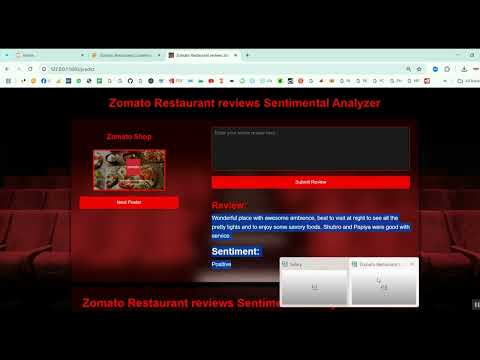
Zomato Restaurant Reviews Sentimental Analyzer in Python Projects
Zomato Restaurant Reviews Sentimental Analyzer in Python Projects
र 1000
⭐ Featured
⭐ Featured
AI & ML Models
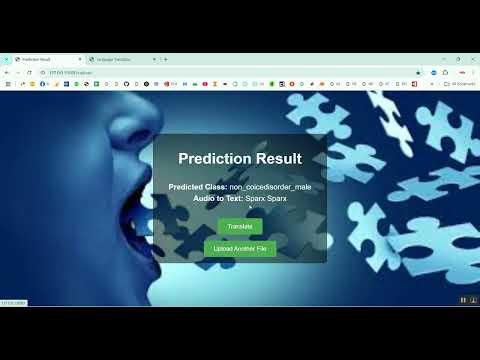
Voice Disorder Prediction using Audio Dataset in Python Projects
Voice Disorder Prediction using Audio Dataset in Python Projects
र 1000
AI & ML Models
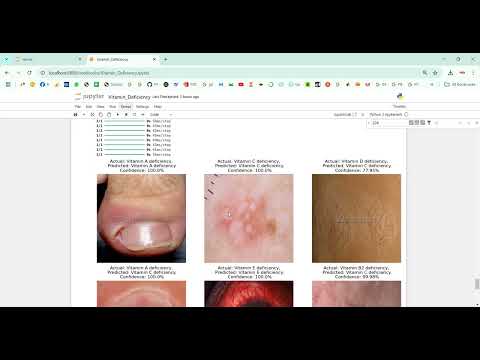
Vitamin Deficiency Detection Using Image Processing in Python Projects
Vitamin Deficiency Detection Using Image Processing in Python Projects
र 1000