AI & ML Models
0.0 (0 reviews) • 0 downloads
Diabetic Transmission Future in Python Projects
र 1000
Diabetic Transmission Future in Python Projects
Technical Details
Domain : Python
Database : Sqlite
Tools : Anaconda
Run Tools: VS Code
Database : Sqlite
Tools : Anaconda
Run Tools: VS Code
Secure Payment
Instant Download
GST Invoice
24/7 Support
About This Product
Diabetic Transmission Future in Python Projects
Abstract
Diabetes is a chronic metabolic disorder that affects millions of people worldwide, and early prediction of its progression or complications can significantly improve patient outcomes. The project Diabetic Transmission Future in Python Projects focuses on developing an intelligent system to forecast the future risk or transmission of diabetes-related complications using patient data. Python is used as the development platform due to its robust libraries for data analysis, machine learning, and visualization, including Pandas, NumPy, Scikit-learn, TensorFlow, and Matplotlib. The system collects historical patient records, such as glucose levels, blood pressure, insulin levels, BMI, lifestyle factors, and demographic data, and applies predictive modeling techniques to estimate future disease trends and risk levels. By enabling early interventions and personalized care strategies, this system aims to reduce the incidence of diabetes complications and improve overall patient management.
Existing System
Existing diabetes monitoring systems primarily rely on periodic medical checkups and manual analysis of patient health data. Traditional statistical methods like linear regression or logistic regression are used for risk estimation, but they often fail to capture complex nonlinear relationships and interactions among various risk factors. Some healthcare applications offer alerts or recommendations based on threshold-based rules, but these approaches lack predictive capabilities and do not provide personalized forecasting. Additionally, many existing systems are limited in integrating large-scale patient data, lifestyle information, or continuous glucose monitoring data, which reduces the accuracy and effectiveness of long-term prediction.
Proposed System
The proposed system introduces a Python-based predictive framework for forecasting diabetes progression and transmission of related complications. Patient data is preprocessed to handle missing values, normalize measurements, and encode categorical variables. Machine learning models such as Random Forest, Gradient Boosting, Support Vector Machines (SVM), and deep learning models like LSTM or ANN are trained to predict the likelihood of diabetes progression, potential complications (e.g., retinopathy, neuropathy, cardiovascular risk), or future glucose trends. Time-series analysis is used for continuous monitoring data, while ensemble models improve accuracy and robustness. The system generates interpretable risk scores and visualizations, providing healthcare providers with actionable insights for preventive interventions and personalized treatment planning. This approach enables early detection, better disease management, and improved quality of life for diabetic patients.
Abstract
Diabetes is a chronic metabolic disorder that affects millions of people worldwide, and early prediction of its progression or complications can significantly improve patient outcomes. The project Diabetic Transmission Future in Python Projects focuses on developing an intelligent system to forecast the future risk or transmission of diabetes-related complications using patient data. Python is used as the development platform due to its robust libraries for data analysis, machine learning, and visualization, including Pandas, NumPy, Scikit-learn, TensorFlow, and Matplotlib. The system collects historical patient records, such as glucose levels, blood pressure, insulin levels, BMI, lifestyle factors, and demographic data, and applies predictive modeling techniques to estimate future disease trends and risk levels. By enabling early interventions and personalized care strategies, this system aims to reduce the incidence of diabetes complications and improve overall patient management.
Existing System
Existing diabetes monitoring systems primarily rely on periodic medical checkups and manual analysis of patient health data. Traditional statistical methods like linear regression or logistic regression are used for risk estimation, but they often fail to capture complex nonlinear relationships and interactions among various risk factors. Some healthcare applications offer alerts or recommendations based on threshold-based rules, but these approaches lack predictive capabilities and do not provide personalized forecasting. Additionally, many existing systems are limited in integrating large-scale patient data, lifestyle information, or continuous glucose monitoring data, which reduces the accuracy and effectiveness of long-term prediction.
Proposed System
The proposed system introduces a Python-based predictive framework for forecasting diabetes progression and transmission of related complications. Patient data is preprocessed to handle missing values, normalize measurements, and encode categorical variables. Machine learning models such as Random Forest, Gradient Boosting, Support Vector Machines (SVM), and deep learning models like LSTM or ANN are trained to predict the likelihood of diabetes progression, potential complications (e.g., retinopathy, neuropathy, cardiovascular risk), or future glucose trends. Time-series analysis is used for continuous monitoring data, while ensemble models improve accuracy and robustness. The system generates interpretable risk scores and visualizations, providing healthcare providers with actionable insights for preventive interventions and personalized treatment planning. This approach enables early detection, better disease management, and improved quality of life for diabetic patients.
Customer Reviews (0)
No reviews yet. Be the first!
Related Products
⭐ Featured
AI & ML Models
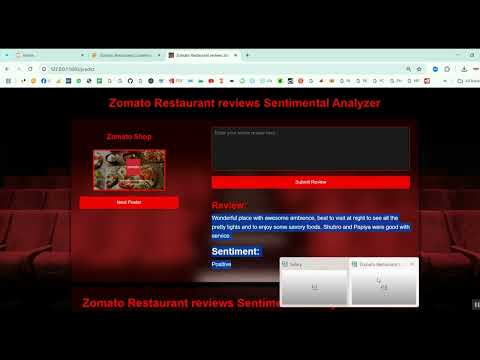
Zomato Restaurant Reviews Sentimental Analyzer in Python Projects
Zomato Restaurant Reviews Sentimental Analyzer in Python Projects
र 1000
⭐ Featured
⭐ Featured
AI & ML Models
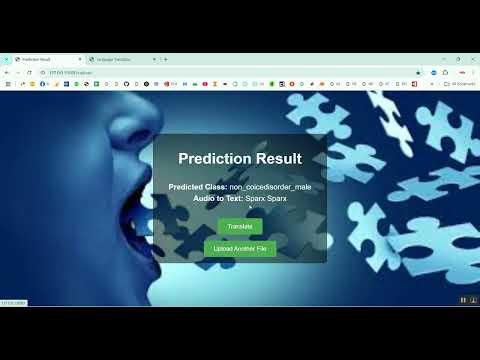
Voice Disorder Prediction using Audio Dataset in Python Projects
Voice Disorder Prediction using Audio Dataset in Python Projects
र 1000
AI & ML Models
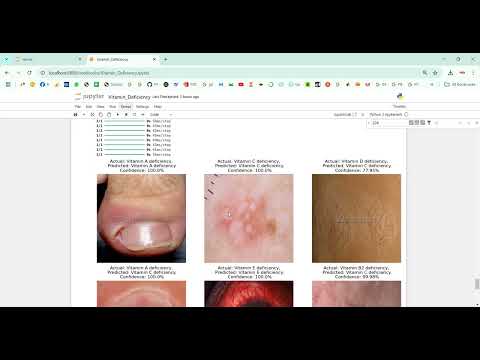
Vitamin Deficiency Detection Using Image Processing in Python Projects
Vitamin Deficiency Detection Using Image Processing in Python Projects
र 1000