AI & ML Models
0.0 (0 reviews) • 0 downloads
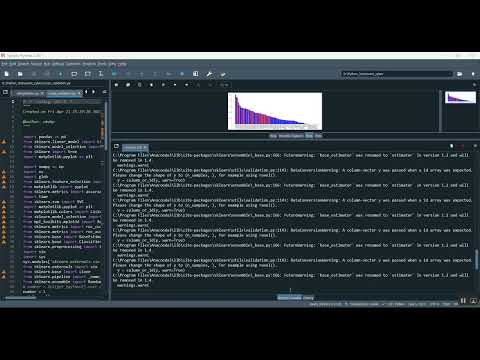
Cyber Event Detection Cross Validation Predicting Feature in Python Projects
र 1000
Cyber Event Detection Cross Validation Predicting Feature in Python Projects
Technical Details
Domain : Python
Database : Sqlite
Tools : Anaconda
Run Tools: VS Code
Database : Sqlite
Tools : Anaconda
Run Tools: VS Code
Secure Payment
Instant Download
GST Invoice
24/7 Support
About This Product
Cyber Event Detection Cross Validation Predicting Feature in Python Projects
Abstract
As cyber threats become more sophisticated and large-scale, detecting and predicting cyber events in real time is crucial for maintaining security in IT infrastructures. The project “Cyber Event Detection Cross Validation Predicting Feature in Python” focuses on building a robust machine learning pipeline for identifying and forecasting cyber events. Using Python’s data science stack, the system ingests network logs and security events, applies preprocessing and feature engineering, and then predicts potential cyber incidents. Cross-validation techniques (such as k-fold, stratified k-fold, and time-series split) are employed to ensure model generalization and avoid overfitting. Predictive features—extracted from packet flows, anomaly scores, and user behavior—are ranked to highlight their importance in cyber event prediction. This project demonstrates how modern machine learning practices can enhance cybersecurity analytics.
Existing System
Current cyber event detection systems are often based on static thresholds, signature-based intrusion detection, or single-pass machine learning models trained without rigorous validation. These approaches tend to suffer from high false positives, poor adaptability to evolving threats, and overfitting due to limited evaluation methods. Most existing tools also do not provide clear visibility into which features are most predictive of cyber events, making it harder for analysts to understand and improve detection strategies. This results in delayed response times, missed anomalies, and limited trust in automated security tools.
Proposed System
The proposed system introduces a Python-based cyber event detection pipeline incorporating both cross-validation and predictive feature analysis. Data from firewalls, IDS logs, or SIEM systems is collected and preprocessed (cleaning, normalization, feature selection). Multiple classification algorithms (such as Logistic Regression, Random Forest, Gradient Boosting, and Deep Neural Networks) are trained using cross-validation to optimize hyperparameters and assess performance across folds. Feature importance methods (like permutation importance or SHAP values) are used to rank predictors and provide explainable insights into the model’s decision-making. The pipeline outputs predicted event categories, confidence scores, and ranked features, enabling security teams to act proactively. A Flask dashboard can be integrated for visualizing alerts, model performance, and top predictive indicators. This approach improves detection accuracy, reduces overfitting, and enhances transparency in cyber event prediction.
Abstract
As cyber threats become more sophisticated and large-scale, detecting and predicting cyber events in real time is crucial for maintaining security in IT infrastructures. The project “Cyber Event Detection Cross Validation Predicting Feature in Python” focuses on building a robust machine learning pipeline for identifying and forecasting cyber events. Using Python’s data science stack, the system ingests network logs and security events, applies preprocessing and feature engineering, and then predicts potential cyber incidents. Cross-validation techniques (such as k-fold, stratified k-fold, and time-series split) are employed to ensure model generalization and avoid overfitting. Predictive features—extracted from packet flows, anomaly scores, and user behavior—are ranked to highlight their importance in cyber event prediction. This project demonstrates how modern machine learning practices can enhance cybersecurity analytics.
Existing System
Current cyber event detection systems are often based on static thresholds, signature-based intrusion detection, or single-pass machine learning models trained without rigorous validation. These approaches tend to suffer from high false positives, poor adaptability to evolving threats, and overfitting due to limited evaluation methods. Most existing tools also do not provide clear visibility into which features are most predictive of cyber events, making it harder for analysts to understand and improve detection strategies. This results in delayed response times, missed anomalies, and limited trust in automated security tools.
Proposed System
The proposed system introduces a Python-based cyber event detection pipeline incorporating both cross-validation and predictive feature analysis. Data from firewalls, IDS logs, or SIEM systems is collected and preprocessed (cleaning, normalization, feature selection). Multiple classification algorithms (such as Logistic Regression, Random Forest, Gradient Boosting, and Deep Neural Networks) are trained using cross-validation to optimize hyperparameters and assess performance across folds. Feature importance methods (like permutation importance or SHAP values) are used to rank predictors and provide explainable insights into the model’s decision-making. The pipeline outputs predicted event categories, confidence scores, and ranked features, enabling security teams to act proactively. A Flask dashboard can be integrated for visualizing alerts, model performance, and top predictive indicators. This approach improves detection accuracy, reduces overfitting, and enhances transparency in cyber event prediction.
Customer Reviews (0)
No reviews yet. Be the first!
Related Products
⭐ Featured

AI & ML Models
Zomato Restaurant Reviews Sentimental Analyzer in Python Projects
Zomato Restaurant Reviews Sentimental Analyzer in Python Projects
र 1000
⭐ Featured
⭐ Featured

AI & ML Models
Voice Disorder Prediction using Audio Dataset in Python Projects
Voice Disorder Prediction using Audio Dataset in Python Projects
र 1000

AI & ML Models
Vitamin Deficiency Detection Using Image Processing in Python Projects
Vitamin Deficiency Detection Using Image Processing in Python Projects
र 1000