AI & ML Models
0.0 (0 reviews) • 0 downloads
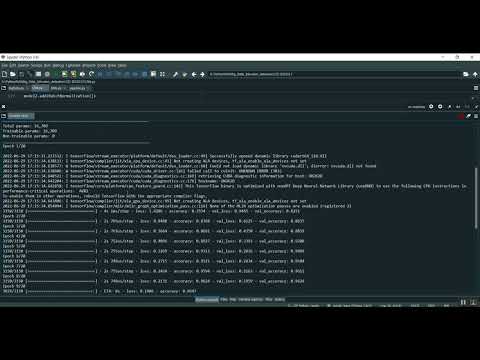
Cyber Attacks in WSN CIC- IDS2017 DARPA1998 Flask App in Python Projects
र 1000
Cyber Attacks in WSN CIC- IDS2017 DARPA1998 Flask App in Python Projects
Technical Details
Domain : Python
Database : Sqlite
Tools : Anaconda
Run Tools: VS Code
Database : Sqlite
Tools : Anaconda
Run Tools: VS Code
Secure Payment
Instant Download
GST Invoice
24/7 Support
About This Product
Cyber Attacks in WSN CIC- IDS2017 DARPA1998 Flask App in Python Projects
Abstract
Wireless Sensor Networks (WSNs) are widely deployed in smart cities, healthcare, and industrial automation due to their low-cost sensing and communication capabilities. However, these networks are highly vulnerable to cyberattacks such as denial of service (DoS), probe attacks, or unauthorized data manipulation. Public datasets like CIC-IDS2017 and DARPA1998 provide benchmark traffic data to train and test intrusion detection models. This project, “Cyber Attacks in WSN CIC-IDS2017 DARPA1998 Flask App in Python”, aims to develop a machine learning–based intrusion detection and classification system integrated into a Flask web app. Using Python libraries such as Pandas, Scikit-learn, TensorFlow/PyTorch, and Matplotlib, the system ingests data from these benchmark datasets, preprocesses it, and builds classification models to identify and categorize cyberattacks in WSN environments. The web interface allows users to upload data, view analytics, and receive real-time attack detection results.
Existing System
Current intrusion detection systems for WSNs mostly rely on static rule sets or shallow machine learning models trained on small, domain-specific datasets. These systems have limited scalability, struggle with large datasets, and cannot handle the diverse types of attacks present in modern benchmarks like CIC-IDS2017 or DARPA1998. In addition, many existing tools lack user-friendly interfaces, making it hard for researchers or practitioners to experiment with multiple models or datasets simultaneously. This leads to high false positives, outdated signatures, and difficulty adapting to evolving attack behaviors.
Proposed System
The proposed system integrates benchmark intrusion datasets (CIC-IDS2017 and DARPA1998) with a Flask-based Python web application to create a versatile WSN cyberattack detection and classification platform. The app includes modules for data upload, preprocessing (feature selection, normalization, encoding), model training (Random Forest, Gradient Boosting, SVM, Deep Neural Networks), and attack prediction. It can classify multiple attack categories (DoS, brute force, infiltration, probe, etc.) and generate performance metrics such as accuracy, precision, recall, and F1-score. The Flask front end offers dashboards, live visualization of attack patterns, and downloadable reports. By combining large-scale datasets with modern machine learning techniques, the system significantly improves detection accuracy and provides a hands-on educational and research tool for cybersecurity in WSNs.
Abstract
Wireless Sensor Networks (WSNs) are widely deployed in smart cities, healthcare, and industrial automation due to their low-cost sensing and communication capabilities. However, these networks are highly vulnerable to cyberattacks such as denial of service (DoS), probe attacks, or unauthorized data manipulation. Public datasets like CIC-IDS2017 and DARPA1998 provide benchmark traffic data to train and test intrusion detection models. This project, “Cyber Attacks in WSN CIC-IDS2017 DARPA1998 Flask App in Python”, aims to develop a machine learning–based intrusion detection and classification system integrated into a Flask web app. Using Python libraries such as Pandas, Scikit-learn, TensorFlow/PyTorch, and Matplotlib, the system ingests data from these benchmark datasets, preprocesses it, and builds classification models to identify and categorize cyberattacks in WSN environments. The web interface allows users to upload data, view analytics, and receive real-time attack detection results.
Existing System
Current intrusion detection systems for WSNs mostly rely on static rule sets or shallow machine learning models trained on small, domain-specific datasets. These systems have limited scalability, struggle with large datasets, and cannot handle the diverse types of attacks present in modern benchmarks like CIC-IDS2017 or DARPA1998. In addition, many existing tools lack user-friendly interfaces, making it hard for researchers or practitioners to experiment with multiple models or datasets simultaneously. This leads to high false positives, outdated signatures, and difficulty adapting to evolving attack behaviors.
Proposed System
The proposed system integrates benchmark intrusion datasets (CIC-IDS2017 and DARPA1998) with a Flask-based Python web application to create a versatile WSN cyberattack detection and classification platform. The app includes modules for data upload, preprocessing (feature selection, normalization, encoding), model training (Random Forest, Gradient Boosting, SVM, Deep Neural Networks), and attack prediction. It can classify multiple attack categories (DoS, brute force, infiltration, probe, etc.) and generate performance metrics such as accuracy, precision, recall, and F1-score. The Flask front end offers dashboards, live visualization of attack patterns, and downloadable reports. By combining large-scale datasets with modern machine learning techniques, the system significantly improves detection accuracy and provides a hands-on educational and research tool for cybersecurity in WSNs.
Customer Reviews (0)
No reviews yet. Be the first!
Related Products
⭐ Featured
AI & ML Models
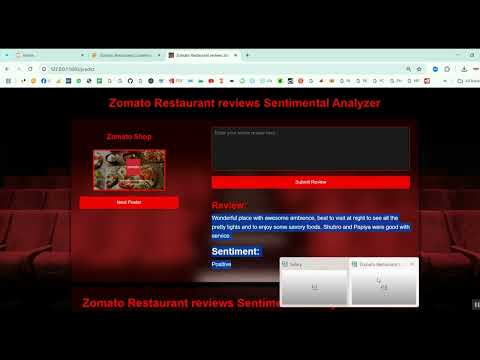
Zomato Restaurant Reviews Sentimental Analyzer in Python Projects
Zomato Restaurant Reviews Sentimental Analyzer in Python Projects
र 1000
⭐ Featured
⭐ Featured
AI & ML Models
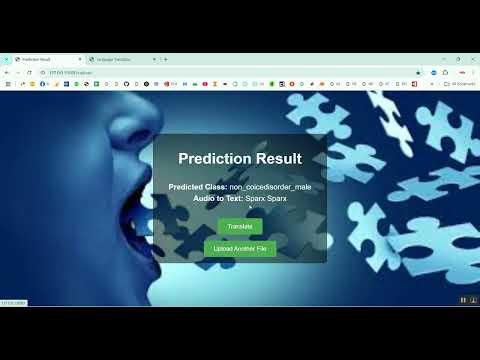
Voice Disorder Prediction using Audio Dataset in Python Projects
Voice Disorder Prediction using Audio Dataset in Python Projects
र 1000
AI & ML Models
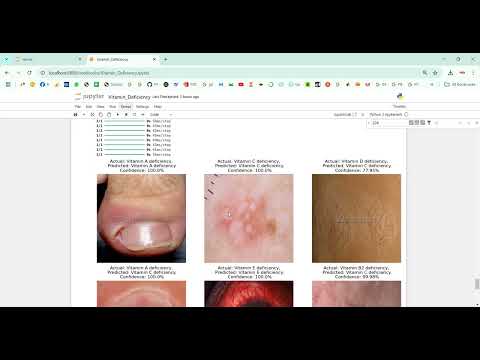
Vitamin Deficiency Detection Using Image Processing in Python Projects
Vitamin Deficiency Detection Using Image Processing in Python Projects
र 1000