AI & ML Models
0.0 (0 reviews) • 0 downloads
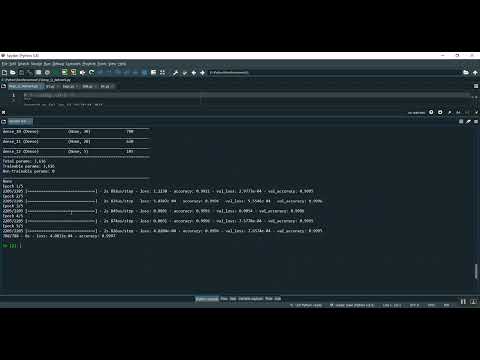
Cyber Attack Deep Q Network ML Classification in Python Projects
र 1000
Cyber Attack Deep Q Network ML Classification in Python Projects
Technical Details
Domain : Python
Database : Sqlite
Tools : Anaconda
Run Tools: VS Code
Database : Sqlite
Tools : Anaconda
Run Tools: VS Code
Secure Payment
Instant Download
GST Invoice
24/7 Support
About This Product
Cyber Attack Deep Q Network ML Classification in Python Projects
Abstract
Cyberattacks on computer networks have become increasingly sophisticated, targeting critical infrastructure, financial systems, and personal data. Traditional intrusion detection systems often fail to detect complex or evolving attack patterns. The project “Cyber Attack Deep Q Network ML Classification in Python” aims to apply Deep Reinforcement Learning — specifically Deep Q Networks (DQN) — combined with machine learning classification techniques to identify and categorize cyberattacks in real time. By training a DQN agent on network traffic data, the system can learn to classify malicious activities and take optimal decisions in terms of mitigation or alerting. Python’s ecosystem of libraries such as TensorFlow/PyTorch, Scikit-learn, NumPy, and Pandas enables building, training, and evaluating the model efficiently. This project enhances cybersecurity research by demonstrating how reinforcement learning can be integrated with classification approaches for improved threat detection.
Existing System
Current intrusion detection and cyberattack classification systems largely depend on supervised machine learning models such as Random Forests, SVMs, or Logistic Regression trained on static datasets like KDDCup99 or NSL-KDD. While effective to a degree, these systems often exhibit high false positive rates and cannot adapt dynamically to new attack patterns. They also rely on fixed feature sets and offline training, making them less effective in rapidly changing network environments. Furthermore, most existing systems focus on signature-based detection rather than learning policies that can generalize to unseen threats, limiting their ability to provide proactive cybersecurity measures.
Proposed System
The proposed system introduces a Deep Q Network integrated with ML classification to detect and classify cyberattacks dynamically. It processes live or recorded network traffic data, extracts key features (such as packet rates, protocol types, and anomaly scores), and feeds them into a DQN agent. The agent learns an optimal policy for distinguishing between benign and malicious activities while simultaneously classifying the type of attack (e.g., DDoS, phishing, malware injection). Python libraries like TensorFlow or PyTorch are used to build the deep reinforcement learning model, while Scikit-learn handles preprocessing and auxiliary classification tasks. This hybrid approach allows the system to adaptively learn from feedback, reduce false positives, and improve real-time response capabilities. The Flask framework can be added to build a web-based dashboard for visualizing detected threats, system status, and model performance.
Abstract
Cyberattacks on computer networks have become increasingly sophisticated, targeting critical infrastructure, financial systems, and personal data. Traditional intrusion detection systems often fail to detect complex or evolving attack patterns. The project “Cyber Attack Deep Q Network ML Classification in Python” aims to apply Deep Reinforcement Learning — specifically Deep Q Networks (DQN) — combined with machine learning classification techniques to identify and categorize cyberattacks in real time. By training a DQN agent on network traffic data, the system can learn to classify malicious activities and take optimal decisions in terms of mitigation or alerting. Python’s ecosystem of libraries such as TensorFlow/PyTorch, Scikit-learn, NumPy, and Pandas enables building, training, and evaluating the model efficiently. This project enhances cybersecurity research by demonstrating how reinforcement learning can be integrated with classification approaches for improved threat detection.
Existing System
Current intrusion detection and cyberattack classification systems largely depend on supervised machine learning models such as Random Forests, SVMs, or Logistic Regression trained on static datasets like KDDCup99 or NSL-KDD. While effective to a degree, these systems often exhibit high false positive rates and cannot adapt dynamically to new attack patterns. They also rely on fixed feature sets and offline training, making them less effective in rapidly changing network environments. Furthermore, most existing systems focus on signature-based detection rather than learning policies that can generalize to unseen threats, limiting their ability to provide proactive cybersecurity measures.
Proposed System
The proposed system introduces a Deep Q Network integrated with ML classification to detect and classify cyberattacks dynamically. It processes live or recorded network traffic data, extracts key features (such as packet rates, protocol types, and anomaly scores), and feeds them into a DQN agent. The agent learns an optimal policy for distinguishing between benign and malicious activities while simultaneously classifying the type of attack (e.g., DDoS, phishing, malware injection). Python libraries like TensorFlow or PyTorch are used to build the deep reinforcement learning model, while Scikit-learn handles preprocessing and auxiliary classification tasks. This hybrid approach allows the system to adaptively learn from feedback, reduce false positives, and improve real-time response capabilities. The Flask framework can be added to build a web-based dashboard for visualizing detected threats, system status, and model performance.
Customer Reviews (0)
No reviews yet. Be the first!
Related Products
⭐ Featured
AI & ML Models
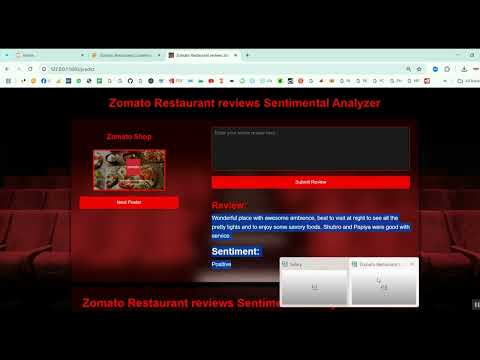
Zomato Restaurant Reviews Sentimental Analyzer in Python Projects
Zomato Restaurant Reviews Sentimental Analyzer in Python Projects
र 1000
⭐ Featured
⭐ Featured

AI & ML Models
Voice Disorder Prediction using Audio Dataset in Python Projects
Voice Disorder Prediction using Audio Dataset in Python Projects
र 1000

AI & ML Models
Vitamin Deficiency Detection Using Image Processing in Python Projects
Vitamin Deficiency Detection Using Image Processing in Python Projects
र 1000