AI & ML Models
0.0 (0 reviews) • 0 downloads
Cryto Currency Sentiment Analysis in Python Projects
र 1000
Cryto Currency Sentiment Analysis in Python Projects
Technical Details
Domain : Python
Database : Sqlite
Tools : Anaconda
Run Tools: VS Code
Database : Sqlite
Tools : Anaconda
Run Tools: VS Code
Secure Payment
Instant Download
GST Invoice
24/7 Support
About This Product
Cryto Currency Sentiment Analysis in Python Projects
Abstract
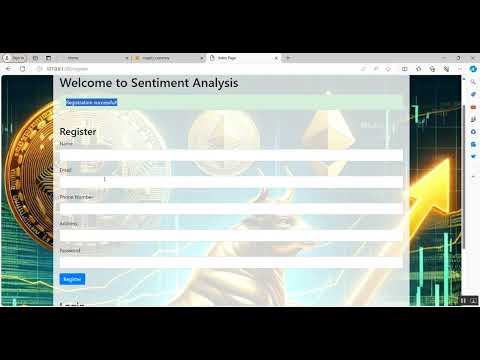
Cryptocurrency markets are highly volatile, influenced by news, social media, and public sentiment. Understanding market sentiment is critical for predicting price movements and making informed investment decisions. This project develops a Python-based Cryptocurrency Sentiment Analysis system that analyzes textual data from sources such as social media, news articles, and forums to determine the sentiment associated with different cryptocurrencies. The system leverages natural language processing (NLP) techniques and machine learning algorithms to classify sentiments as positive, negative, or neutral. By providing insights into market trends and investor sentiment, the system aids traders, investors, and analysts in strategic decision-making and risk management.
Existing System
Traditional methods of cryptocurrency analysis rely heavily on historical price trends, technical indicators, and expert opinions. While these methods can identify past patterns, they often fail to account for the real-time influence of public sentiment on market behavior. Some automated systems attempt sentiment analysis using simple keyword matching or rule-based approaches, but these methods are limited in handling complex language, sarcasm, or context. Additionally, existing systems may lack real-time capabilities or scalability to analyze large volumes of social media and news data efficiently. Consequently, traditional approaches are insufficient for capturing the dynamic sentiment-driven nature of cryptocurrency markets.
Proposed System
The proposed system introduces a Python-based Cryptocurrency Sentiment Analysis framework that integrates natural language processing and machine learning to analyze and predict market sentiment effectively. Text data from sources like Twitter, Reddit, and cryptocurrency news websites is collected, cleaned, and preprocessed using techniques such as tokenization, stop-word removal, and stemming/lemmatization. Sentiment features are extracted and fed into machine learning classifiers such as Logistic Regression, Naive Bayes, Random Forest, or deep learning models like LSTM for sentiment prediction. Python libraries including Pandas, NumPy, NLTK, TextBlob, Scikit-learn, and TensorFlow are used for data processing, model training, and evaluation. The system provides real-time sentiment scores and visualizations, enabling investors and analysts to make informed trading decisions, manage risks, and understand market behavior based on public opinion.
Abstract
Cryptocurrency markets are highly volatile, influenced by news, social media, and public sentiment. Understanding market sentiment is critical for predicting price movements and making informed investment decisions. This project develops a Python-based Cryptocurrency Sentiment Analysis system that analyzes textual data from sources such as social media, news articles, and forums to determine the sentiment associated with different cryptocurrencies. The system leverages natural language processing (NLP) techniques and machine learning algorithms to classify sentiments as positive, negative, or neutral. By providing insights into market trends and investor sentiment, the system aids traders, investors, and analysts in strategic decision-making and risk management.
Existing System
Traditional methods of cryptocurrency analysis rely heavily on historical price trends, technical indicators, and expert opinions. While these methods can identify past patterns, they often fail to account for the real-time influence of public sentiment on market behavior. Some automated systems attempt sentiment analysis using simple keyword matching or rule-based approaches, but these methods are limited in handling complex language, sarcasm, or context. Additionally, existing systems may lack real-time capabilities or scalability to analyze large volumes of social media and news data efficiently. Consequently, traditional approaches are insufficient for capturing the dynamic sentiment-driven nature of cryptocurrency markets.
Proposed System
The proposed system introduces a Python-based Cryptocurrency Sentiment Analysis framework that integrates natural language processing and machine learning to analyze and predict market sentiment effectively. Text data from sources like Twitter, Reddit, and cryptocurrency news websites is collected, cleaned, and preprocessed using techniques such as tokenization, stop-word removal, and stemming/lemmatization. Sentiment features are extracted and fed into machine learning classifiers such as Logistic Regression, Naive Bayes, Random Forest, or deep learning models like LSTM for sentiment prediction. Python libraries including Pandas, NumPy, NLTK, TextBlob, Scikit-learn, and TensorFlow are used for data processing, model training, and evaluation. The system provides real-time sentiment scores and visualizations, enabling investors and analysts to make informed trading decisions, manage risks, and understand market behavior based on public opinion.
Customer Reviews (0)
No reviews yet. Be the first!
Related Products
⭐ Featured
AI & ML Models
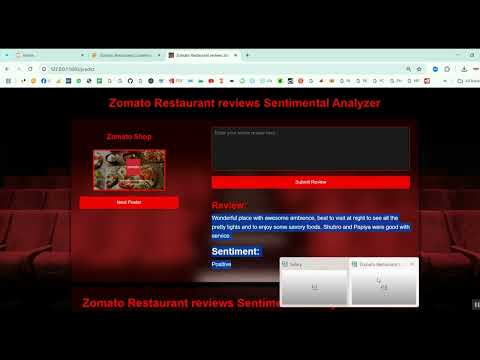
Zomato Restaurant Reviews Sentimental Analyzer in Python Projects
Zomato Restaurant Reviews Sentimental Analyzer in Python Projects
र 1000
⭐ Featured
⭐ Featured

AI & ML Models
Voice Disorder Prediction using Audio Dataset in Python Projects
Voice Disorder Prediction using Audio Dataset in Python Projects
र 1000

AI & ML Models
Vitamin Deficiency Detection Using Image Processing in Python Projects
Vitamin Deficiency Detection Using Image Processing in Python Projects
र 1000