Django Projects
0.0 (0 reviews) • 0 downloads
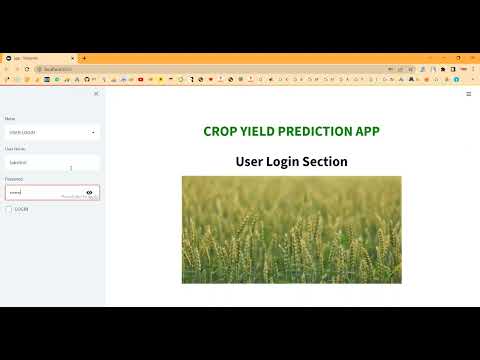
Crop Yield Prediction Using Machine Learning Techniques in Python Projects
र 1000
Crop Yield Prediction Using Machine Learning Techniques in Python Projects
Technical Details
Domain : Python
Database : Sqlite
Tools : Anaconda
Run Tools: VS Code
Database : Sqlite
Tools : Anaconda
Run Tools: VS Code
Secure Payment
Instant Download
GST Invoice
24/7 Support
About This Product
Crop Yield Prediction Using Machine Learning Techniques in Python Projects
Abstract
Crop yield prediction is one of the most important applications of data science in agriculture, as it helps farmers, researchers, and policymakers plan cultivation strategies, resource allocation, and market decisions. This project, Crop Yield Prediction Using Machine Learning Techniques in Python, focuses on predicting the yield of crops based on features such as soil properties, rainfall, temperature, humidity, and other climatic conditions. The system leverages Python libraries like Pandas, NumPy, Scikit-learn, Matplotlib, and Seaborn to preprocess data, train multiple ML models such as Linear Regression, Decision Tree, Random Forest, Support Vector Machines (SVM), and Artificial Neural Networks (ANN), and evaluate them using accuracy, RMSE, and R² score. The model assists farmers by providing data-driven insights into expected yields, helping them reduce risks and improve profitability.
Existing System
The current methods of yield prediction mostly depend on historical yield data, farmer experience, or government reports, which are time-consuming, generalized, and inaccurate at local levels. Some statistical models are used, but they lack the ability to capture complex nonlinear interactions among multiple environmental and soil factors. Moreover, traditional systems rarely provide real-time prediction or interactive interfaces for farmers, making them impractical for day-to-day agricultural decision-making.
Proposed System
The proposed system applies modern machine learning techniques to improve the accuracy and usability of crop yield prediction. The workflow includes data preprocessing (handling missing values, encoding categorical variables, feature scaling), feature engineering (selecting rainfall, soil fertility, temperature, crop type, and fertilizer usage as key features), and model training using various ML algorithms. Regression models estimate yield values, while classification models categorize yield levels (high, medium, low). The system is evaluated with cross-validation and performance metrics to select the best model. Compared to the existing system, the proposed framework provides more accurate, scalable, and adaptive predictions, supporting precision agriculture and assisting both farmers and policymakers.
Abstract
Crop yield prediction is one of the most important applications of data science in agriculture, as it helps farmers, researchers, and policymakers plan cultivation strategies, resource allocation, and market decisions. This project, Crop Yield Prediction Using Machine Learning Techniques in Python, focuses on predicting the yield of crops based on features such as soil properties, rainfall, temperature, humidity, and other climatic conditions. The system leverages Python libraries like Pandas, NumPy, Scikit-learn, Matplotlib, and Seaborn to preprocess data, train multiple ML models such as Linear Regression, Decision Tree, Random Forest, Support Vector Machines (SVM), and Artificial Neural Networks (ANN), and evaluate them using accuracy, RMSE, and R² score. The model assists farmers by providing data-driven insights into expected yields, helping them reduce risks and improve profitability.
Existing System
The current methods of yield prediction mostly depend on historical yield data, farmer experience, or government reports, which are time-consuming, generalized, and inaccurate at local levels. Some statistical models are used, but they lack the ability to capture complex nonlinear interactions among multiple environmental and soil factors. Moreover, traditional systems rarely provide real-time prediction or interactive interfaces for farmers, making them impractical for day-to-day agricultural decision-making.
Proposed System
The proposed system applies modern machine learning techniques to improve the accuracy and usability of crop yield prediction. The workflow includes data preprocessing (handling missing values, encoding categorical variables, feature scaling), feature engineering (selecting rainfall, soil fertility, temperature, crop type, and fertilizer usage as key features), and model training using various ML algorithms. Regression models estimate yield values, while classification models categorize yield levels (high, medium, low). The system is evaluated with cross-validation and performance metrics to select the best model. Compared to the existing system, the proposed framework provides more accurate, scalable, and adaptive predictions, supporting precision agriculture and assisting both farmers and policymakers.
Customer Reviews (0)
No reviews yet. Be the first!
Related Products
⭐ Featured
⭐ Featured

Django Projects
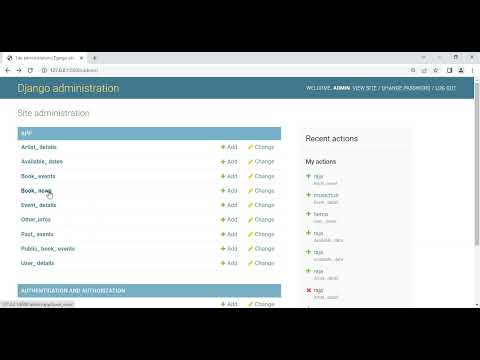
Music Event Booking App in Django Python
Music Event Booking App in Django Python
र 1000
⭐ Featured
Django Projects
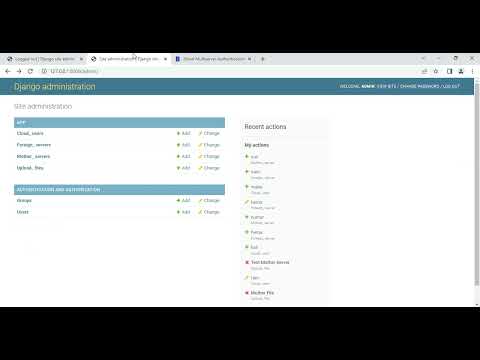
Multi Server Management System in Django Python
Multi Server Management System in Django Python
र 1000
⭐ Featured

Django Projects
Multi Authority Access Control in Django Python
Multi Authority Access Control in Django Python
र 1000