AI & ML Models
0.0 (0 reviews) • 0 downloads
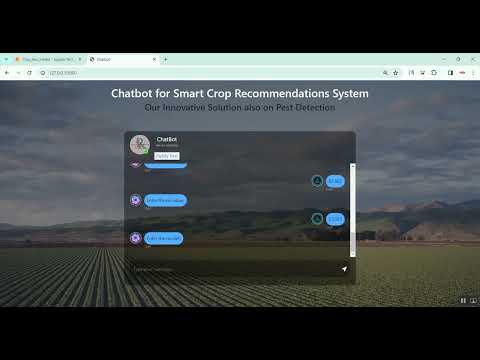
Crop Recommendation Pets Detection in Python Projects
र 1000
Crop Recommendation Pets Detection in Python Projects
Technical Details
Domain : Python
Database : Sqlite
Tools : Anaconda
Run Tools: VS Code
Database : Sqlite
Tools : Anaconda
Run Tools: VS Code
Secure Payment
Instant Download
GST Invoice
24/7 Support
About This Product
Crop Recommendation Pets Detection in Python Projects
Abstract
Efficient crop monitoring and yield prediction are critical for ensuring food security and optimizing agricultural productivity. Traditional methods of monitoring crops are often manual, time-consuming, and prone to errors due to environmental variability and large farm areas. This project develops a Python-based system for crop plant monitoring and prediction, leveraging data from sensors, images, and environmental parameters such as temperature, humidity, and soil moisture. Machine learning models analyze this data to monitor plant health, detect potential diseases, and predict crop yield. By automating crop monitoring and forecasting, the system enables farmers to make data-driven decisions, reduce losses, optimize resource usage, and improve overall agricultural productivity.
Existing System
Traditional crop monitoring methods rely on manual observation and periodic inspection by farmers or agricultural experts. While this approach provides direct insights, it is inefficient for large-scale farms and often leads to delayed interventions in case of pest infestations, diseases, or nutrient deficiencies. Some automated systems use simple sensor networks or rule-based decision support, but they lack predictive capabilities and fail to integrate multiple environmental factors effectively. Existing methods also struggle to process and analyze large datasets in real-time, making it difficult to provide timely recommendations. Consequently, traditional and early automated systems are limited in accuracy, scalability, and proactive crop management.
Proposed System
The proposed system introduces a Python-based framework for crop plant monitoring and yield prediction using machine learning and data analytics techniques. Data from IoT sensors, satellite images, and weather stations is collected and preprocessed to remove noise and normalize values. Features such as soil moisture, temperature, humidity, and leaf health indicators are extracted and used to train predictive models like Random Forest, Support Vector Machines (SVM), or Neural Networks. The system can detect plant stress, predict crop yield, and provide actionable recommendations for irrigation, fertilization, and pest control. Python libraries such as Pandas, NumPy, OpenCV, TensorFlow, and Scikit-learn are employed for data handling, modeling, and visualization. By providing real-time monitoring and accurate predictions, the system enhances decision-making for farmers, reduces crop losses, and improves agricultural efficiency.
Abstract
Efficient crop monitoring and yield prediction are critical for ensuring food security and optimizing agricultural productivity. Traditional methods of monitoring crops are often manual, time-consuming, and prone to errors due to environmental variability and large farm areas. This project develops a Python-based system for crop plant monitoring and prediction, leveraging data from sensors, images, and environmental parameters such as temperature, humidity, and soil moisture. Machine learning models analyze this data to monitor plant health, detect potential diseases, and predict crop yield. By automating crop monitoring and forecasting, the system enables farmers to make data-driven decisions, reduce losses, optimize resource usage, and improve overall agricultural productivity.
Existing System
Traditional crop monitoring methods rely on manual observation and periodic inspection by farmers or agricultural experts. While this approach provides direct insights, it is inefficient for large-scale farms and often leads to delayed interventions in case of pest infestations, diseases, or nutrient deficiencies. Some automated systems use simple sensor networks or rule-based decision support, but they lack predictive capabilities and fail to integrate multiple environmental factors effectively. Existing methods also struggle to process and analyze large datasets in real-time, making it difficult to provide timely recommendations. Consequently, traditional and early automated systems are limited in accuracy, scalability, and proactive crop management.
Proposed System
The proposed system introduces a Python-based framework for crop plant monitoring and yield prediction using machine learning and data analytics techniques. Data from IoT sensors, satellite images, and weather stations is collected and preprocessed to remove noise and normalize values. Features such as soil moisture, temperature, humidity, and leaf health indicators are extracted and used to train predictive models like Random Forest, Support Vector Machines (SVM), or Neural Networks. The system can detect plant stress, predict crop yield, and provide actionable recommendations for irrigation, fertilization, and pest control. Python libraries such as Pandas, NumPy, OpenCV, TensorFlow, and Scikit-learn are employed for data handling, modeling, and visualization. By providing real-time monitoring and accurate predictions, the system enhances decision-making for farmers, reduces crop losses, and improves agricultural efficiency.
Customer Reviews (0)
No reviews yet. Be the first!
Related Products
⭐ Featured
AI & ML Models
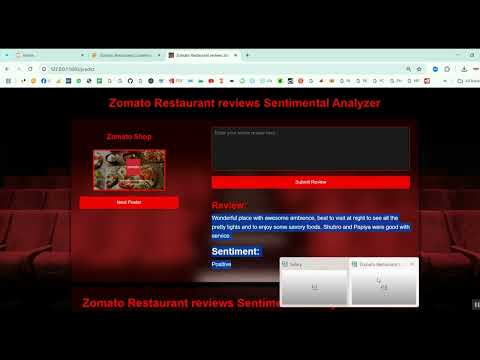
Zomato Restaurant Reviews Sentimental Analyzer in Python Projects
Zomato Restaurant Reviews Sentimental Analyzer in Python Projects
र 1000
⭐ Featured
⭐ Featured
AI & ML Models
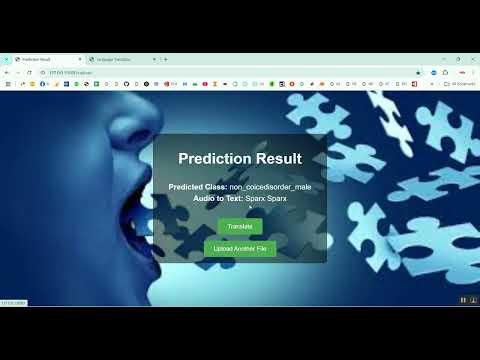
Voice Disorder Prediction using Audio Dataset in Python Projects
Voice Disorder Prediction using Audio Dataset in Python Projects
र 1000
AI & ML Models
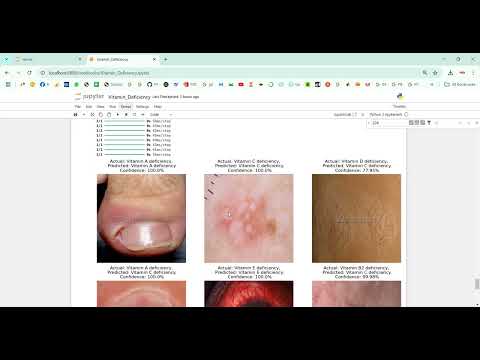
Vitamin Deficiency Detection Using Image Processing in Python Projects
Vitamin Deficiency Detection Using Image Processing in Python Projects
र 1000