Django Projects
0.0 (0 reviews) • 0 downloads
Crime Data Analyis in India in Python Projects
र 1000
Crime Data Analyis in India in Python Projects
Technical Details
Domain : Python
Database : Sqlite
Tools : Anaconda
Run Tools: VS Code
Database : Sqlite
Tools : Anaconda
Run Tools: VS Code
Secure Payment
Instant Download
GST Invoice
24/7 Support
About This Product
Crime Data Analyis in India in Python Projects
Abstract
Crime has become a major social issue in India, and analyzing crime patterns can help in policy-making, law enforcement, and public awareness. This project, Crime Data Analysis in India Using Python, focuses on collecting and analyzing crime-related datasets such as thefts, assaults, murders, cybercrime, and domestic violence across different states and years. Using Python libraries like Pandas, NumPy, Matplotlib, Seaborn, and Scikit-learn, the project performs exploratory data analysis (EDA), visualization, and predictive modeling to identify trends, hotspots, and correlations. The system provides insights into crime distribution by region, gender, and year, enabling authorities and researchers to make data-driven decisions to improve safety and crime prevention strategies.
Existing System
The existing crime analysis in India is largely handled through government reports, statistical yearbooks, and manual analysis. While these provide raw information, they are often static, complex, and difficult for the public to interpret. Many current systems lack automation, real-time analysis, and visualization tools, making it hard for policymakers or citizens to extract actionable insights. Moreover, predictive modeling for future crime trends is rarely integrated into these traditional approaches.
Proposed System
The proposed system introduces a Python-based crime data analysis framework that uses data preprocessing, visualization, and machine learning to study Indian crime datasets. The workflow includes data collection (from NCRB or Kaggle datasets), data cleaning and preprocessing, exploratory analysis with heatmaps, bar plots, and trend graphs, and predictive modeling using ML algorithms such as Linear Regression, Random Forest, or Clustering to forecast crime patterns. Compared to the existing system, this approach offers interactive visualization, data-driven insights, and prediction capabilities, making it more user-friendly for researchers, law enforcement, and the general public.
Abstract
Crime has become a major social issue in India, and analyzing crime patterns can help in policy-making, law enforcement, and public awareness. This project, Crime Data Analysis in India Using Python, focuses on collecting and analyzing crime-related datasets such as thefts, assaults, murders, cybercrime, and domestic violence across different states and years. Using Python libraries like Pandas, NumPy, Matplotlib, Seaborn, and Scikit-learn, the project performs exploratory data analysis (EDA), visualization, and predictive modeling to identify trends, hotspots, and correlations. The system provides insights into crime distribution by region, gender, and year, enabling authorities and researchers to make data-driven decisions to improve safety and crime prevention strategies.
Existing System
The existing crime analysis in India is largely handled through government reports, statistical yearbooks, and manual analysis. While these provide raw information, they are often static, complex, and difficult for the public to interpret. Many current systems lack automation, real-time analysis, and visualization tools, making it hard for policymakers or citizens to extract actionable insights. Moreover, predictive modeling for future crime trends is rarely integrated into these traditional approaches.
Proposed System
The proposed system introduces a Python-based crime data analysis framework that uses data preprocessing, visualization, and machine learning to study Indian crime datasets. The workflow includes data collection (from NCRB or Kaggle datasets), data cleaning and preprocessing, exploratory analysis with heatmaps, bar plots, and trend graphs, and predictive modeling using ML algorithms such as Linear Regression, Random Forest, or Clustering to forecast crime patterns. Compared to the existing system, this approach offers interactive visualization, data-driven insights, and prediction capabilities, making it more user-friendly for researchers, law enforcement, and the general public.
Customer Reviews (0)
No reviews yet. Be the first!
Related Products
⭐ Featured
⭐ Featured

Django Projects
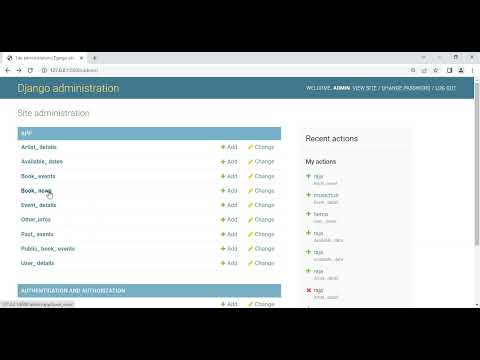
Music Event Booking App in Django Python
Music Event Booking App in Django Python
र 1000
⭐ Featured
Django Projects
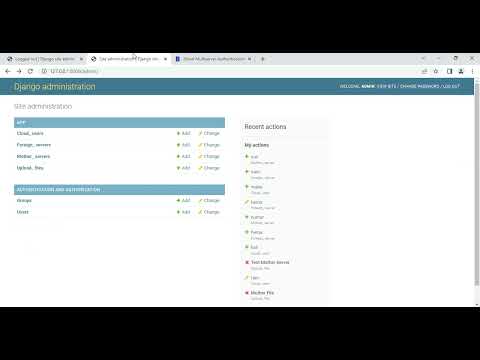
Multi Server Management System in Django Python
Multi Server Management System in Django Python
र 1000
⭐ Featured

Django Projects
Multi Authority Access Control in Django Python
Multi Authority Access Control in Django Python
र 1000