Django Projects
0.0 (0 reviews) • 0 downloads
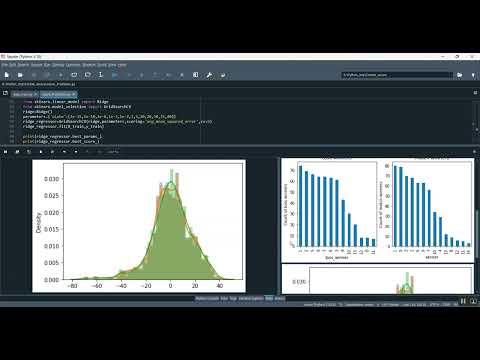
Cricket Score First Innings Score ML in Python Projects
र 1000
Cricket Score First Innings Score ML in Python Projects
Technical Details
Domain : Python
Database : Sqlite
Tools : Anaconda
Run Tools: VS Code
Database : Sqlite
Tools : Anaconda
Run Tools: VS Code
Secure Payment
Instant Download
GST Invoice
24/7 Support
About This Product
Cricket Score First Innings Score ML in Python Projects
Abstract
Cricket is one of the most popular sports worldwide, and predicting the first innings score has significant importance for players, analysts, betting markets, and spectators. Estimating the target score involves analyzing factors such as overs played, wickets fallen, run rate, batting lineup, and opposition bowling strength. This project, Cricket First Innings Score Prediction Using Machine Learning in Python, aims to develop a predictive model that estimates the final score of a team in the first innings based on real-time match data. Using Python libraries such as Pandas, NumPy, Scikit-learn, and Matplotlib, the dataset is preprocessed, key features are extracted, and machine learning models such as Linear Regression, Random Forest, or Gradient Boosting are applied to predict the score. The system helps in strategic planning and provides real-time insights during live matches.
Existing System
The existing methods for cricket score prediction largely rely on statistical averages, expert judgment, or basic regression techniques. These approaches often fail to consider dynamic match situations such as wicket pressure, pitch conditions, and bowling variations. Moreover, they do not adapt to real-time changes in match flow, resulting in inaccurate or biased score forecasts. Traditional systems are also limited in their use of historical data, which restricts their predictive performance in complex match scenarios.
Proposed System
The proposed system applies machine learning techniques to predict the first innings score in cricket. The workflow includes data collection (historical match datasets including overs, wickets, runs, extras, and strike rates), feature engineering (run rate calculation, wickets vs overs ratio, batting team, bowling team, and venue), and model training using ML algorithms like Linear Regression, Random Forest, and Gradient Boosting. The trained model then predicts the final score of the innings based on the current state of play. Compared to existing systems, this approach leverages historical data, real-time inputs, and advanced ML models, offering more accurate predictions and adaptability to varying conditions.
Abstract
Cricket is one of the most popular sports worldwide, and predicting the first innings score has significant importance for players, analysts, betting markets, and spectators. Estimating the target score involves analyzing factors such as overs played, wickets fallen, run rate, batting lineup, and opposition bowling strength. This project, Cricket First Innings Score Prediction Using Machine Learning in Python, aims to develop a predictive model that estimates the final score of a team in the first innings based on real-time match data. Using Python libraries such as Pandas, NumPy, Scikit-learn, and Matplotlib, the dataset is preprocessed, key features are extracted, and machine learning models such as Linear Regression, Random Forest, or Gradient Boosting are applied to predict the score. The system helps in strategic planning and provides real-time insights during live matches.
Existing System
The existing methods for cricket score prediction largely rely on statistical averages, expert judgment, or basic regression techniques. These approaches often fail to consider dynamic match situations such as wicket pressure, pitch conditions, and bowling variations. Moreover, they do not adapt to real-time changes in match flow, resulting in inaccurate or biased score forecasts. Traditional systems are also limited in their use of historical data, which restricts their predictive performance in complex match scenarios.
Proposed System
The proposed system applies machine learning techniques to predict the first innings score in cricket. The workflow includes data collection (historical match datasets including overs, wickets, runs, extras, and strike rates), feature engineering (run rate calculation, wickets vs overs ratio, batting team, bowling team, and venue), and model training using ML algorithms like Linear Regression, Random Forest, and Gradient Boosting. The trained model then predicts the final score of the innings based on the current state of play. Compared to existing systems, this approach leverages historical data, real-time inputs, and advanced ML models, offering more accurate predictions and adaptability to varying conditions.
Customer Reviews (0)
No reviews yet. Be the first!
Related Products
⭐ Featured
⭐ Featured

Django Projects
Music Event Booking App in Django Python
Music Event Booking App in Django Python
र 1000
⭐ Featured
Django Projects
Multi Server Management System in Django Python
Multi Server Management System in Django Python
र 1000
⭐ Featured

Django Projects
Multi Authority Access Control in Django Python
Multi Authority Access Control in Django Python
र 1000