Django Projects
0.0 (0 reviews) • 0 downloads
Credit Card LSTM RNN in Python Projects
Credit Card LSTM RNN in Python Projects
Technical Details
Domain : Python
Database : Sqlite
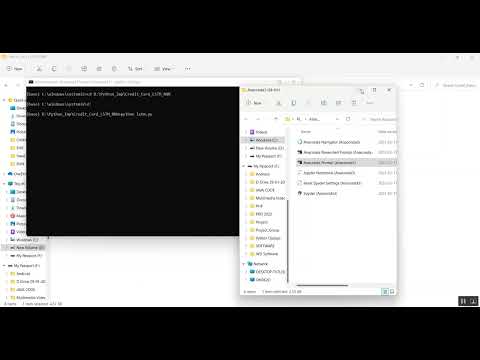
Tools : Anaconda
Run Tools: VS Code
Database : Sqlite
Tools : Anaconda
Run Tools: VS Code
Secure Payment
Instant Download
GST Invoice
24/7 Support
About This Product
Credit Card LSTM RNN in Python Projects
Abstract
Credit card fraud is one of the most pressing challenges in digital financial transactions, leading to billions of dollars in losses worldwide. Detecting fraud efficiently requires models that can learn temporal dependencies in transaction sequences and adapt to dynamic fraud patterns. This project, Credit Card Fraud Detection Using LSTM and RNN in Python, applies Recurrent Neural Networks (RNN) and Long Short-Term Memory (LSTM) models to predict fraudulent activities. The system preprocesses credit card transaction data, balances the dataset using techniques such as SMOTE or undersampling, and trains deep learning models to classify transactions as genuine or fraudulent. Built with Python libraries such as TensorFlow/Keras, Pandas, NumPy, and Scikit-learn, the project demonstrates how sequence learning improves fraud detection accuracy, reduces false alarms, and ensures a reliable fraud monitoring system.
Existing System
Traditional fraud detection techniques depend on rule-based approaches, statistical models, and basic machine learning algorithms like Logistic Regression, Decision Trees, or Random Forest. While these methods work for detecting known fraud patterns, they struggle with unseen or adaptive fraudulent behaviors. Additionally, they often result in high false positive rates, where legitimate transactions are flagged incorrectly. Standard RNNs have been used but suffer from vanishing gradient problems, limiting their ability to capture long-term dependencies in transaction sequences.
Proposed System
The proposed system introduces a deep learning framework combining RNN and LSTM for credit card fraud detection. The workflow includes data preprocessing (feature scaling, handling class imbalance, and converting transactions into sequences), RNN training for short-term dependency capture, and LSTM model training to handle long-term sequential patterns. The system is evaluated using performance metrics such as accuracy, precision, recall, F1-score, and ROC-AUC. Compared to existing systems, this approach provides higher detection accuracy, better adaptability to dynamic fraud trends, and lower false positives, making it suitable for real-world banking and financial institutions.
Abstract
Credit card fraud is one of the most pressing challenges in digital financial transactions, leading to billions of dollars in losses worldwide. Detecting fraud efficiently requires models that can learn temporal dependencies in transaction sequences and adapt to dynamic fraud patterns. This project, Credit Card Fraud Detection Using LSTM and RNN in Python, applies Recurrent Neural Networks (RNN) and Long Short-Term Memory (LSTM) models to predict fraudulent activities. The system preprocesses credit card transaction data, balances the dataset using techniques such as SMOTE or undersampling, and trains deep learning models to classify transactions as genuine or fraudulent. Built with Python libraries such as TensorFlow/Keras, Pandas, NumPy, and Scikit-learn, the project demonstrates how sequence learning improves fraud detection accuracy, reduces false alarms, and ensures a reliable fraud monitoring system.
Existing System
Traditional fraud detection techniques depend on rule-based approaches, statistical models, and basic machine learning algorithms like Logistic Regression, Decision Trees, or Random Forest. While these methods work for detecting known fraud patterns, they struggle with unseen or adaptive fraudulent behaviors. Additionally, they often result in high false positive rates, where legitimate transactions are flagged incorrectly. Standard RNNs have been used but suffer from vanishing gradient problems, limiting their ability to capture long-term dependencies in transaction sequences.
Proposed System
The proposed system introduces a deep learning framework combining RNN and LSTM for credit card fraud detection. The workflow includes data preprocessing (feature scaling, handling class imbalance, and converting transactions into sequences), RNN training for short-term dependency capture, and LSTM model training to handle long-term sequential patterns. The system is evaluated using performance metrics such as accuracy, precision, recall, F1-score, and ROC-AUC. Compared to existing systems, this approach provides higher detection accuracy, better adaptability to dynamic fraud trends, and lower false positives, making it suitable for real-world banking and financial institutions.
Customer Reviews (0)
No reviews yet. Be the first!
Related Products
⭐ Featured
⭐ Featured

Django Projects
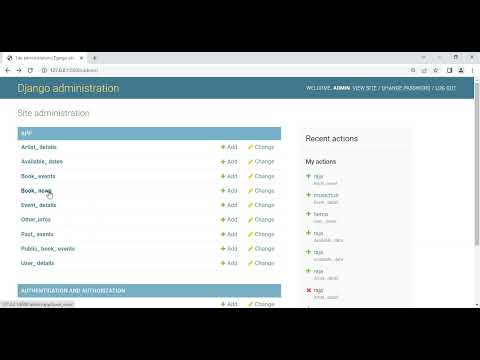
Music Event Booking App in Django Python
Music Event Booking App in Django Python
र 1000
⭐ Featured
Django Projects
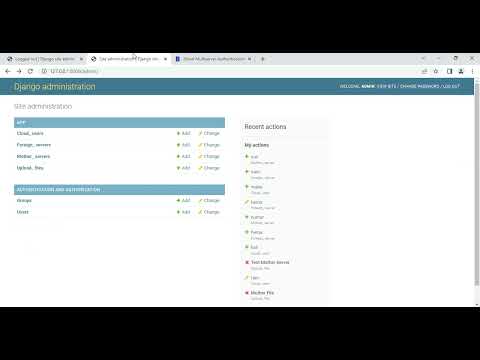
Multi Server Management System in Django Python
Multi Server Management System in Django Python
र 1000
⭐ Featured

Django Projects
Multi Authority Access Control in Django Python
Multi Authority Access Control in Django Python
र 1000