AI & ML Models
0.0 (0 reviews) • 0 downloads
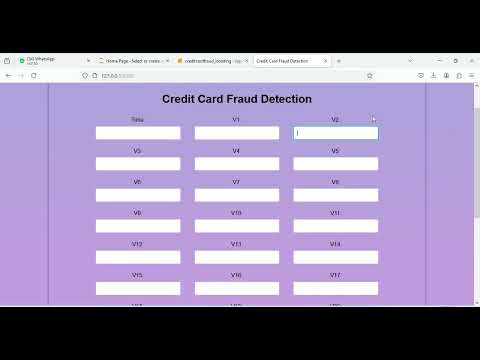
Credit Card Fraud Detection and Isolating in Python Projects
र 1000
Credit Card Fraud Detection and Isolating in Python Projects
Technical Details
Domain : Python
Database : Sqlite
Tools : Anaconda
Run Tools: VS Code
Database : Sqlite
Tools : Anaconda
Run Tools: VS Code
Secure Payment
Instant Download
GST Invoice
24/7 Support
About This Product
Credit Card Fraud Detection and Isolating in Python Projects
Abstract
Credit card fraud is a growing concern in the financial industry, leading to substantial monetary losses and compromised customer trust. Detecting and isolating fraudulent transactions promptly is essential to minimize risk and protect both financial institutions and customers. This project develops a Python-based system for credit card fraud detection and isolation using advanced machine learning and data analytics techniques. The system analyzes transaction patterns, identifies anomalies, classifies fraudulent activities, and isolates suspicious transactions for further verification. By combining supervised and unsupervised learning methods, the system enhances detection accuracy, reduces false positives, and enables real-time monitoring. This approach ensures secure financial transactions, minimizes economic losses, and improves the overall efficiency of fraud management systems.
Existing System
Traditional methods for detecting credit card fraud rely on manual verification, simple rule-based checks, or threshold-based alerts for unusual transactions. These approaches are limited in their ability to detect sophisticated or evolving fraud patterns and often generate a high number of false positives, burdening both customers and financial institutions. Some automated systems use basic statistical models or machine learning with limited features, but they struggle with highly imbalanced datasets where fraudulent transactions are rare compared to legitimate ones. Moreover, existing systems often lack mechanisms for isolating suspicious transactions, which is critical for preventing further financial damage while maintaining seamless operations for genuine customers. Consequently, these systems fail to provide real-time, adaptive, and robust fraud detection and isolation.
Proposed System
The proposed system introduces a Python-based framework for credit card fraud detection and isolating suspicious transactions. Transactional data is first preprocessed to handle missing values, normalize features, and address class imbalance using techniques such as SMOTE (Synthetic Minority Over-sampling Technique). The system employs supervised machine learning algorithms like Random Forest, Gradient Boosting, and XGBoost to classify transactions as legitimate or fraudulent, while unsupervised anomaly detection methods identify unusual patterns not seen in historical data. Once detected, suspicious transactions are isolated for further investigation without affecting the processing of legitimate transactions. Python libraries such as Pandas, NumPy, Scikit-learn, and TensorFlow are utilized for data processing, model training, and evaluation. By providing real-time detection, accurate classification, and automated isolation, the proposed system improves fraud management, protects customer accounts, and ensures financial security.
Abstract
Credit card fraud is a growing concern in the financial industry, leading to substantial monetary losses and compromised customer trust. Detecting and isolating fraudulent transactions promptly is essential to minimize risk and protect both financial institutions and customers. This project develops a Python-based system for credit card fraud detection and isolation using advanced machine learning and data analytics techniques. The system analyzes transaction patterns, identifies anomalies, classifies fraudulent activities, and isolates suspicious transactions for further verification. By combining supervised and unsupervised learning methods, the system enhances detection accuracy, reduces false positives, and enables real-time monitoring. This approach ensures secure financial transactions, minimizes economic losses, and improves the overall efficiency of fraud management systems.
Existing System
Traditional methods for detecting credit card fraud rely on manual verification, simple rule-based checks, or threshold-based alerts for unusual transactions. These approaches are limited in their ability to detect sophisticated or evolving fraud patterns and often generate a high number of false positives, burdening both customers and financial institutions. Some automated systems use basic statistical models or machine learning with limited features, but they struggle with highly imbalanced datasets where fraudulent transactions are rare compared to legitimate ones. Moreover, existing systems often lack mechanisms for isolating suspicious transactions, which is critical for preventing further financial damage while maintaining seamless operations for genuine customers. Consequently, these systems fail to provide real-time, adaptive, and robust fraud detection and isolation.
Proposed System
The proposed system introduces a Python-based framework for credit card fraud detection and isolating suspicious transactions. Transactional data is first preprocessed to handle missing values, normalize features, and address class imbalance using techniques such as SMOTE (Synthetic Minority Over-sampling Technique). The system employs supervised machine learning algorithms like Random Forest, Gradient Boosting, and XGBoost to classify transactions as legitimate or fraudulent, while unsupervised anomaly detection methods identify unusual patterns not seen in historical data. Once detected, suspicious transactions are isolated for further investigation without affecting the processing of legitimate transactions. Python libraries such as Pandas, NumPy, Scikit-learn, and TensorFlow are utilized for data processing, model training, and evaluation. By providing real-time detection, accurate classification, and automated isolation, the proposed system improves fraud management, protects customer accounts, and ensures financial security.
Customer Reviews (0)
No reviews yet. Be the first!
Related Products
⭐ Featured
AI & ML Models
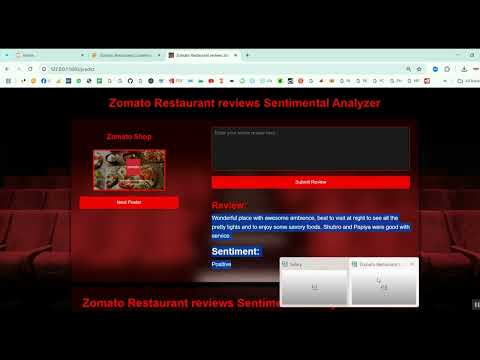
Zomato Restaurant Reviews Sentimental Analyzer in Python Projects
Zomato Restaurant Reviews Sentimental Analyzer in Python Projects
र 1000
⭐ Featured
⭐ Featured

AI & ML Models
Voice Disorder Prediction using Audio Dataset in Python Projects
Voice Disorder Prediction using Audio Dataset in Python Projects
र 1000

AI & ML Models
Vitamin Deficiency Detection Using Image Processing in Python Projects
Vitamin Deficiency Detection Using Image Processing in Python Projects
र 1000