Django Projects
0.0 (0 reviews) • 0 downloads
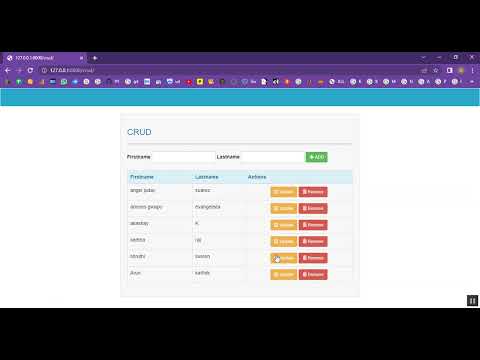
Create Read Update Delete App in Django Python
Create Read Update Delete App in Django Python
Technical Details
Domain : Python
Database : Sqlite
Tools : Anaconda
Run Tools: VS Code
Database : Sqlite
Tools : Anaconda
Run Tools: VS Code
Secure Payment
Instant Download
GST Invoice
24/7 Support
About This Product
Create Read Update Delete App in Django Python
Abstract
Data management is the foundation of most web applications, where the ability to create, read, update, and delete (CRUD) records efficiently is essential. The CRUD App in Django Python is a simple yet powerful web application that demonstrates how to manage data through a user-friendly interface backed by a robust database. Built using the Django framework, this system enables users to add new records, retrieve and view stored data, update existing entries, and delete unnecessary records in a secure and structured manner. With Django’s Model-View-Template (MVT) architecture, the application ensures seamless interaction between the frontend and backend, offering authentication, validation, and database integrity. This project serves as the core building block for larger enterprise systems, including management software, e-commerce platforms, and content management systems.
Existing System
Traditional data management systems often rely on manual processes, spreadsheets, or static databases that require technical knowledge to modify. Non-technical users face challenges when editing or maintaining such records due to the absence of a user-friendly interface. Additionally, existing manual solutions lack real-time validation, access control, and secure storage, making them error-prone and inefficient. For small-scale projects, developers often hardcode database entries, which is neither scalable nor maintainable.
Proposed System
The proposed Django-based CRUD Application solves these limitations by providing a web-based interface where users can manage data without technical expertise. Using Django models, data is stored in a relational database (SQLite/MySQL/PostgreSQL), and the system offers functionalities such as adding new records (Create), displaying all entries (Read), editing/updating records (Update), and removing entries (Delete). Django’s built-in form handling ensures validation and error handling, while authentication provides secure access control. The application can be extended with features such as search, pagination, role-based permissions, and export to CSV/PDF. Compared to existing manual systems, this solution provides efficiency, scalability, and security, serving as a practical foundation for building more advanced applications.
Abstract
Data management is the foundation of most web applications, where the ability to create, read, update, and delete (CRUD) records efficiently is essential. The CRUD App in Django Python is a simple yet powerful web application that demonstrates how to manage data through a user-friendly interface backed by a robust database. Built using the Django framework, this system enables users to add new records, retrieve and view stored data, update existing entries, and delete unnecessary records in a secure and structured manner. With Django’s Model-View-Template (MVT) architecture, the application ensures seamless interaction between the frontend and backend, offering authentication, validation, and database integrity. This project serves as the core building block for larger enterprise systems, including management software, e-commerce platforms, and content management systems.
Existing System
Traditional data management systems often rely on manual processes, spreadsheets, or static databases that require technical knowledge to modify. Non-technical users face challenges when editing or maintaining such records due to the absence of a user-friendly interface. Additionally, existing manual solutions lack real-time validation, access control, and secure storage, making them error-prone and inefficient. For small-scale projects, developers often hardcode database entries, which is neither scalable nor maintainable.
Proposed System
The proposed Django-based CRUD Application solves these limitations by providing a web-based interface where users can manage data without technical expertise. Using Django models, data is stored in a relational database (SQLite/MySQL/PostgreSQL), and the system offers functionalities such as adding new records (Create), displaying all entries (Read), editing/updating records (Update), and removing entries (Delete). Django’s built-in form handling ensures validation and error handling, while authentication provides secure access control. The application can be extended with features such as search, pagination, role-based permissions, and export to CSV/PDF. Compared to existing manual systems, this solution provides efficiency, scalability, and security, serving as a practical foundation for building more advanced applications.
Customer Reviews (0)
No reviews yet. Be the first!
Related Products
⭐ Featured
⭐ Featured

Django Projects
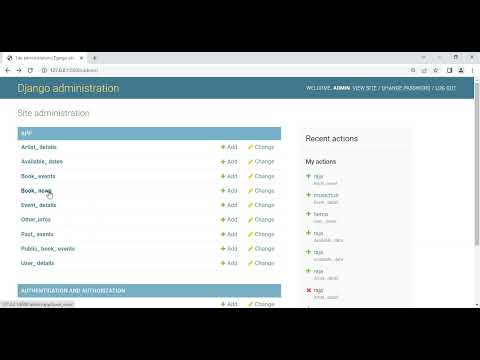
Music Event Booking App in Django Python
Music Event Booking App in Django Python
र 1000
⭐ Featured
Django Projects
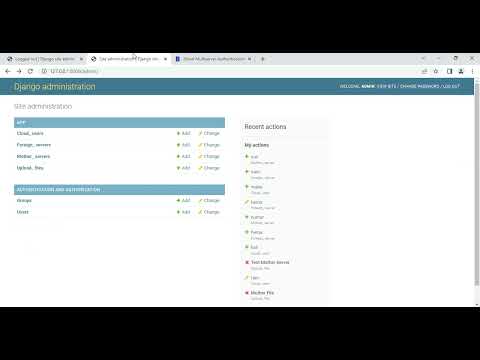
Multi Server Management System in Django Python
Multi Server Management System in Django Python
र 1000
⭐ Featured
Django Projects
Multi Authority Access Control in Django Python
Multi Authority Access Control in Django Python
र 1000