Django Projects
0.0 (0 reviews) • 0 downloads
Crack detection Using CNN Streamlit in Python Projects
र 1000
Crack detection Using CNN Streamlit in Python Projects
Technical Details
Domain : Python
Database : Sqlite
Tools : Anaconda
Run Tools: VS Code
Database : Sqlite
Tools : Anaconda
Run Tools: VS Code
Secure Payment
Instant Download
GST Invoice
24/7 Support
About This Product
Crack detection Using CNN Streamlit in Python Projects
Abstract
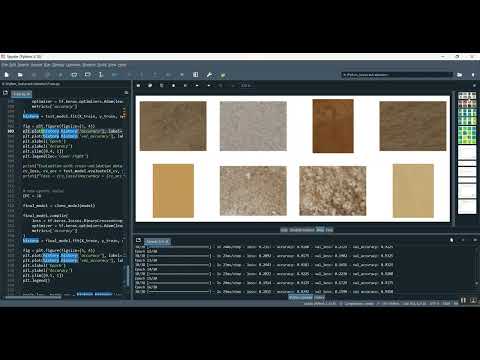
Cracks in buildings, bridges, and other infrastructure are early indicators of structural damage that can compromise safety if left undetected. Manual crack inspection is often time-consuming, labor-intensive, and prone to human error. This project, Crack Detection Using CNN Streamlit in Python, implements a Convolutional Neural Network (CNN) to automatically detect cracks in images of concrete or structural surfaces. The model is trained using datasets of cracked and non-cracked images, with preprocessing steps such as normalization and augmentation to improve accuracy. Using Python libraries such as TensorFlow/Keras, OpenCV, NumPy, and Streamlit, the trained CNN is integrated into a Streamlit web application, enabling users to upload images and receive real-time crack detection results with visual outputs.
Existing System
Traditional crack detection relies on manual visual inspections by engineers or the use of threshold-based image processing techniques. While effective for small-scale inspections, manual methods are time-consuming, costly, and error-prone, especially for large infrastructures. Conventional image processing approaches, such as edge detection and morphological operations, often fail in cases of noise, varying lighting, or complex textures. Some existing automated methods use machine learning but lack deep feature extraction capabilities and do not provide user-friendly deployment platforms for real-world use.
Proposed System
The proposed system introduces a deep learning–based crack detection framework using CNNs, combined with a Streamlit interface for real-time usability. The workflow includes image preprocessing (resizing, normalization, and augmentation), CNN training to learn hierarchical features of cracks, and classification of input images into cracked or non-cracked categories. The trained model is deployed via Streamlit, where users can upload surface images and instantly view detection results. Compared to existing methods, this system is more accurate, robust to noise, automated, and easy to use, providing a practical solution for engineers, construction companies, and safety inspectors.
Abstract
Cracks in buildings, bridges, and other infrastructure are early indicators of structural damage that can compromise safety if left undetected. Manual crack inspection is often time-consuming, labor-intensive, and prone to human error. This project, Crack Detection Using CNN Streamlit in Python, implements a Convolutional Neural Network (CNN) to automatically detect cracks in images of concrete or structural surfaces. The model is trained using datasets of cracked and non-cracked images, with preprocessing steps such as normalization and augmentation to improve accuracy. Using Python libraries such as TensorFlow/Keras, OpenCV, NumPy, and Streamlit, the trained CNN is integrated into a Streamlit web application, enabling users to upload images and receive real-time crack detection results with visual outputs.
Existing System
Traditional crack detection relies on manual visual inspections by engineers or the use of threshold-based image processing techniques. While effective for small-scale inspections, manual methods are time-consuming, costly, and error-prone, especially for large infrastructures. Conventional image processing approaches, such as edge detection and morphological operations, often fail in cases of noise, varying lighting, or complex textures. Some existing automated methods use machine learning but lack deep feature extraction capabilities and do not provide user-friendly deployment platforms for real-world use.
Proposed System
The proposed system introduces a deep learning–based crack detection framework using CNNs, combined with a Streamlit interface for real-time usability. The workflow includes image preprocessing (resizing, normalization, and augmentation), CNN training to learn hierarchical features of cracks, and classification of input images into cracked or non-cracked categories. The trained model is deployed via Streamlit, where users can upload surface images and instantly view detection results. Compared to existing methods, this system is more accurate, robust to noise, automated, and easy to use, providing a practical solution for engineers, construction companies, and safety inspectors.
Customer Reviews (0)
No reviews yet. Be the first!
Related Products
⭐ Featured
⭐ Featured

Django Projects
Music Event Booking App in Django Python
Music Event Booking App in Django Python
र 1000
⭐ Featured
Django Projects
Multi Server Management System in Django Python
Multi Server Management System in Django Python
र 1000
⭐ Featured

Django Projects
Multi Authority Access Control in Django Python
Multi Authority Access Control in Django Python
र 1000