Django Projects
0.0 (0 reviews) • 0 downloads
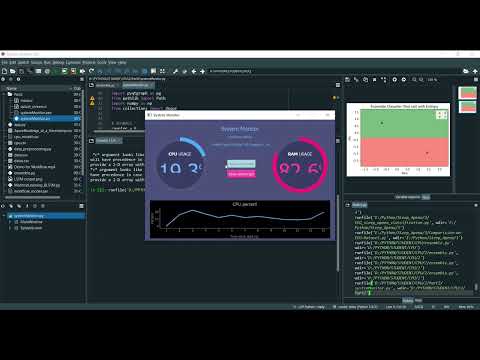
CPU Software Defect Detection in System Monitor in Python Projects
र 1000
CPU Software Defect Detection in System Monitor in Python Projects
Technical Details
Domain : Python
Database : Sqlite
Tools : Anaconda
Run Tools: VS Code
Database : Sqlite
Tools : Anaconda
Run Tools: VS Code
Secure Payment
Instant Download
GST Invoice
24/7 Support
About This Product
CPU Software Defect Detection in System Monitor in Python Projects
Abstract
Software defects in CPU-intensive processes can lead to performance degradation, system crashes, or security vulnerabilities. Detecting such anomalies in real time is crucial for maintaining system stability and reliability. This project, CPU Software Defect Detection in System Monitor in Python, develops an intelligent monitoring system that observes CPU usage, memory consumption, and process behavior to identify potential defects in running applications. Using Python libraries such as psutil, Pandas, NumPy, and Scikit-learn, the system collects system metrics, preprocesses the data, and applies machine learning classification models such as Random Forest, Decision Tree, or Support Vector Machine (SVM) to detect abnormal behaviors. Integrated with a simple console or GUI-based system monitor, the project provides real-time alerts for defect-prone applications, assisting in proactive troubleshooting and system optimization.
Existing System
Current system monitors, such as built-in operating system utilities (Task Manager in Windows, top/htop in Linux), provide CPU and memory usage statistics but do not perform intelligent defect detection. They rely solely on raw metrics, leaving it up to users or administrators to interpret whether a process is malfunctioning. Some advanced monitoring tools integrate log-based anomaly detection, but they often require complex configurations, high computational overhead, or enterprise-level software, making them less accessible for small-scale or personal use.
Proposed System
The proposed system introduces an automated defect detection mechanism built into a Python-based system monitor. The workflow includes data collection using psutil for real-time CPU and memory metrics, feature extraction such as CPU spikes, thread counts, and memory leaks, and machine learning classification to distinguish between normal and defective process behavior. Once a defect is predicted, the system can generate real-time alerts or logs for further action. Compared to existing monitoring tools, this approach is lightweight, intelligent, and proactive, providing not just raw system usage statistics but actionable insights into software defects, making it suitable for developers, system administrators, and researchers.
Abstract
Software defects in CPU-intensive processes can lead to performance degradation, system crashes, or security vulnerabilities. Detecting such anomalies in real time is crucial for maintaining system stability and reliability. This project, CPU Software Defect Detection in System Monitor in Python, develops an intelligent monitoring system that observes CPU usage, memory consumption, and process behavior to identify potential defects in running applications. Using Python libraries such as psutil, Pandas, NumPy, and Scikit-learn, the system collects system metrics, preprocesses the data, and applies machine learning classification models such as Random Forest, Decision Tree, or Support Vector Machine (SVM) to detect abnormal behaviors. Integrated with a simple console or GUI-based system monitor, the project provides real-time alerts for defect-prone applications, assisting in proactive troubleshooting and system optimization.
Existing System
Current system monitors, such as built-in operating system utilities (Task Manager in Windows, top/htop in Linux), provide CPU and memory usage statistics but do not perform intelligent defect detection. They rely solely on raw metrics, leaving it up to users or administrators to interpret whether a process is malfunctioning. Some advanced monitoring tools integrate log-based anomaly detection, but they often require complex configurations, high computational overhead, or enterprise-level software, making them less accessible for small-scale or personal use.
Proposed System
The proposed system introduces an automated defect detection mechanism built into a Python-based system monitor. The workflow includes data collection using psutil for real-time CPU and memory metrics, feature extraction such as CPU spikes, thread counts, and memory leaks, and machine learning classification to distinguish between normal and defective process behavior. Once a defect is predicted, the system can generate real-time alerts or logs for further action. Compared to existing monitoring tools, this approach is lightweight, intelligent, and proactive, providing not just raw system usage statistics but actionable insights into software defects, making it suitable for developers, system administrators, and researchers.
Customer Reviews (0)
No reviews yet. Be the first!
Related Products
⭐ Featured
⭐ Featured

Django Projects
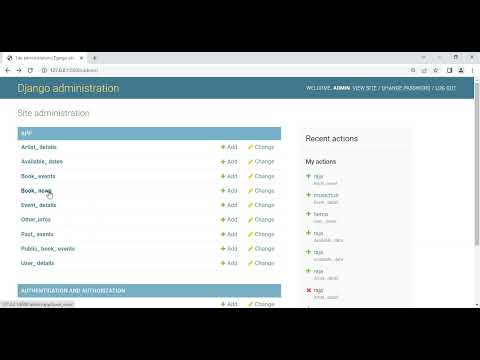
Music Event Booking App in Django Python
Music Event Booking App in Django Python
र 1000
⭐ Featured
Django Projects
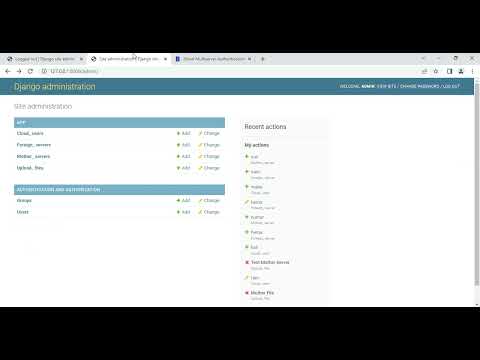
Multi Server Management System in Django Python
Multi Server Management System in Django Python
र 1000
⭐ Featured

Django Projects
Multi Authority Access Control in Django Python
Multi Authority Access Control in Django Python
र 1000