Django Projects
0.0 (0 reviews) • 0 downloads
Covid Time Value Prediction Streamlit in Python Projects
र 1000
Covid Time Value Prediction Streamlit in Python Projects
Technical Details
Domain : Python
Database : Sqlite
Tools : Anaconda
Run Tools: VS Code
Database : Sqlite
Tools : Anaconda
Run Tools: VS Code
Secure Payment
Instant Download
GST Invoice
24/7 Support
About This Product
Covid Time Value Prediction Streamlit in Python Projects
Abstract
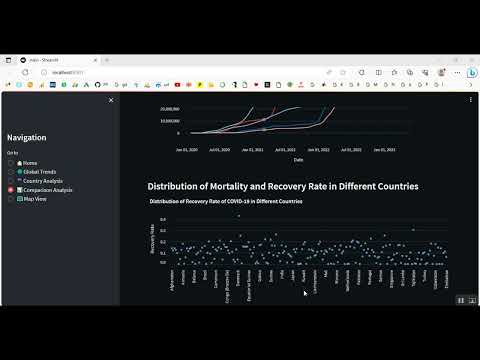
The COVID-19 pandemic has had significant temporal impacts on public health, economy, and social behavior. Predicting time-related values such as infection rates, recovery periods, or hospitalization duration can help authorities make timely decisions and allocate resources efficiently. This project, COVID Time Value Prediction Streamlit in Python, focuses on developing a machine learning–based system to forecast COVID-related temporal metrics using historical datasets. Implemented in Python with libraries like Pandas, NumPy, Scikit-learn, and Streamlit, the system allows users to input relevant features, train predictive models such as Linear Regression, Random Forest, or Gradient Boosting, and visualize predicted outcomes in an interactive web interface. The approach provides a real-time, accessible, and automated solution for forecasting COVID-related time-dependent values.
Existing System
Existing COVID prediction systems primarily rely on statistical models or epidemiological simulations, such as SIR models or ARIMA time series forecasting. While these models can provide insights, they often require expert knowledge, extensive data preprocessing, and do not offer user-friendly interfaces. Additionally, most existing solutions are not interactive, limiting accessibility for healthcare workers, policymakers, or researchers who need real-time predictions with adjustable input parameters.
Proposed System
The proposed system introduces a Python and Streamlit–based framework for COVID time value prediction. The workflow includes data collection and preprocessing (handling missing values, normalization, and feature selection), training of machine learning models such as Linear Regression, Random Forest, or Gradient Boosting, and interactive visualization using Streamlit. Users can input relevant variables, adjust parameters, and receive predictions for COVID-related temporal metrics in real time. Compared to existing systems, this approach provides automation, interactive visualization, real-time prediction, and ease of use, making it practical for healthcare authorities, researchers, and decision-makers to anticipate trends and take timely actions.
Abstract
The COVID-19 pandemic has had significant temporal impacts on public health, economy, and social behavior. Predicting time-related values such as infection rates, recovery periods, or hospitalization duration can help authorities make timely decisions and allocate resources efficiently. This project, COVID Time Value Prediction Streamlit in Python, focuses on developing a machine learning–based system to forecast COVID-related temporal metrics using historical datasets. Implemented in Python with libraries like Pandas, NumPy, Scikit-learn, and Streamlit, the system allows users to input relevant features, train predictive models such as Linear Regression, Random Forest, or Gradient Boosting, and visualize predicted outcomes in an interactive web interface. The approach provides a real-time, accessible, and automated solution for forecasting COVID-related time-dependent values.
Existing System
Existing COVID prediction systems primarily rely on statistical models or epidemiological simulations, such as SIR models or ARIMA time series forecasting. While these models can provide insights, they often require expert knowledge, extensive data preprocessing, and do not offer user-friendly interfaces. Additionally, most existing solutions are not interactive, limiting accessibility for healthcare workers, policymakers, or researchers who need real-time predictions with adjustable input parameters.
Proposed System
The proposed system introduces a Python and Streamlit–based framework for COVID time value prediction. The workflow includes data collection and preprocessing (handling missing values, normalization, and feature selection), training of machine learning models such as Linear Regression, Random Forest, or Gradient Boosting, and interactive visualization using Streamlit. Users can input relevant variables, adjust parameters, and receive predictions for COVID-related temporal metrics in real time. Compared to existing systems, this approach provides automation, interactive visualization, real-time prediction, and ease of use, making it practical for healthcare authorities, researchers, and decision-makers to anticipate trends and take timely actions.
Customer Reviews (0)
No reviews yet. Be the first!
Related Products
⭐ Featured
⭐ Featured

Django Projects
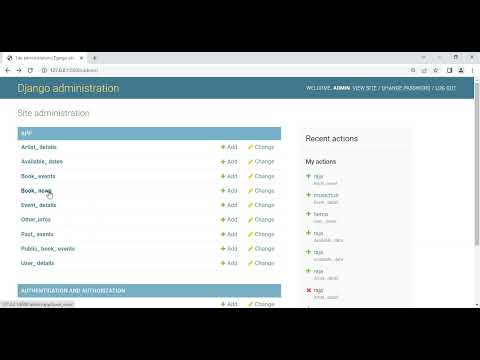
Music Event Booking App in Django Python
Music Event Booking App in Django Python
र 1000
⭐ Featured
Django Projects
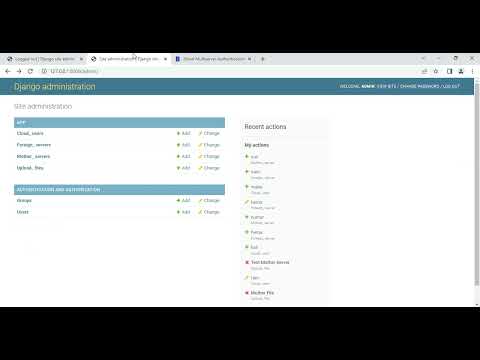
Multi Server Management System in Django Python
Multi Server Management System in Django Python
र 1000
⭐ Featured

Django Projects
Multi Authority Access Control in Django Python
Multi Authority Access Control in Django Python
र 1000