
AI & ML Models
0.0 (0 reviews) • 0 downloads
Content Based Image Retrieval in Python Projects
र 1000
Content Based Image Retrieval in Python Projects
Technical Details
Domain : Python
Database : Sqlite
Tools : Anaconda
Run Tools: VS Code
Database : Sqlite
Tools : Anaconda
Run Tools: VS Code
Secure Payment
Instant Download
GST Invoice
24/7 Support
About This Product
Content Based Image Retrieval in Python Projects
Abstract
Content Based Image Retrieval (CBIR) is a technique used to retrieve digital images from large databases based on the content features of images such as color, texture, shape, and patterns rather than relying on metadata or keywords. With the rapid increase in multimedia data, traditional text-based image retrieval systems have become inefficient, as manual annotation is time-consuming and often inaccurate. This project develops a Python-based CBIR system that extracts meaningful features from images and performs similarity matching to retrieve relevant images from the database. The system leverages feature extraction methods, dimensionality reduction, and machine learning algorithms to improve retrieval accuracy and speed. By providing efficient and automated image search capabilities, the system can be applied in medical imaging, e-commerce, digital libraries, and other multimedia applications.
Existing System
Traditional image retrieval systems rely heavily on text-based annotations, requiring users or experts to manually label images with keywords. While simple to implement, these systems face several limitations, including subjectivity, labor-intensive annotation, and difficulty in describing complex visual content accurately. Additionally, keyword-based search cannot capture visual similarities, leading to irrelevant or incomplete retrieval results. Some earlier CBIR systems attempted feature-based retrieval using basic color histograms or texture analysis; however, they lacked robustness and failed to scale for large image datasets. Existing approaches often struggle with variations in lighting, orientation, or background, which significantly reduces retrieval performance and limits the practical usability of image databases.
Proposed System
The proposed system introduces a Python-based CBIR framework that efficiently retrieves images based on their visual content. The system extracts key features from images, such as color histograms, texture descriptors, edge patterns, and deep learning-based embeddings, to represent images numerically. These features are then compared using similarity measures like Euclidean distance, cosine similarity, or more advanced ranking algorithms to retrieve images most relevant to a query image. By leveraging Python libraries such as OpenCV, scikit-image, TensorFlow, or PyTorch, the system ensures fast computation and scalability for large datasets. The proposed method improves retrieval accuracy, handles variations in image quality or orientation, and provides a user-friendly interface for interactive image search. This approach is particularly useful for applications in medical diagnostics, digital libraries, fashion catalogs, and multimedia content management.
Abstract
Content Based Image Retrieval (CBIR) is a technique used to retrieve digital images from large databases based on the content features of images such as color, texture, shape, and patterns rather than relying on metadata or keywords. With the rapid increase in multimedia data, traditional text-based image retrieval systems have become inefficient, as manual annotation is time-consuming and often inaccurate. This project develops a Python-based CBIR system that extracts meaningful features from images and performs similarity matching to retrieve relevant images from the database. The system leverages feature extraction methods, dimensionality reduction, and machine learning algorithms to improve retrieval accuracy and speed. By providing efficient and automated image search capabilities, the system can be applied in medical imaging, e-commerce, digital libraries, and other multimedia applications.
Existing System
Traditional image retrieval systems rely heavily on text-based annotations, requiring users or experts to manually label images with keywords. While simple to implement, these systems face several limitations, including subjectivity, labor-intensive annotation, and difficulty in describing complex visual content accurately. Additionally, keyword-based search cannot capture visual similarities, leading to irrelevant or incomplete retrieval results. Some earlier CBIR systems attempted feature-based retrieval using basic color histograms or texture analysis; however, they lacked robustness and failed to scale for large image datasets. Existing approaches often struggle with variations in lighting, orientation, or background, which significantly reduces retrieval performance and limits the practical usability of image databases.
Proposed System
The proposed system introduces a Python-based CBIR framework that efficiently retrieves images based on their visual content. The system extracts key features from images, such as color histograms, texture descriptors, edge patterns, and deep learning-based embeddings, to represent images numerically. These features are then compared using similarity measures like Euclidean distance, cosine similarity, or more advanced ranking algorithms to retrieve images most relevant to a query image. By leveraging Python libraries such as OpenCV, scikit-image, TensorFlow, or PyTorch, the system ensures fast computation and scalability for large datasets. The proposed method improves retrieval accuracy, handles variations in image quality or orientation, and provides a user-friendly interface for interactive image search. This approach is particularly useful for applications in medical diagnostics, digital libraries, fashion catalogs, and multimedia content management.
Customer Reviews (0)
No reviews yet. Be the first!
Related Products
⭐ Featured

AI & ML Models
Zomato Restaurant Reviews Sentimental Analyzer in Python Projects
Zomato Restaurant Reviews Sentimental Analyzer in Python Projects
र 1000
⭐ Featured
⭐ Featured
AI & ML Models
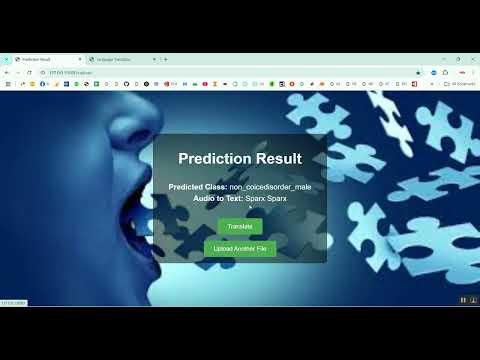
Voice Disorder Prediction using Audio Dataset in Python Projects
Voice Disorder Prediction using Audio Dataset in Python Projects
र 1000

AI & ML Models
Vitamin Deficiency Detection Using Image Processing in Python Projects
Vitamin Deficiency Detection Using Image Processing in Python Projects
र 1000