AI & ML Models
0.0 (0 reviews) • 0 downloads
College On Campus Resume Base Question Test in Python Projects
र 1000
College On Campus Resume Base Question Test in Python Projects
Technical Details
Domain : Python
Database : Sqlite
Tools : Anaconda
Run Tools: VS Code
Database : Sqlite
Tools : Anaconda
Run Tools: VS Code
Secure Payment
Instant Download
GST Invoice
24/7 Support
About This Product
College On Campus Resume Base Question Test in Python Projects
Abstract
Campus recruitment and on-campus placement processes require efficient assessment of students’ skills and suitability for various roles. The project titled College On-Campus Resume-Based Question Test in Python Projects focuses on developing an automated system that generates and evaluates tests based on students’ resumes. Python is chosen as the development platform due to its extensive libraries for data processing, natural language processing (NLP), and web development, including Pandas, NumPy, NLTK, Flask, and Tkinter. The system parses student resumes to extract key skills, experiences, and educational details, and then generates customized multiple-choice or short-answer questions related to these skills. The platform provides instant evaluation and feedback, allowing colleges and recruiters to efficiently assess student preparedness and ensure targeted skill evaluation for placement processes.
Existing System
Existing systems for student evaluation during campus recruitment typically rely on generic aptitude tests, manual interviews, or standard questionnaires that are not tailored to individual resumes. This one-size-fits-all approach often fails to evaluate students’ actual skills or highlight specific strengths relevant to job profiles. Manual assessment is time-consuming, labor-intensive, and prone to bias, especially when large numbers of students are involved. Some online testing platforms exist, but they rarely integrate resume parsing and personalized question generation. As a result, the evaluation process is inefficient and may not accurately reflect a student’s abilities, reducing the effectiveness of on-campus recruitment efforts.
Proposed System
The proposed system introduces a Python-based intelligent platform that automates resume-based question generation and assessment. Student resumes are uploaded and processed using NLP techniques to extract relevant keywords, skills, academic achievements, and project experiences. Based on these extracted features, a question bank is dynamically generated, including multiple-choice, coding, or descriptive questions tailored to each student’s profile. The system evaluates responses automatically using pre-defined answer patterns, coding output comparison, or keyword matching for descriptive answers. Python libraries such as NLTK, Spacy, and Scikit-learn are used for text processing and feature extraction, while Flask or Tkinter can provide an interactive user interface. The platform also provides analytics and feedback to students and administrators, highlighting areas of strength and improvement. This approach improves assessment accuracy, saves time, ensures fairness, and aligns evaluation with individual skill sets.
Abstract
Campus recruitment and on-campus placement processes require efficient assessment of students’ skills and suitability for various roles. The project titled College On-Campus Resume-Based Question Test in Python Projects focuses on developing an automated system that generates and evaluates tests based on students’ resumes. Python is chosen as the development platform due to its extensive libraries for data processing, natural language processing (NLP), and web development, including Pandas, NumPy, NLTK, Flask, and Tkinter. The system parses student resumes to extract key skills, experiences, and educational details, and then generates customized multiple-choice or short-answer questions related to these skills. The platform provides instant evaluation and feedback, allowing colleges and recruiters to efficiently assess student preparedness and ensure targeted skill evaluation for placement processes.
Existing System
Existing systems for student evaluation during campus recruitment typically rely on generic aptitude tests, manual interviews, or standard questionnaires that are not tailored to individual resumes. This one-size-fits-all approach often fails to evaluate students’ actual skills or highlight specific strengths relevant to job profiles. Manual assessment is time-consuming, labor-intensive, and prone to bias, especially when large numbers of students are involved. Some online testing platforms exist, but they rarely integrate resume parsing and personalized question generation. As a result, the evaluation process is inefficient and may not accurately reflect a student’s abilities, reducing the effectiveness of on-campus recruitment efforts.
Proposed System
The proposed system introduces a Python-based intelligent platform that automates resume-based question generation and assessment. Student resumes are uploaded and processed using NLP techniques to extract relevant keywords, skills, academic achievements, and project experiences. Based on these extracted features, a question bank is dynamically generated, including multiple-choice, coding, or descriptive questions tailored to each student’s profile. The system evaluates responses automatically using pre-defined answer patterns, coding output comparison, or keyword matching for descriptive answers. Python libraries such as NLTK, Spacy, and Scikit-learn are used for text processing and feature extraction, while Flask or Tkinter can provide an interactive user interface. The platform also provides analytics and feedback to students and administrators, highlighting areas of strength and improvement. This approach improves assessment accuracy, saves time, ensures fairness, and aligns evaluation with individual skill sets.
Customer Reviews (0)
No reviews yet. Be the first!
Related Products
⭐ Featured
AI & ML Models
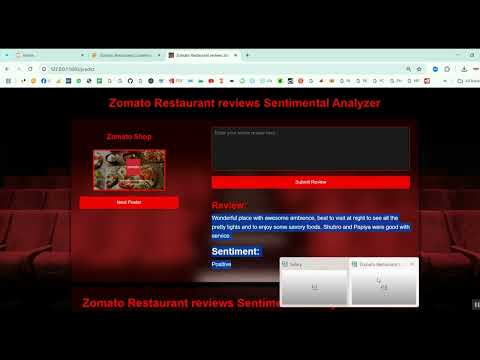
Zomato Restaurant Reviews Sentimental Analyzer in Python Projects
Zomato Restaurant Reviews Sentimental Analyzer in Python Projects
र 1000
⭐ Featured
⭐ Featured
AI & ML Models
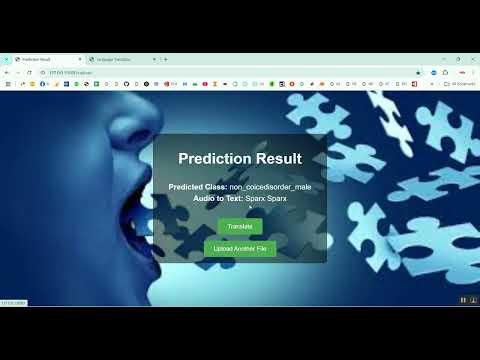
Voice Disorder Prediction using Audio Dataset in Python Projects
Voice Disorder Prediction using Audio Dataset in Python Projects
र 1000
AI & ML Models
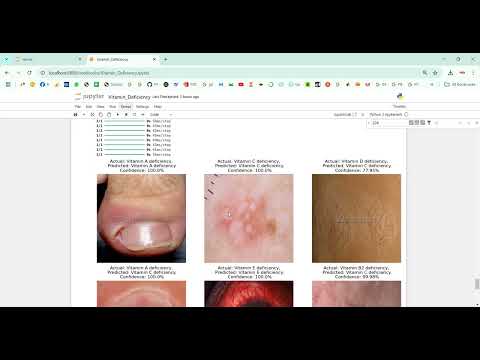
Vitamin Deficiency Detection Using Image Processing in Python Projects
Vitamin Deficiency Detection Using Image Processing in Python Projects
र 1000