Django Projects
0.0 (0 reviews) • 0 downloads
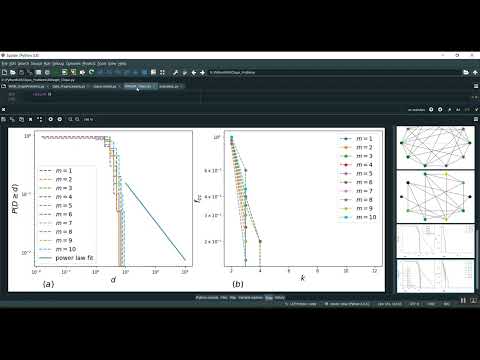
Clique Problems Prediction in Python Projects
र 1000
Clique Problems Prediction in Python Projects
Technical Details
Domain : Python
Database : Sqlite
Tools : Anaconda
Run Tools: VS Code
Database : Sqlite
Tools : Anaconda
Run Tools: VS Code
Secure Payment
Instant Download
GST Invoice
24/7 Support
About This Product
Clique Problems Prediction in Python Projects
Abstract
Clique problems, which involve identifying fully connected subgraphs within a network, are a fundamental concept in graph theory and have applications in social networks, bioinformatics, communication networks, and combinatorial optimization. Detecting cliques in large networks is computationally intensive due to the NP-complete nature of the problem. This project, Clique Problems Prediction in Python, focuses on developing a system to predict the presence and size of cliques in graphs using machine learning and algorithmic approaches. Using Python libraries such as NetworkX, NumPy, Pandas, and Scikit-learn, the system represents graphs, extracts features, and applies predictive models to analyze network connectivity patterns. The project demonstrates how computational techniques can optimize clique detection and improve performance in practical applications.
Existing System
Traditional approaches for clique detection rely on graph-theoretic algorithms, including brute-force search, backtracking, branch-and-bound, and heuristic algorithms. While effective for small networks, these methods are time-consuming and computationally expensive when applied to large-scale graphs, such as social networks with thousands or millions of nodes. Some existing automated approaches use exact algorithms or approximation heuristics, but they often struggle with scalability and efficiency, especially for dynamic or evolving networks.
Proposed System
The proposed system introduces a Python-based machine learning framework for predicting clique problems in networks. The workflow includes graph representation using NetworkX, feature extraction (node degrees, clustering coefficients, connectivity patterns), and training machine learning models such as Random Forest, SVM, or Neural Networks to predict clique presence and size. For smaller networks, algorithmic detection using optimized search and heuristics can be applied. Compared to existing systems, this approach provides faster prediction, scalability to larger networks, and the ability to handle dynamic graph data. The system can also visualize predicted cliques, assisting researchers in network analysis, social network studies, and bioinformatics applications.
Abstract
Clique problems, which involve identifying fully connected subgraphs within a network, are a fundamental concept in graph theory and have applications in social networks, bioinformatics, communication networks, and combinatorial optimization. Detecting cliques in large networks is computationally intensive due to the NP-complete nature of the problem. This project, Clique Problems Prediction in Python, focuses on developing a system to predict the presence and size of cliques in graphs using machine learning and algorithmic approaches. Using Python libraries such as NetworkX, NumPy, Pandas, and Scikit-learn, the system represents graphs, extracts features, and applies predictive models to analyze network connectivity patterns. The project demonstrates how computational techniques can optimize clique detection and improve performance in practical applications.
Existing System
Traditional approaches for clique detection rely on graph-theoretic algorithms, including brute-force search, backtracking, branch-and-bound, and heuristic algorithms. While effective for small networks, these methods are time-consuming and computationally expensive when applied to large-scale graphs, such as social networks with thousands or millions of nodes. Some existing automated approaches use exact algorithms or approximation heuristics, but they often struggle with scalability and efficiency, especially for dynamic or evolving networks.
Proposed System
The proposed system introduces a Python-based machine learning framework for predicting clique problems in networks. The workflow includes graph representation using NetworkX, feature extraction (node degrees, clustering coefficients, connectivity patterns), and training machine learning models such as Random Forest, SVM, or Neural Networks to predict clique presence and size. For smaller networks, algorithmic detection using optimized search and heuristics can be applied. Compared to existing systems, this approach provides faster prediction, scalability to larger networks, and the ability to handle dynamic graph data. The system can also visualize predicted cliques, assisting researchers in network analysis, social network studies, and bioinformatics applications.
Customer Reviews (0)
No reviews yet. Be the first!
Related Products
⭐ Featured
⭐ Featured

Django Projects
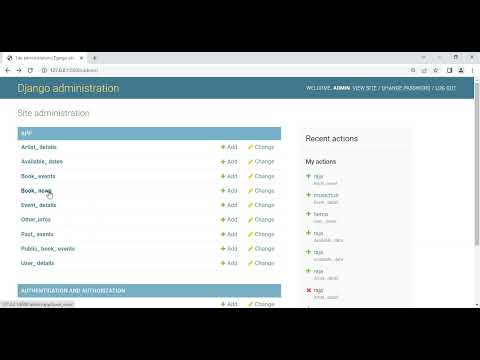
Music Event Booking App in Django Python
Music Event Booking App in Django Python
र 1000
⭐ Featured
Django Projects
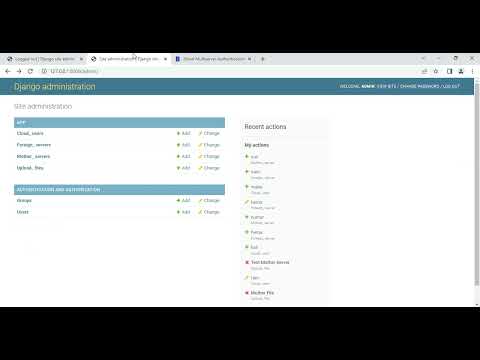
Multi Server Management System in Django Python
Multi Server Management System in Django Python
र 1000
⭐ Featured

Django Projects
Multi Authority Access Control in Django Python
Multi Authority Access Control in Django Python
र 1000