Django Projects
0.0 (0 reviews) • 0 downloads
Chronic Kidney Data Train Flask App in Python Projects
र 1000
Chronic Kidney Data Train Flask App in Python Projects
Technical Details
Domain : Python
Database : Sqlite
Tools : Anaconda
Run Tools: VS Code
Database : Sqlite
Tools : Anaconda
Run Tools: VS Code
Secure Payment
Instant Download
GST Invoice
24/7 Support
About This Product
Chronic Kidney Data Train Flask App in Python Projects
Abstract
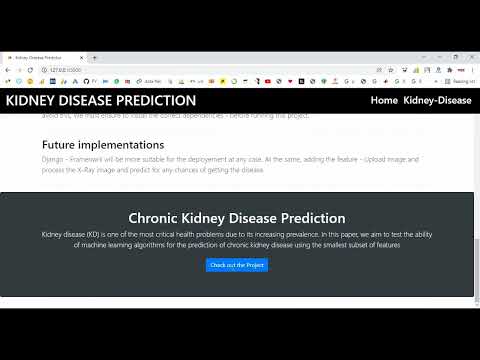
Chronic Kidney Disease (CKD) is a severe health condition that can lead to kidney failure if not diagnosed and managed early. Traditional diagnosis often requires multiple lab tests and expert medical analysis, which can be time-consuming and inaccessible in some areas. This project, Chronic Kidney Data Train Flask App in Python, focuses on developing an automated system that predicts the likelihood of CKD using patient data. The system uses machine learning models such as Random Forest, Support Vector Machine (SVM), or Neural Networks to analyze clinical and demographic features such as blood pressure, glucose levels, blood urea, creatinine, and age. Implemented in Python using Pandas, NumPy, Scikit-learn, and Flask, the trained model is deployed as a web application where users can input patient data and receive real-time predictions, facilitating early diagnosis and intervention.
Existing System
Currently, CKD detection relies on manual evaluation by healthcare professionals, which involves reviewing lab reports, symptoms, and patient history. While effective, this process is time-intensive, subjective, and dependent on expert availability. Some existing automated solutions use traditional machine learning algorithms, but they often lack a user-friendly interface, limiting accessibility for non-technical users. Furthermore, many systems do not provide real-time predictions, making them less practical for early detection and preventive healthcare.
Proposed System
The proposed system introduces a Python-based machine learning framework integrated with a Flask web application for chronic kidney disease prediction. The workflow includes data preprocessing (handling missing values, normalization, and encoding categorical features), feature selection, and ML model training using Random Forest, SVM, or Neural Networks. Once trained, the model is deployed in a Flask app, where users can input patient details and receive instant predictions regarding CKD risk. Compared to existing systems, this approach provides automated, accurate, real-time, and accessible predictions, enabling early intervention and improved patient care. Additionally, the system can be extended with visual analytics to show feature importance and risk factors, further supporting clinical decision-making.
Abstract
Chronic Kidney Disease (CKD) is a severe health condition that can lead to kidney failure if not diagnosed and managed early. Traditional diagnosis often requires multiple lab tests and expert medical analysis, which can be time-consuming and inaccessible in some areas. This project, Chronic Kidney Data Train Flask App in Python, focuses on developing an automated system that predicts the likelihood of CKD using patient data. The system uses machine learning models such as Random Forest, Support Vector Machine (SVM), or Neural Networks to analyze clinical and demographic features such as blood pressure, glucose levels, blood urea, creatinine, and age. Implemented in Python using Pandas, NumPy, Scikit-learn, and Flask, the trained model is deployed as a web application where users can input patient data and receive real-time predictions, facilitating early diagnosis and intervention.
Existing System
Currently, CKD detection relies on manual evaluation by healthcare professionals, which involves reviewing lab reports, symptoms, and patient history. While effective, this process is time-intensive, subjective, and dependent on expert availability. Some existing automated solutions use traditional machine learning algorithms, but they often lack a user-friendly interface, limiting accessibility for non-technical users. Furthermore, many systems do not provide real-time predictions, making them less practical for early detection and preventive healthcare.
Proposed System
The proposed system introduces a Python-based machine learning framework integrated with a Flask web application for chronic kidney disease prediction. The workflow includes data preprocessing (handling missing values, normalization, and encoding categorical features), feature selection, and ML model training using Random Forest, SVM, or Neural Networks. Once trained, the model is deployed in a Flask app, where users can input patient details and receive instant predictions regarding CKD risk. Compared to existing systems, this approach provides automated, accurate, real-time, and accessible predictions, enabling early intervention and improved patient care. Additionally, the system can be extended with visual analytics to show feature importance and risk factors, further supporting clinical decision-making.
Customer Reviews (0)
No reviews yet. Be the first!
Related Products
⭐ Featured
⭐ Featured

Django Projects
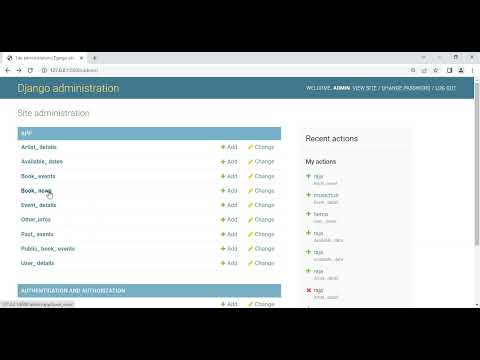
Music Event Booking App in Django Python
Music Event Booking App in Django Python
र 1000
⭐ Featured
Django Projects
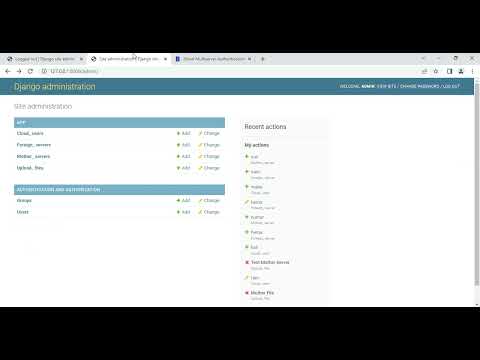
Multi Server Management System in Django Python
Multi Server Management System in Django Python
र 1000
⭐ Featured

Django Projects
Multi Authority Access Control in Django Python
Multi Authority Access Control in Django Python
र 1000